
Wearing a 36 Band With Confidence
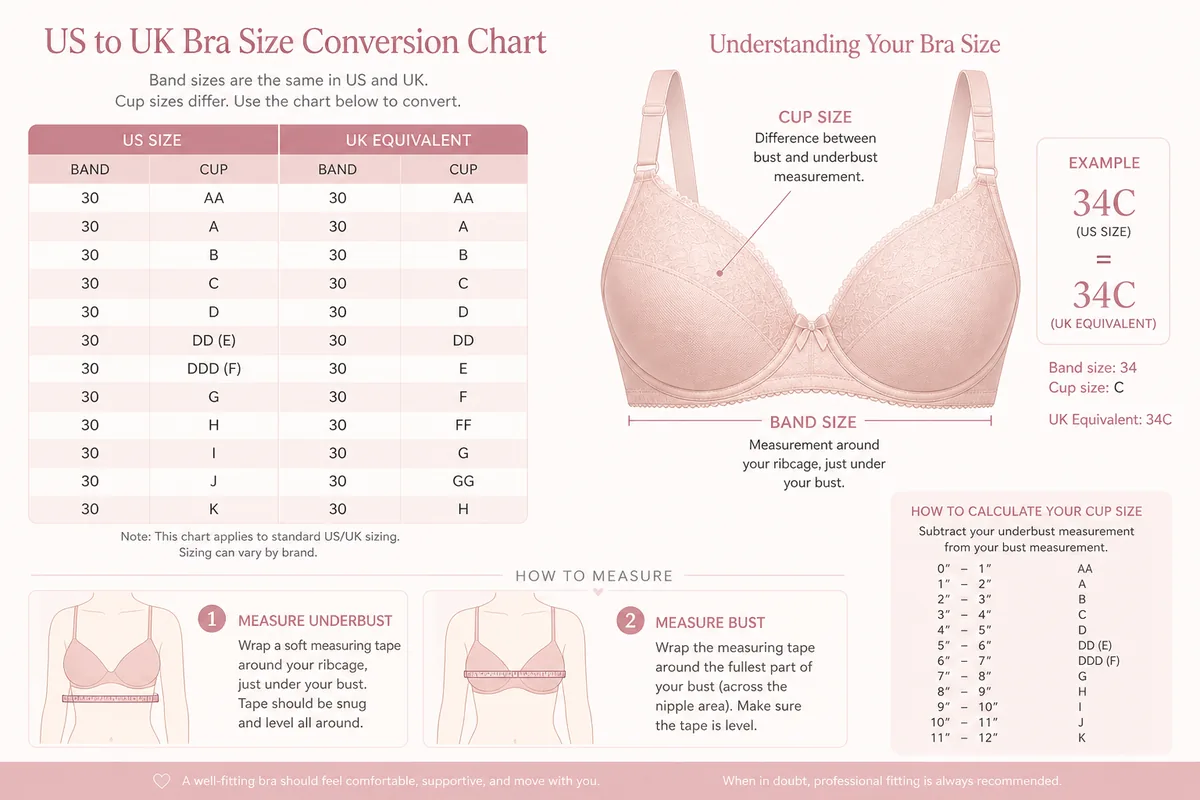
A broader ribcage or an underbust in the mid-to-upper 30s often lands on 36—but grabbing 36 to “feel freer” when you actually need 34 plus more cup is a common trap that leaves the band riding up.
Quick answer
36 is a wider US/UK band (EU often ~80). Match the letter to measurements, not dress size. If every 36 slides up, try a firmer 34 sister with more cup before abandoning the size family.
US / UK band: 36 · EU (approx.): 80
Pair with a cup letter for volume. The letter is relative to this band—not a clothing size.
If this size feels wrong, try this next
Start from what you feel in the bra—not from a clothing size. Change one thing at a time: usually cup volume first if the band already stays level.
36 rides up; you came from a tight 34
Try next: 34 with a larger cup (sister)
Tight cups often feel like a tight band.
36C cups spill; band feels fine
Try next: 36D / higher cup, or see 34DD sister path
Volume belongs on the band that already anchors you.
Wireless 36 feels floppy
Try next: Firmer underband style, not a bigger band
Stretch-only crops are not the same as a structured 36.
Center gore floats
Try next: More cup depth or a different wire width
Floating gore is usually cup/shape, not “need 38.”
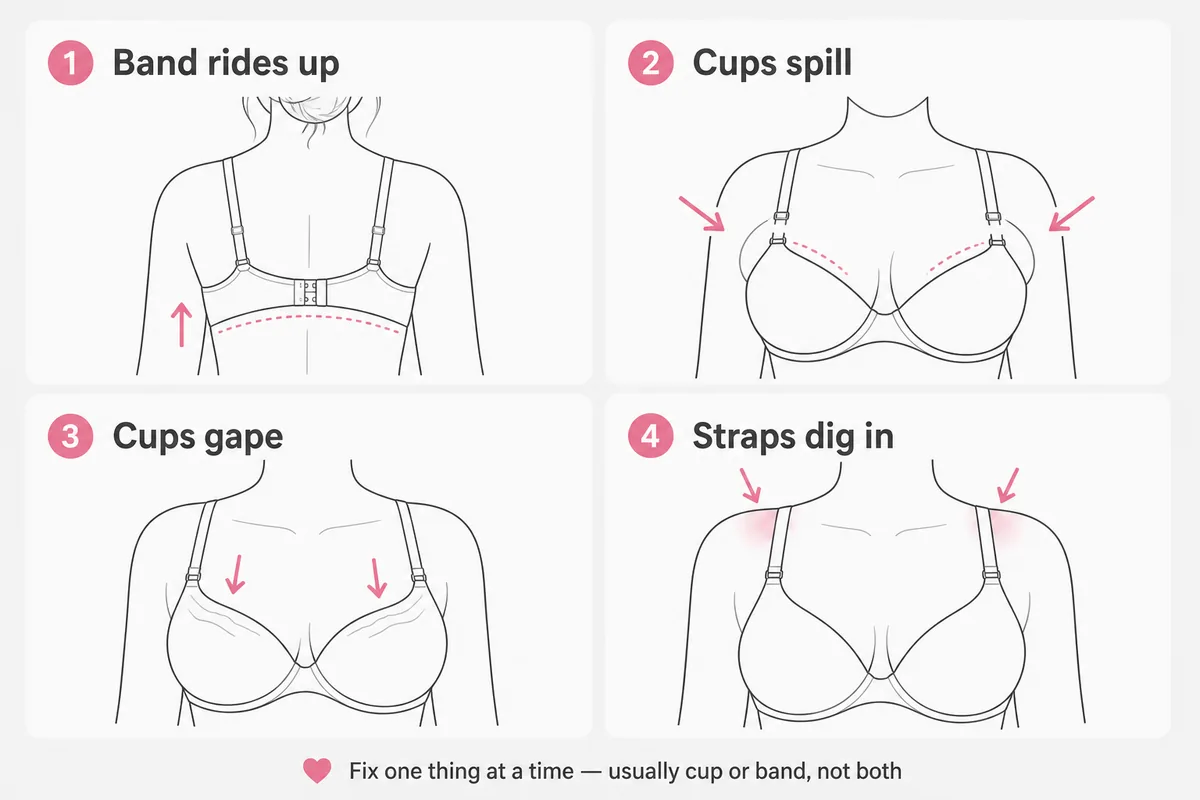
Measure for a 36 band
Soft tape, afternoon timing, skin-to-tape under the bust. Full illustrated steps: how to measure bra size.
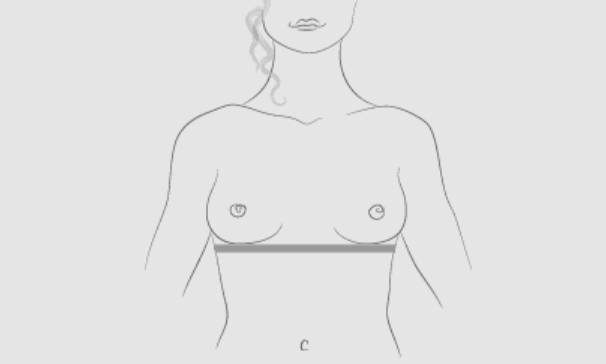
- 1
Snug underbust at the wire line
Measure where the band will sit, not at the natural waist. Keep the tape level front to back. For 36 candidates, snug underbust often lands near 32–34 inches before rounding to the labeled band.
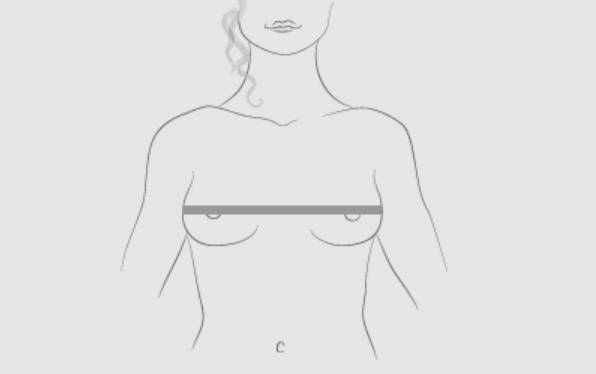
- 2
Standing and leaning bust
Take a standing bust measure and optionally a leaning bust for pendulous shapes. Use the larger relevant number when calculating cup depth on a 36 band.
- 3
Round band to even number
US sizing rounds to 36 when underbust is close. If between 35 and 37, try 36 and 38 with appropriate cups—pick the band that stays level, not the one that feels loose fastest.
- 4
Confirm hook placement
A new 36 should fasten comfortably on the loosest or middle hook. Need the tightest hook out of the box? Likely too big. Cannot hook at all? Try 38 with smaller cup or revisit tape.
36-band fit checks
- Wireless or wired, the band does not creep upward during normal walking.
- Center gore touches chest on underwire bras when cups are correct.
- No persistent red marks under the band that fade only after hours.
- Breast tissue is forward in the cups, not flattened under the band.
- Straps stay adjusted mid-range without sliding off rounded shoulders.
Before judging cups, scoop tissue fully into the cups (scoop & swoop).
Nearby sizes worth comparing
Same letter on a different band is not the same volume. Use these when you are between sizes or a style skips your label.
36B
Lighter cup on 36
When C cups look empty after scooping.
36C
Everyday mid cup
When B cuts in but the band is right.
34 band
Firmer sister family
When 36 never feels secure.
38 band
Wider band family
When every 36 digs despite sister cups.
Same size, different shape
The label is volume on a band—not a body type. If the number seems right but the bra still fights you, cup shape is often the missing piece.
Tall molded cups often gape at the top. Try a shorter or demi cup before assuming the letter is too big.
Shallow t-shirt cups can flatten you even when the letter is right. Seamed or deeper cups usually feel truer.
A natural center gap is normal. Side-support panels help center the silhouette without forcing the gore.
Scoop fully into the cups first. Persistent empty space at the top often means cup shape, not a smaller letter.
Common cups on a 36 band
Reading a 36 label correctly
If you moved up to 36 because cups felt tight on a 34, double-check: sometimes you needed a larger cup on 34, not a bigger band. A too-large band will ride up even when cups seem roomy at first glance.
36 pairs with everything from shallow 36A to fuller 36DD depending on bust-minus-band difference. The letter is independent of dress size—36B and 36D can wear the same top size with different bra needs.
EU banding often maps 36 near 80. When a European chart lists only 80C, compare both band and cup to your US size instead of swapping letters blindly.
Wider bands can feel more forgiving around the ribs, but forgiveness is not the same as support. A 36 that truly fits stays put when you twist and reach without strap tug-of-war.
Muscle gain, postpartum expansion, and age-related ribcage changes commonly land people on 36 after years on 34. Re-measure seasonally if weight or training shifts.
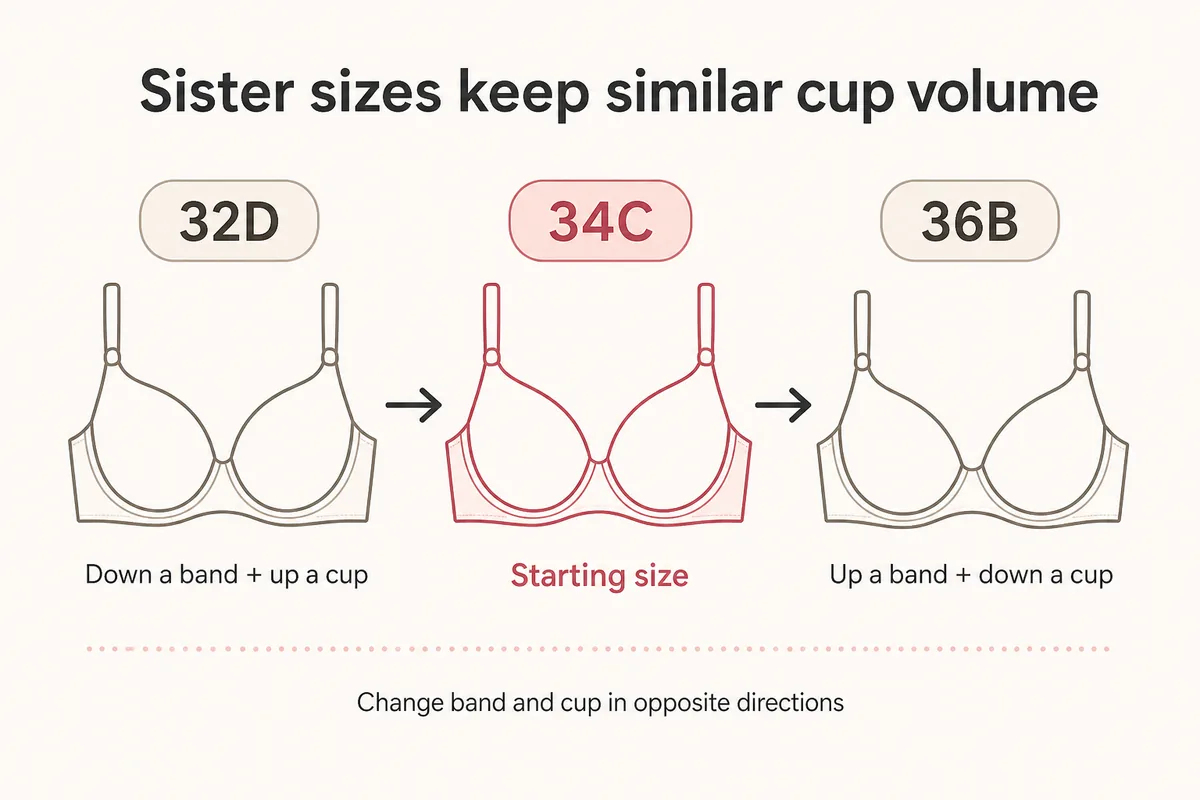
Sister sizes remain your best tool: 34D mirrors 36C volume with a firmer band; 38B mirrors 36C with more ease. Use them when a style skips your exact cup.
Who fits a 36 band well
Underbust snug measures often sit near 32–36 inches (about 81–91 cm), though brand stretch narrows the window. Anyone whose 34 band rides up on the tightest hook may be a 36 with the wrong cup, or still a 34 with too small cups—measure to tell.
Postpartum and menopause can widen the ribcage without dramatically changing bust projection, pushing former 34 wearers to 36 with a new cup letter. That is normal, not a failure of the old size.
Athletes with strong lats sometimes need 36 for circumference but smaller cups than expected—band and cup still decouple. Do not assume 36 means full cups.
Day-to-day fit cues on 36
- Center gore should sit against your sternum on underwire styles.
- Wireless 36 bras still need the band to stay put—stretch alone is not support.
- After weight change or postpartum, re-measure; 36 today may not be 36 next season.
- If the band feels OK but wires sit on breast tissue, try a larger cup before a larger band.
- Longline 36 styles can reduce back bulge under fitted knits without sizing up.
- Rotate bras; mid bands on 36 work hard and elastic recovers slower with single-bra rotation.
36-band mistakes
Skip this: Choosing 36 whenever 34 cups overflow.
Try this instead: Try 34D or 34DD on the firmer band before accepting a loose 36.
Skip this: Assuming 36 equals plus size.
Try this instead: 36 is ribcage measure; cup letter sets volume. Many 36B wear straight-size clothing.
Skip this: Buying 38 because hooks feel easier.
Try this instead: Easier hooks often mean a band too big—test 36 with larger cup or sister 34D.
Sister-size moves from 36
Want a snugger band with similar volume? 34D is a common sister to 36C; 34C sisters with 36B.
Need more ease around the ribs without losing cup? 38B can sister with 36C when the cup letter steps down.
Between 36C and 36D? Try both in the same style—half the time brand grading decides the winner.
Shopping for a 36 band
Mid-band sizes like 36C and 36B appear in most chains, but 36DD may require specialty brands with stronger wings and deeper cups.
Look for side support and wider hooks on fuller cups—fashion-lite 36 bands collapse under daily wear.
EU 80 tags help on international orders; still verify cup depth because US and EU molded cups differ in projection.
How we approach bra sizing
SizeFit tools use bust-to-underbust difference for cup signals, aligned with European clothing size standard EN 13402. Measurement vocabulary follows ISO 8559 work under ISO/TC 133.
Band and cup differences follow classic inch steps used with our calculator—then confirm with a real wear test.
Brands still cut different shapes under the same stamp. Measure, use sister sizes when needed, and keep the bra that stays level through a normal day. Fit guidance—not medical advice.
Frequently asked questions
Not by itself. Plus-size assortments often start at higher bands or extended cups, but a 36 band simply reflects ribcage measurement. Cup volume can be small or full on the same band.
Usually the band is too loose, the cup is too small (pushing the bra out of the fold), or both. Try a firmer 36 or a sister size with a smaller band and larger cup.
Band labels are not pure centimeter underbust. EU 80 is a common counterpart to US 36. For fit, measure underbust in cm or inches and compare to the brand chart.
Same band, one cup step more volume on 36C—often about an inch more bust-minus-band difference on US charts. Switch letter before changing band if hooks feel fine.
Yes—34D for a firmer band, 38B for a looser band, with similar cup volume. Confirm in a wear test because wire width still changes feel.
Related guides
Fitting a 36B Without Guesswork
36B is easy to grab when you want a softer band. The risk is needing 34C instead: similar volume, firmer anchor. If the back rides up, treat that as a band clue before you write off the letter B.
Living Comfortably in 36C
36C is a workhorse under everyday clothes: enough band for a mid ribcage, enough cup for shape. Absolute “C means medium” myths fail here—letter C is volume on a 36, not a personality trait.
34 Bra Size: Band Fit & Common Cups
Because 34 is everywhere in US stores, many people wear “34-something” out of habit. If bras feel loose in the back or empty in the cups, the band number may be right while the letter—or the reverse—is wrong.
Support Starts With a True 38 Band
Wider bands get judged unfairly. A well-fitted 38 should feel quietly supportive under tees—not like a costume size. When it fails, people often change the letter when the band tension was the real issue.