
Fitting a 36B Without Guesswork
36B is easy to grab when you want a softer band. The risk is needing 34C instead: similar volume, firmer anchor. If the back rides up, treat that as a band clue before you write off the letter B.
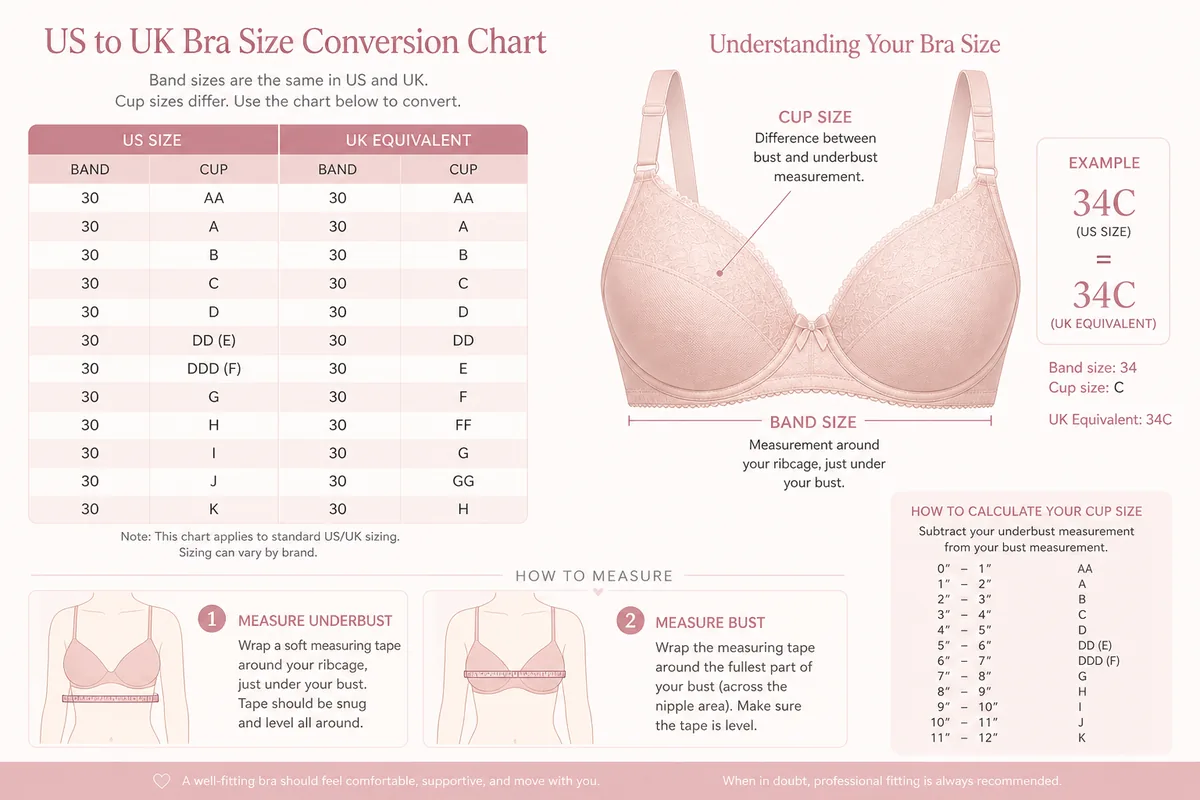
Quick answer
36B ≈ mid band + lighter cup (~2″ difference; EU often ~80B). Sisters: 34C (firmer) and 38A (easier). Keep the band that stays level; change the letter for volume.
| US / UK | EU (approx.) | Cup difference (chart) | Sister sizes |
|---|---|---|---|
| 36B | 80B | About 2" (≈5 cm) | 34C · 38A |
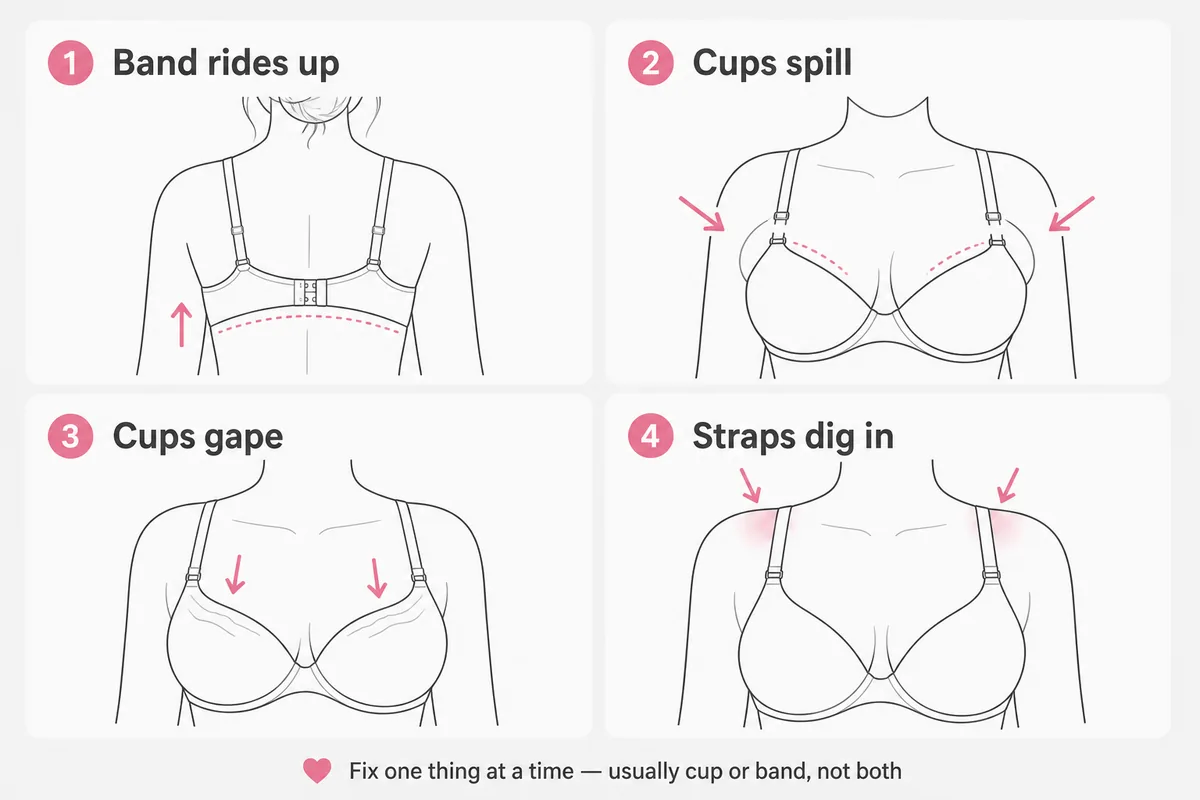
If this size feels wrong, try this next
Start from what you feel in the bra—not from a clothing size. Change one thing at a time: usually cup volume first if the band already stays level.
Came from tight 34B cups
Try next: 34C before committing to 36B
Cup too small feels like band too small.
36B gaps; band OK
Try next: 36A or stretch cup
Empty space is volume/shape, not “need 38.”
Band rides; cups seem fine
Try next: 34C sister
Preserve volume with a shorter band.
Straps slip off
Try next: Closer-set straps or racerback; check band
Loose bands make straps wander.
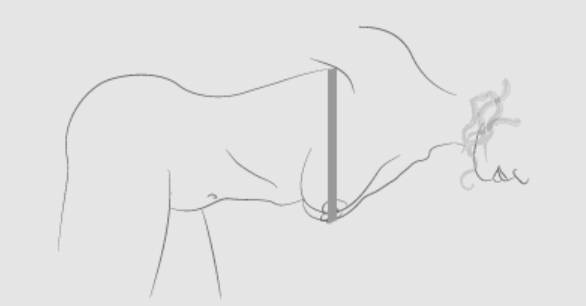
Measure for 36B
Soft tape, afternoon timing, skin-to-tape under the bust. Full illustrated steps: how to measure bra size.
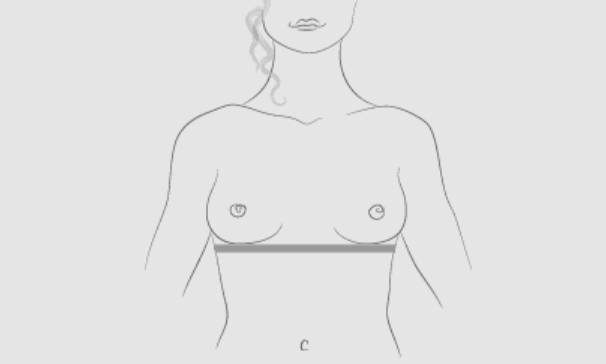
- 1
Underbust for 36 band
Measure snug under bust. If raw measure is 34–36 inches, 36 band is a logical trial after even rounding.
- 2
Bust difference for B
Fullest bust minus underbust near 2 inches suggests B cup on that band. Three inches pushes toward 36C—try both if between.
- 3
Check band in motion
Hook a trial bra on loosest row, raise arms, sit down. 36B band should not hike to shoulder blades.
- 4
Compare sisters
If 36B band feels loose, try 34C before 38A unless hooks dig—digging may mean too small cups pushing the frame.
36B checks
- No persistent gaping at cup top after scooping.
- Band parallel to floor in side mirror.
- Side tissue contained without muffin top at wings.
- Straps stay put without maximum tightening.
- Comfortable hook row is loosest or middle on a new bra.
Before judging cups, scoop tissue fully into the cups (scoop & swoop).
Nearby sizes worth comparing
Same letter on a different band is not the same volume. Use these when you are between sizes or a style skips your label.
36C
One cup up
When 36B cuts in.
34B
Same letter, firmer band
When 36 never anchors.
34C
Sister size
When cups fit but band is loose.
36 band hub
Band overview
Comparing all cups on 36.
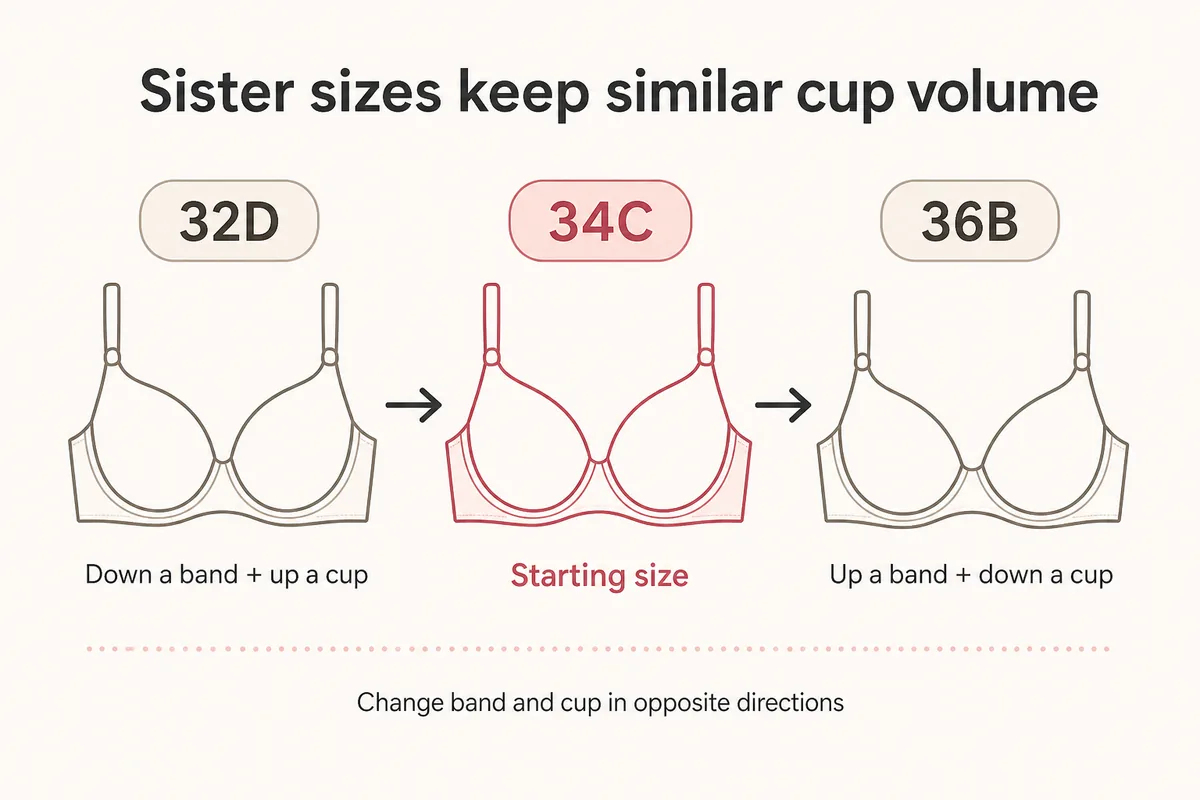
Sister sizes for 36B
Similar cup volume, different band tension. Full rule and chart: bra sister sizes.
- 34C
- 38A
Same size, different shape
The label is volume on a band—not a body type. If the number seems right but the bra still fights you, cup shape is often the missing piece.
Tall molded cups often gape at the top. Try a shorter or demi cup before assuming the letter is too big.
Projected 36B wearers often dislike thick push-up pads that steal depth near the wire.
A natural center gap is normal. Side-support panels help center the silhouette without forcing the gore.
Scoop fully into the cups first. Persistent empty space at the top often means cup shape, not a smaller letter.
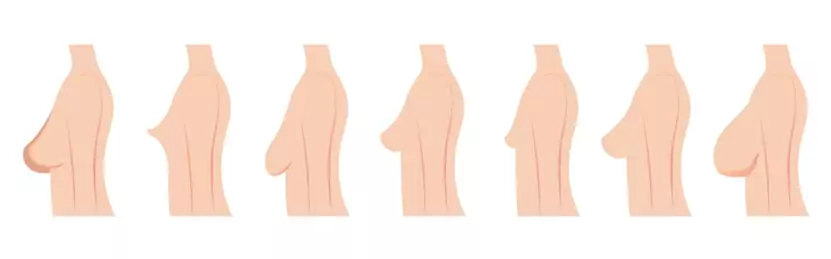
How to read 36B
Expect the band to feel secure on your ribs. If you chose 36 because 34 felt tight but cups still overflow, revisit cup letter on the smaller band before accepting 36B.
B cups on a 36 can look subtle under clothes yet still need the right shape—especially if you are wide-rooted rather than projected.
EU counterparts often sit near 80B. International orders should still follow the brand inch/cm chart, not guess from memory.
36B absolute cup volume exceeds 34B even though both are B letters—band scales the cup. Comparing letters without band numbers misleads.
Shallow molded 36B cups gap on projected tissue; unlined stretch cups often fit better with identical measurements.
Sister 34C and 38A help when 36B band feels wrong but cup volume seems close—fix band first, then letter.
Typical 36B wearers
Snug underbust often near 32–35 inches with bust-minus-band around two inches. Mid ribcage adults and some postpartum bodies land here when band widens but cup volume stays moderate.
Former 38A wearers with riding bands may drop to 36B for a firmer anchor. Former 34C wearers with tight hooks may move to 36B for ease—verify cups still fill.
36B is not junior or senior by definition—it is a measurement outcome. Ignore marketing labels on packaging.
36B-specific comfort notes
- Unlined bras flatter many 36B shapes; thick pads can create empty corners.
- Check armhole edges for chafing—wider bands sometimes need a softer wing.
- If the cups feel fine but hooks dig, confirm you are not wearing a stretched older 36 that forces tighter hooks.
- Sports styles: look for a defined band rather than thin elastic only.
- Sister 34C adds support when 36B band floats; 38A adds ease when 36B digs.
- Re-measure after core training—lats can change band feel without obvious weight change.
36B mistakes
Skip this: Defaulting to 36B after outgrowing 34B without measuring.
Try this instead: You may need 34C or 36C instead—letter and band both matter.
Skip this: Assuming gaping means cups too big.
Try this instead: Often shape mismatch or loose band—check band first, then try 36A or different cut.
Skip this: Jumping to 38A when cups spill.
Try this instead: Try 36C on the same band before loosening to 38.
Neighboring sizes worth trying
Sisters: 34C (snugger) and 38A (easier).
Gap at the apex with a firm band? 36A. Tissue escaping the cup lip? 36C.
If only wireless bras work, choose dense knit bands—flimsy lace 36B will not hold shape.
Buying 36B bras
Mid-volume B cups are stocked widely; look for shape descriptors (demi, full cup, balconette) when molded cups fail.
EU 80B is common counterpart—confirm return policy when trying new international brands.
Keep one firmer sister (34C) in mind for sports and one easier sister (38A) for bloating days if cycles affect fit.
How we approach bra sizing
SizeFit tools use bust-to-underbust difference for cup signals, aligned with European clothing size standard EN 13402. Measurement vocabulary follows ISO 8559 work under ISO/TC 133.
Band and cup differences follow classic inch steps used with our calculator—then confirm with a real wear test.
Brands still cut different shapes under the same stamp. Measure, use sister sizes when needed, and keep the bra that stays level through a normal day. Fit guidance—not medical advice.
Frequently asked questions
They are sister sizes with similar cup volume. 36B has a larger band and smaller cup letter; 34C has a smaller band and larger cup letter.
Common causes: cup too large, shape mismatch, or a band so loose the cups cannot stay aligned. Check band first, then cup.
Use underbust for the band and bust-minus-underbust for the cup. B is often near a 2-inch difference. Enter both measures in a calculator rather than relying on a single bust number.
Not inherently—36 is band width; B is moderate cup volume on that band. Clothing size labels do not map directly.
34C for a firmer band and 38A for a looser band with similar cup volume.
Related guides
Wearing a 36 Band With Confidence
A broader ribcage or an underbust in the mid-to-upper 30s often lands on 36—but grabbing 36 to “feel freer” when you actually need 34 plus more cup is a common trap that leaves the band riding up.
Living Comfortably in 36C
36C is a workhorse under everyday clothes: enough band for a mid ribcage, enough cup for shape. Absolute “C means medium” myths fail here—letter C is volume on a 36, not a personality trait.
Making Sense of 34B
34B shows up on more hangers than almost any other size—which is why it is both a genuine fit for many and a default guess for people who never measured. If it “never feels right,” change one variable at a time.
Sister Sizes Keep Cup Volume, Change the Band
When cups already sit well but the band digs or rides up, sister sizes let you change tension without throwing away the volume that worked. They are a fitting tool—not a reason to skip measuring.