
Sister Sizes Keep Cup Volume, Change the Band
When cups already sit well but the band digs or rides up, sister sizes let you change tension without throwing away the volume that worked. They are a fitting tool—not a reason to skip measuring.
Quick answer
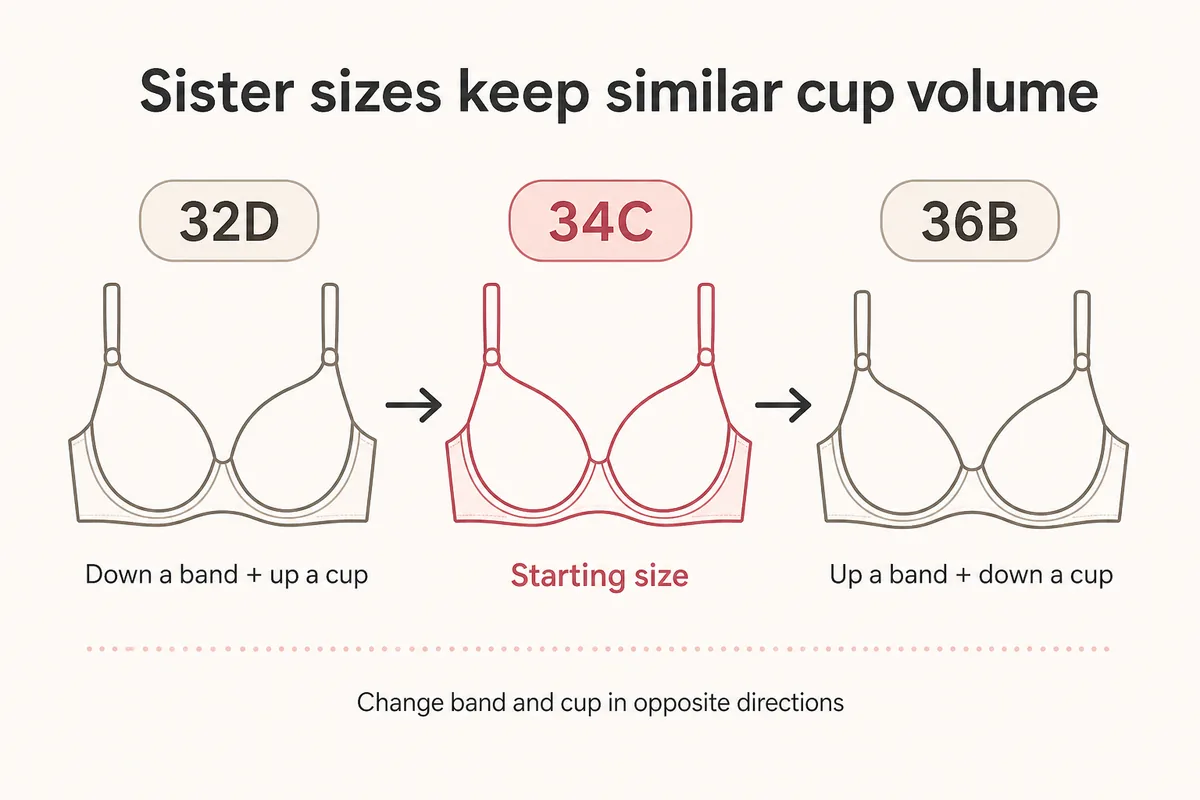
Sister sizes keep roughly the same cup volume while you change the band: down a band + up a cup (or the reverse). Example: 34C ≈ 32D ≈ 36B. Use them for tension or stock gaps—then re-check fit in that brand.
If this size feels wrong, try this next
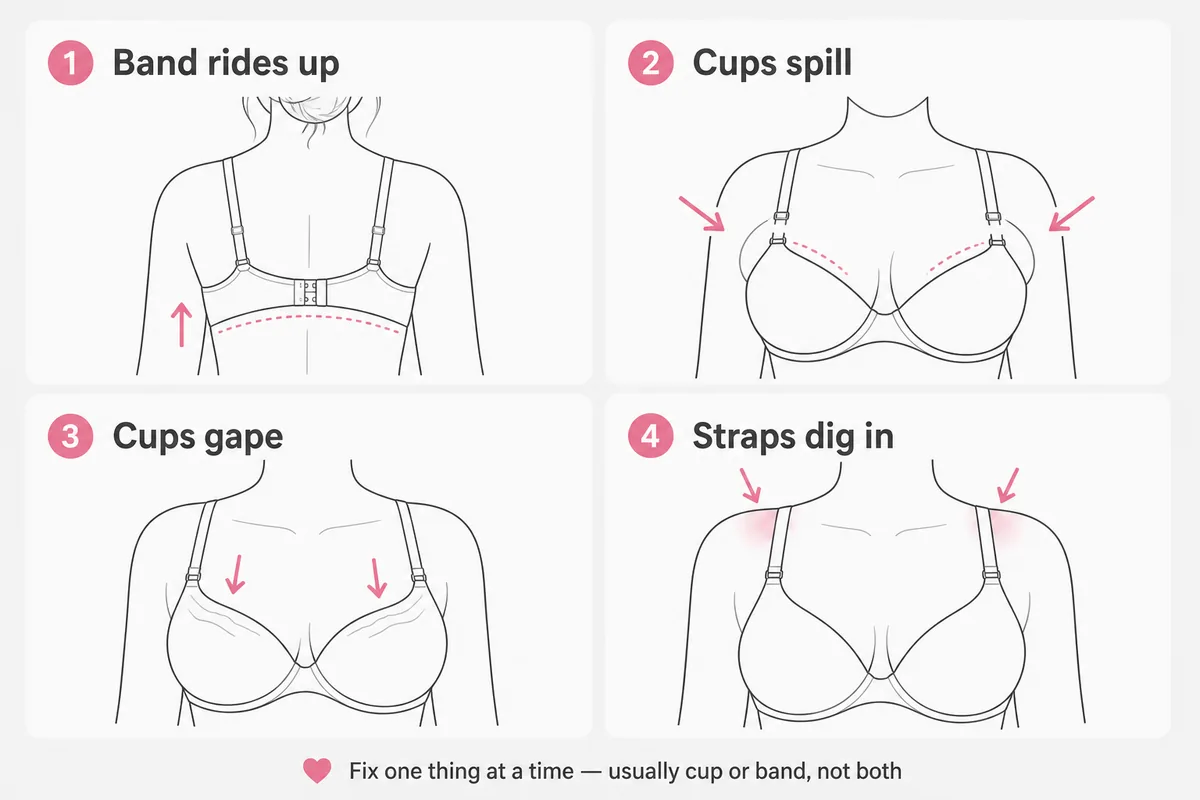
Start from what you feel in the bra—not from a clothing size. Change one thing at a time: usually cup volume first if the band already stays level.
Cups good; band rides up
Try next: Down a band + up a cup
Classic firmer sister move.
Cups good; band digs
Try next: Up a band + down a cup
Easier sister without losing volume.
Changed both band and cup the same way
Try next: Undo; change only opposite directions
Same-direction changes alter volume.
Sister feels totally different
Try next: Accept brand grading; re-fit in that brand
Sisters are approximate, not identical.
Use measurement with sisters
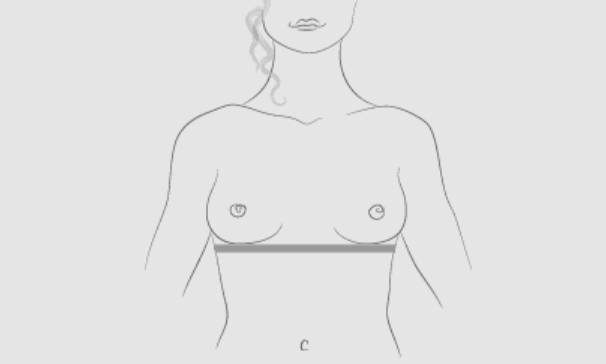
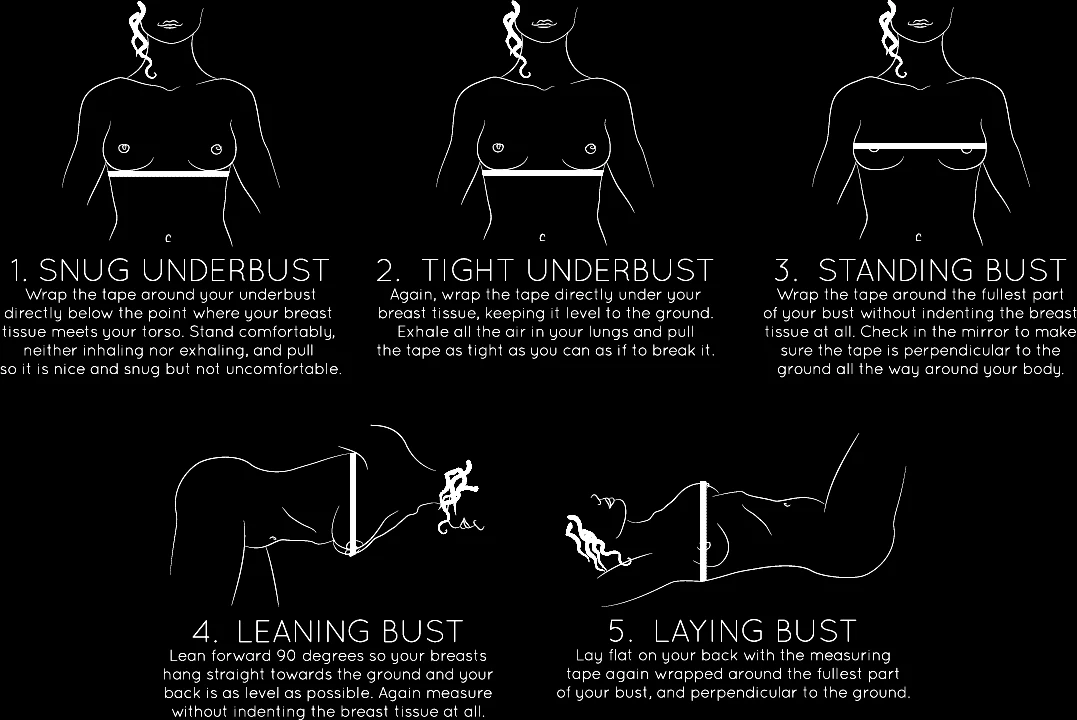
Soft tape, afternoon timing, skin-to-tape under the bust. Full illustrated steps: how to measure bra size.
- 1
Establish baseline size
Measure underbust and bust, calculate starting band and cup. Sisters pivot from a size that is close—not from random labels.
- 2
Identify the problem
Band issue or cup issue? Sisters fix band while holding volume. If cups gape or spill, change letter on same band first.
- 3
Move one diagonal step
Down band, up cup—or up band, down cup—one step at a time. Jumping two diagonals changes volume more than expected.
- 4
Wear-test the sister
Scoop, move, sit for ten minutes. A good sister feels like the same cup with a different hug at the ribs.
Confirm a sister size works
- Cup volume similar—no new spill or gap versus original size.
- Band behavior fixed—level back if old size rode up, or easier hooks if old size dug.
- Gore contact unchanged or improved, not worse.
- Straps need less tension when band issue was the root cause.
- Wire placement still on ribcage, not on breast tissue.
Before judging cups, scoop tissue fully into the cups (scoop & swoop).
Nearby sizes worth comparing
Same letter on a different band is not the same volume. Use these when you are between sizes or a style skips your label.
34B guide
Worked example
Seeing sisters on a common size.
34C guide
32D / 36B neighbors
Practicing the rule.
32DD guide
When stock is sparse
Using 34D as a bridge.
Sister size chart
US-style examples. Rows with * depend on whether the brand names the next step after DD as E or DDD.
| Your size | Common sisters |
|---|---|
| 32A | 30B · 34AA |
| 32B | 30C · 34A |
| 32C | 30D · 34B |
| 32DD | 30E* · 34D |
| 34B | 32C · 36A |
| 34C | 32D · 36B |
| 34D | 32DD · 36C |
| 34DD | 32E* · 36D |
| 36B | 34C · 38A |
| 36C | 34D · 38B |
| 36D | 34DD · 38C |
| 38C | 36D · 40B |
| 38D | 36DD · 40C |
Same size, different shape
The label is volume on a band—not a body type. If the number seems right but the bra still fights you, cup shape is often the missing piece.
Sister sizing fixes band tension. Cup shape (shallow vs projected) still needs the right cut—see the breast shape guide.
Tall molded cups often gape at the top. Try a shorter or demi cup before assuming the letter is too big.
Shallow t-shirt cups can flatten you even when the letter is right. Seamed or deeper cups usually feel truer.
The simple sister-size rule
Go down one band number step (usually 2 inches in US sizing) and up one cup letter to keep volume similar—for example 34C to 32D. Go up a band and down a cup for the other direction—34C to 36B.
This is a volume estimate, not a promise. Stretch, wire width, and breast shape still change how a bra feels. Treat sisters as try-on shortcuts.
Equivalent searches usually want this same idea: a neighboring band with a compensating cup letter when your exact tag is unavailable.
The cup ladder includes double letters—DD, DDD—so sister moves must follow the brand alphabet, not guesswork.
A tighter sister can feel more supportive even when volume matches because the band anchors better—many people prefer 32D over 34C for that reason.
Sister sizing fails when cups were wrong to begin with—if 34B cups gape, 32C will gape too. Fix cup volume first, then band.
When sister sizes help most
You found perfect cups in 34C but the band rides up—32D is the classic fix. Hooks dig on loosest row but cups fit? Try 36B before 34D.
Online shopping when 32DD is out of stock but 34D is available—sisters expand the cart without abandoning fit principles.
Between two band measures on tape—sisters let you test tension without changing cup volume twice.
When sister sizing helps most
- Cups fit, band rides up → try the tighter-band sister.
- Cups fit, band digs in → try the looser-band sister.
- Favorite style missing your size → jump to the closest sister in that line.
- Between two letters on one band → sisters let you test band tension separately from volume.
- Write your sisters on your phone—shopping gets faster.
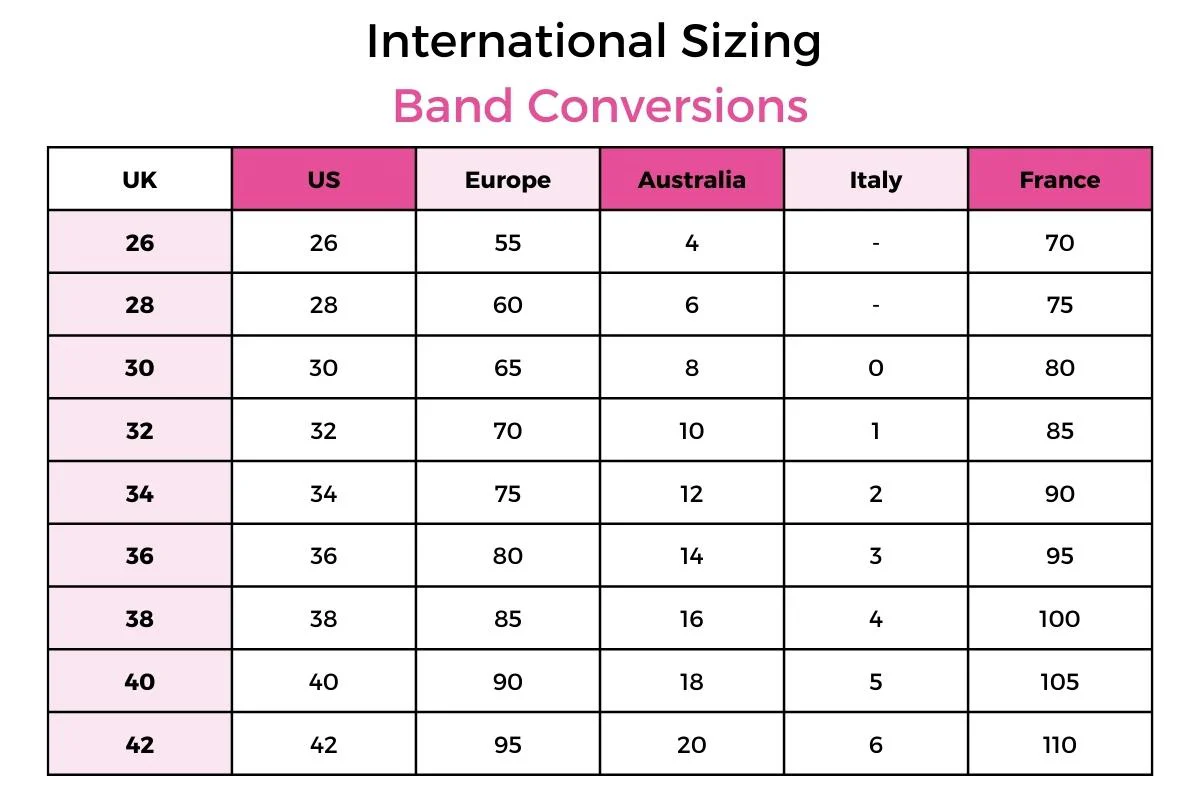
- UK vs US DD/E ladders differ—check chart before sistering across markets.
Sister-size mistakes
Skip this: Sizing up band repeatedly to fix cup spill.
Try this instead: Increase cup letter on correct band; sisters preserve volume, not fix too-small cups on wrong band.
Skip this: Assuming sisters are identical fit.
Try this instead: Wire width and stretch change feel—try on when possible.
Skip this: Skipping two cup steps when sistering.
Try this instead: Move one band step and one cup step only unless chart shows otherwise.
Mistakes to avoid
Do not keep sizing up the band to chase cup volume—that is how people end up in loose 38s with overflowing cups.
Do not assume every brand uses the same DD/E/DDD ladder when you sister across labels—check the letter chart once.
If neither sister feels right, the baseline cup may be wrong—return to measurement rather than chasing more diagonals.
Using sister sizes when you shop
Add two sisters to cart with free returns—compare band feel without store visits.
Stock shortages often hit odd combos like 32DD—34D sister saves the style when volume matches.
Document which sister each brand prefers—you may live in 34C in one line and 32D in another with same measurements.
How we approach bra sizing
SizeFit tools use bust-to-underbust difference for cup signals, aligned with European clothing size standard EN 13402. Measurement vocabulary follows ISO 8559 work under ISO/TC 133.
Sister-size examples follow the common opposite band-and-cup step used in fit education—approximate, not identical across brands.
Brands still cut different shapes under the same stamp. Measure, use sister sizes when needed, and keep the bra that stays level through a normal day. Fit guidance—not medical advice.
Frequently asked questions
They are band/cup combinations with similar cup volume. Example: 34B, 32C, and 36A are often treated as sisters. The band changes; the cup letter moves the opposite way.
No. Volume is approximate. A tighter band can feel more supportive even when cup volume matches, and cup shapes differ by brand.
Start from a size that fits in the cups, then move band and cup in opposite directions. Confirm with underbust and bust measurements when you can.
Commonly 32D (firmer band) and 36B (looser band) on US-style charts.
No—if cups gape or spill in your base size, fix the cup letter first. Sisters adjust band tension while holding similar volume.
Related guides
Making Sense of 34B
34B shows up on more hangers than almost any other size—which is why it is both a genuine fit for many and a default guess for people who never measured. If it “never feels right,” change one variable at a time.
Why 34C Feels Different From 34B
Moving from 34B to 34C often fixes spillage without touching the band—yet many people size up the band instead and lose the snug anchor they already had.
Fitting 32DD Without Settling
32DD is a real measured size—narrower ribs with fuller cups—not a contradiction. People often bounce to 34D for “easier shopping” and then fight a band that will not stay down.
DD vs DDD: Double D, Triple D & Letter Chart
DD and DDD are steps on a cup ladder, not a separate sizing universe. Confusion usually comes from tags that print E/F for the same steps—or from UK charts that place E differently.