
34 Bra Size: Band Fit & Common Cups
Because 34 is everywhere in US stores, many people wear “34-something” out of habit. If bras feel loose in the back or empty in the cups, the band number may be right while the letter—or the reverse—is wrong.
Quick answer
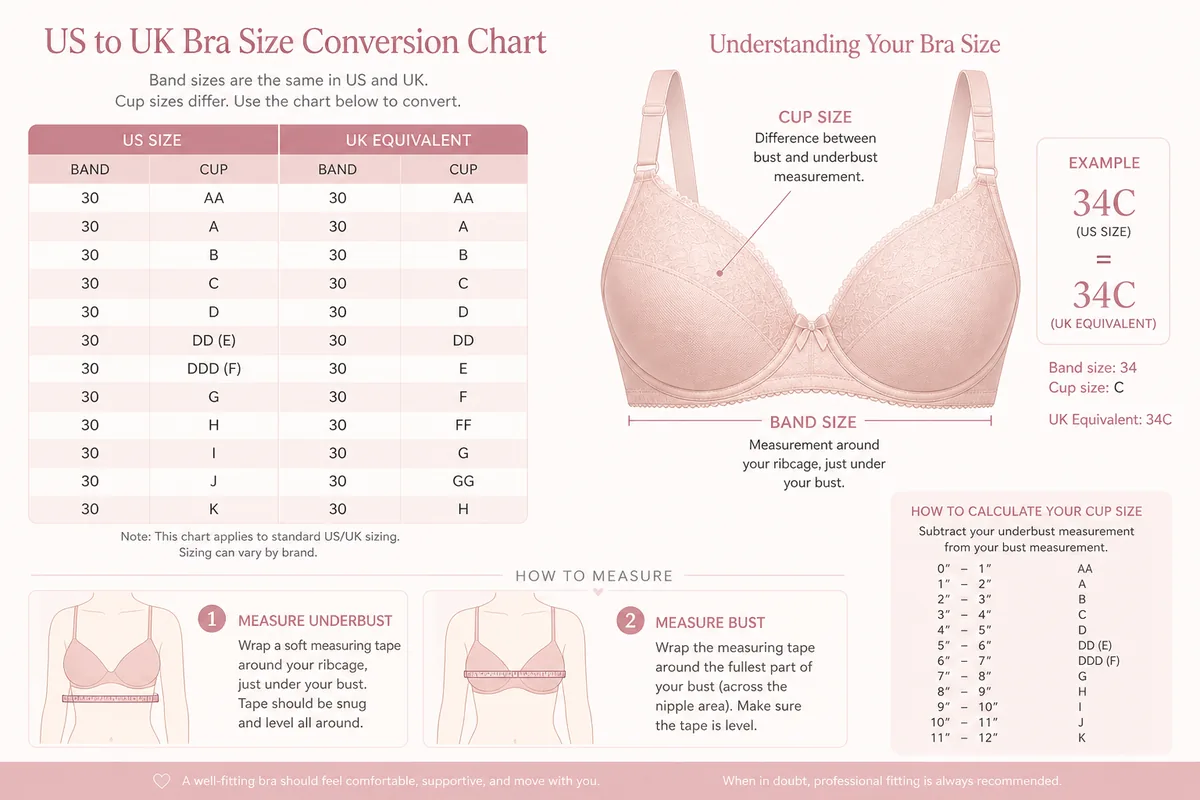
34 is a mid US/UK band (EU often ~75). Popular cups: 34B, 34C, 34DD—pick the letter from bust-minus-band, not dress size. Band should stay level; try 32D or 36B sister sizes if fit is off.
US / UK band: 34 · EU (approx.): 75
Pair with a cup letter for volume. The letter is relative to this band—not a clothing size.
If this size feels wrong, try this next
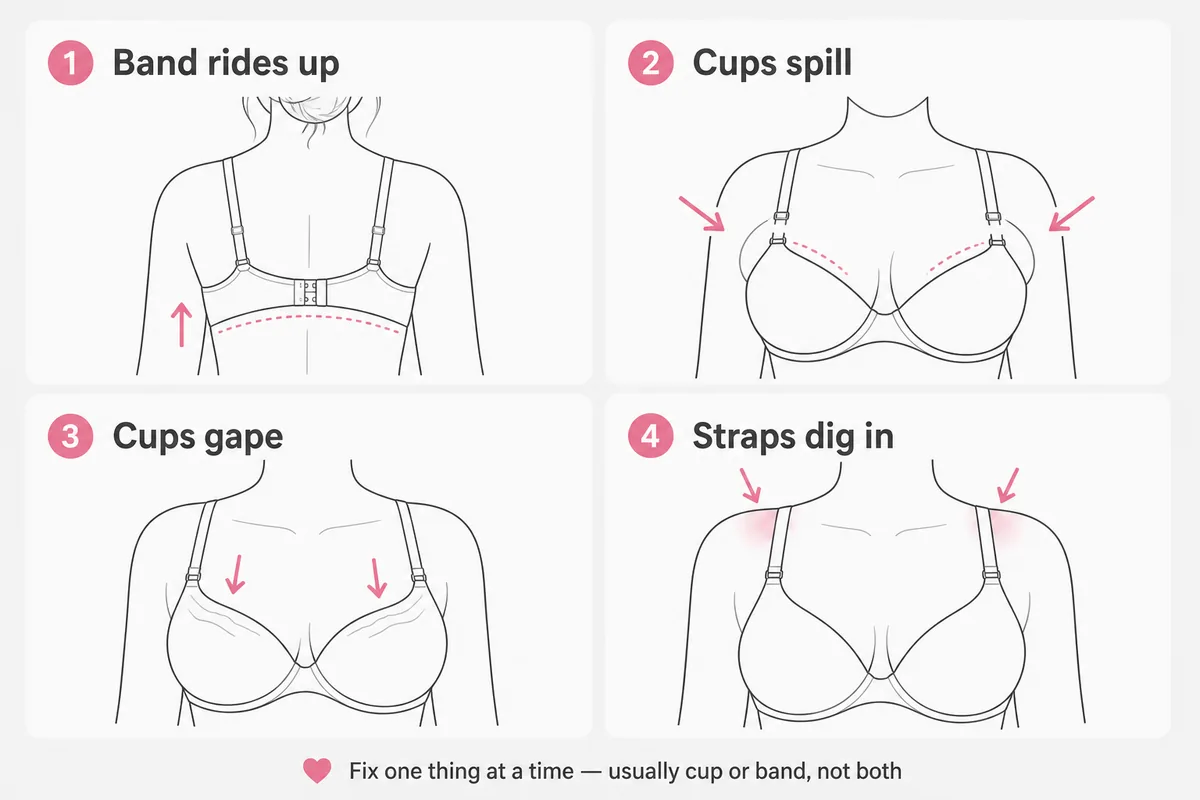
Start from what you feel in the bra—not from a clothing size. Change one thing at a time: usually cup volume first if the band already stays level.
34 band slides up during the day
Try next: 32 with a larger cup (sister) or a firmer 34 wing
A loose band cannot hold wires in your fold.
Cups cut in or spill at 34B
Try next: 34C or 34DD on the same band
Keep the band that matches your ribs; change volume first.
Only 34B is in stock and cups gape
Try next: 34A, or a stretchier cup shape in 34B
Shape mismatch mimics a wrong letter.
Hooks leave marks but band still rides
Try next: Larger cup on 34, not a looser 36 yet
Too-small cups force the frame upward while the elastic feels harsh.
Measuring for a 34 band
Soft tape, afternoon timing, skin-to-tape under the bust. Full illustrated steps: how to measure bra size.
- 1
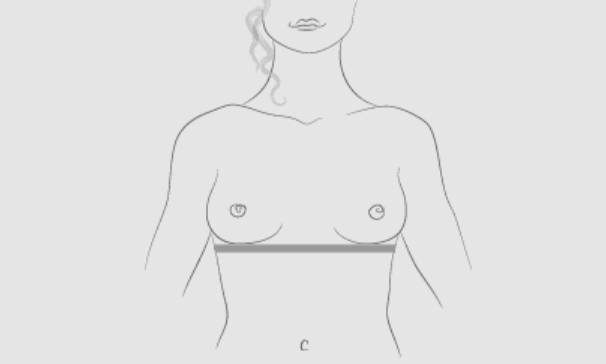
Underbust level and snug
Stand naturally, exhale gently, and measure under the bust where the band will sit. Keep the tape parallel. Write down snug inches or cm—do not add slack for comfort; the bra elastic provides ease.
- 2
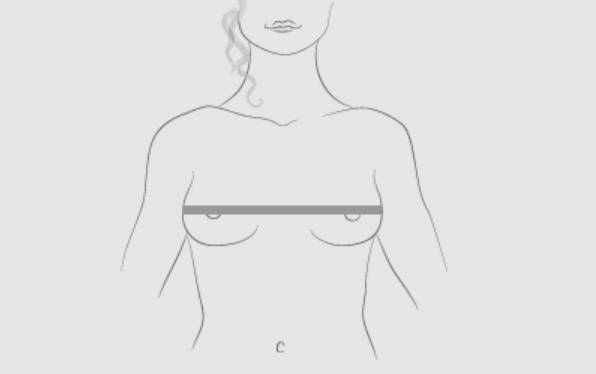
Bust at fullest point
Measure around the fullest part, usually nipple height, with the tape flat across the back. For pendulous shapes, lean forward slightly so tissue falls into the tape path.
- 3
Calculate cup from difference
Subtract underbust from bust. On many US charts, about 2 inches suggests B, 3 inches C, 5 inches DD. Use a calculator if math is not your strength—consistency matters more than perfection.
- 4
Validate with a wear test
Try your calculated 34 with one letter up and down. The best combo keeps the band level after ten minutes of movement, not just while standing still in a fitting room.
Wear-test checklist for 34
- Back band remains parallel to the floor after you reach overhead.
- Underwires encase breast tissue and rest on the ribcage, not on the breast.
- No quad-boob at the neckline when you scoop forward.
- Side seams or wings do not cut into armpit flesh.
- You can hook the bra on the middle or loosest row with room to tighten later.
Before judging cups, scoop tissue fully into the cups (scoop & swoop).
Nearby sizes worth comparing
Same letter on a different band is not the same volume. Use these when you are between sizes or a style skips your label.
34B
Often tried first
Starting point when charts suggest ~2″ cup difference.
34C
One cup up
When 34B spills after a full scoop.
34DD
Fuller cup on 34
When D still quads or wires sit on tissue.
32 band
Firmer band family
When 34 never stays level.

Same size, different shape
The label is volume on a band—not a body type. If the number seems right but the bra still fights you, cup shape is often the missing piece.
Tall molded cups often gape at the top. Try a shorter or demi cup before assuming the letter is too big.
Shallow t-shirt cups can flatten you even when the letter is right. Seamed or deeper cups usually feel truer.
A natural center gap is normal. Side-support panels help center the silhouette without forcing the gore.
Scoop fully into the cups first. Persistent empty space at the top often means cup shape, not a smaller letter.
Common cups on a 34 band
What the number 34 is telling you
The band number tracks underbust more than clothing size. If a 34 slides up toward your shoulder blades, you may need a smaller band or a different cup volume so the wire can sit in your fold instead of floating on breast tissue.
Because 34 racks are packed in every department store, it is easy to grab 34B by default. After measuring, plenty of wearers land on 34C, 34DD, or a sister size instead—same band, different letter, completely different comfort.
EU charts often place 34 near a 75 band. Use that only as a bridge when a site lists European numbers; cup naming still varies, especially around DD, E, and DDD.
A stable 34 should feel like a firm hug around the ribs, not a corset. You should be able to breathe and sit without the band migrating upward. If only the hooks on the tightest row feel secure, the bra may already be worn out or the size may be wrong.
Cup letters on 34 span shallow 34A to projected 34DD and beyond. Comparing yourself to someone else in 34B is meaningless without knowing bust-minus-band difference and breast shape.
Sister sizes let you keep 34 cup volume while testing band tension—32D when you need a firmer hug, 36B when you need ease—without jumping two problems at once.
Who typically wears a 34 band
Snug underbust measurements commonly fall in the low-to-mid 30-inch range (about 73–78 cm). That includes many average-height adults, not a single body type. Cup letters then spread from A through DD+ on the same band.
If you were fitted years ago as 34B and never re-measured, you might now be 32D or 34C. Weight change, hormonal cycles, and brand changes all shift fit without changing your clothing size.
Retail habit also plays a role: associates stock 34 heavily, so try-ons skew toward 34 even when 32 or 36 is anatomically closer. Bring a tape measure to override default assumptions.
Fit habits that keep a 34 working
- Check the back: the band should be as level as the front.
- On a new bra, start on the loosest hook so you can tighten as elastic softens.
- Scoop breast tissue into the cups before judging whether 34B vs 34C is right.
- If only one size is in stock, prefer the correct band over close enough cups.
- Log which brands run tight or shallow on your 34—future orders get faster.
- Replace when the band stretches to ride up on the tightest hook despite proper washing.
34-band pitfalls to avoid
Skip this: Assuming 34B is average so it must be right for you.
Try this instead: Measure underbust and bust difference; 34 is just the band anchor.
Skip this: Moving to 36 when cups feel tight on 34.
Try this instead: Try 34C or 34D first—looser bands hide cup problems until straps hurt.
Skip this: Ignoring sister sizes when your exact 34C is sold out.
Try this instead: 32D or 36B preserves volume while fixing band feel.
Tweaks around a 34 band
Cups gap at the top on 34B? Try 34A, a different cup shape, or confirm you scooped fully before downsizing.
Need the same cup feel with a firmer hug? Look at 32C (sister to 34B) or 32D (sister to 34C).
Hooks dig but band stays put? Softer wing fabrics or a longline 34 can spread pressure without going to 36.
Buying bras in a 34 band
Mall brands excel at 34B and 34C basics; fuller cups on 34 often live in specialty lines. Filter by both band and cup online instead of browsing generic 34 tags.
Read reviews for runs small in band or shallow in cup—34DD in one line can equal 34D in another. Keep a personal fit note on your phone.
EU 75 conversions help on international sites, but always open the size chart PDF. Letter duplication (DD/E) trips up even experienced shoppers.
How we approach bra sizing
SizeFit tools use bust-to-underbust difference for cup signals, aligned with European clothing size standard EN 13402. Measurement vocabulary follows ISO 8559 work under ISO/TC 133.
Band and cup differences follow classic inch steps used with our calculator—then confirm with a real wear test.
Brands still cut different shapes under the same stamp. Measure, use sister sizes when needed, and keep the bra that stays level through a normal day. Fit guidance—not medical advice.
Frequently asked questions
Measure snugly under your bust. Many people whose underbust sits near the low-to-mid 30-inch range try a 34, then confirm with how the bra sits through a full day—not just a dressing-room glance.
It is heavily stocked, which is not the same as average for every body. Average figures vary by country and study. Measure instead of chasing a single normal size.
Often around EU 75 for the band number. Cup letters may be written differently (for example DD vs E), so match both number and letter on the product chart.
Yes. Stretch, hook spacing, and wire width change fit. Use the brand chart and sister sizes rather than forcing one universal 34.
Move when the band rides up (often too loose—try 32 with larger cup) or digs relentlessly on the loosest hook (try 36 with smaller cup). Cup fit should drive letter changes, not band jumps alone.
Related guides
Making Sense of 34B
34B shows up on more hangers than almost any other size—which is why it is both a genuine fit for many and a default guess for people who never measured. If it “never feels right,” change one variable at a time.
Why 34C Feels Different From 34B
Moving from 34B to 34C often fixes spillage without touching the band—yet many people size up the band instead and lose the snug anchor they already had.
Owning a True 34DD Fit
Plenty of people discover 34DD only after leaving a too-small 34C/D or a stretched 36. The win is keeping a common band while admitting the cup volume you actually need.
Sister Sizes Keep Cup Volume, Change the Band
When cups already sit well but the band digs or rides up, sister sizes let you change tension without throwing away the volume that worked. They are a fitting tool—not a reason to skip measuring.