
DD vs DDD: Double D, Triple D & Letter Chart
DD and DDD are steps on a cup ladder, not a separate sizing universe. Confusion usually comes from tags that print E/F for the same steps—or from UK charts that place E differently.
Quick answer
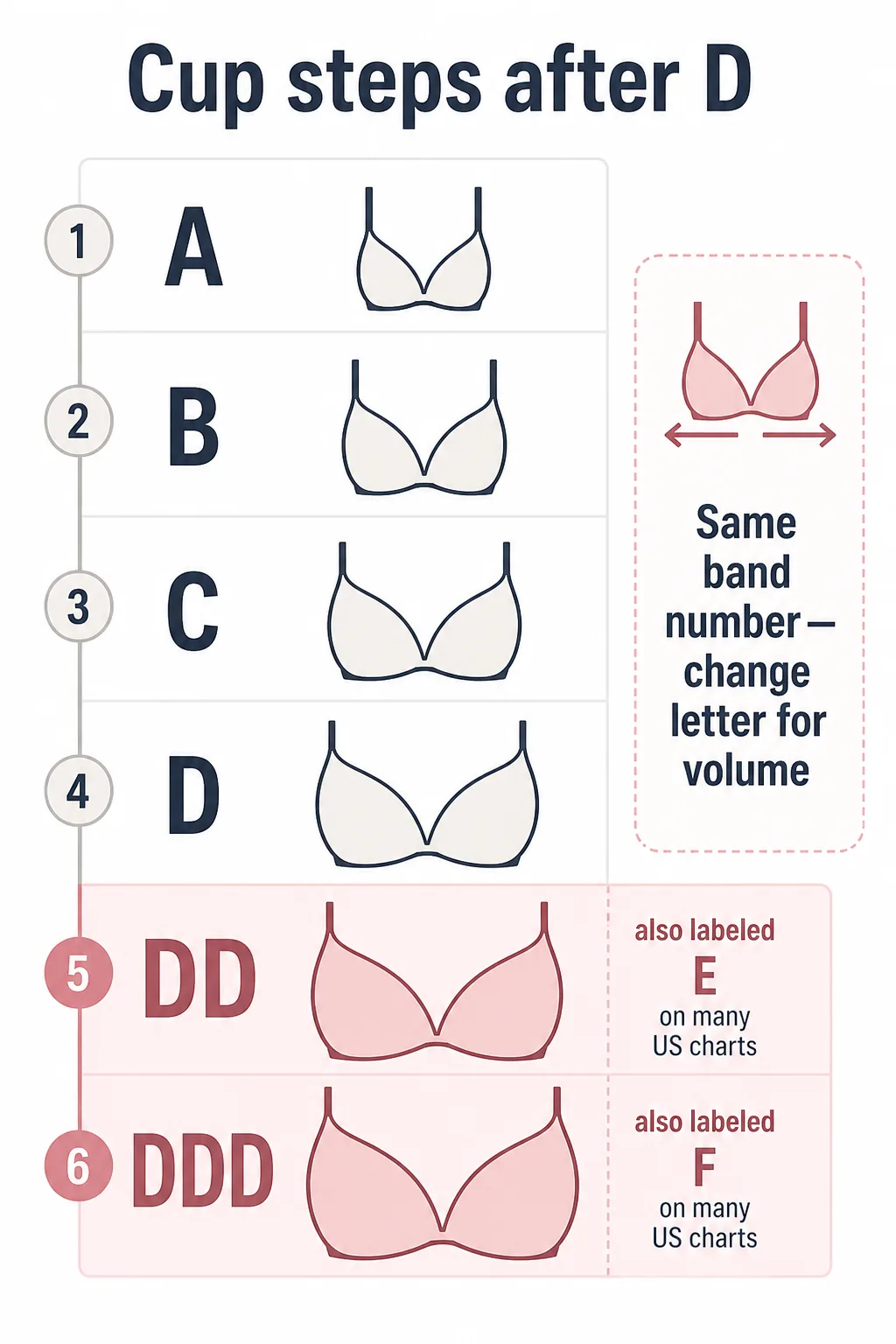
Double D (DD) is one cup step after D; triple D (DDD) is one step after DD—often also labeled E and F on US tags. Try DD before DDD on the same band when D cups spill.
If this size feels wrong, try this next
Start from what you feel in the bra—not from a clothing size. Change one thing at a time: usually cup volume first if the band already stays level.
D spills; unsure DD vs size-up band
Try next: Same band, try DD
Volume first when the band already fits.
DD still cuts in
Try next: DDD/F on the same band
Next step, not automatically a bigger band.
US DD vs UK E confusion
Try next: Compare that brand’s chart rows
Alphabets disagree across markets.
Only find DD by buying 36
Try next: Specialty 34DD / 32DD
Keep the band that matches your ribs.
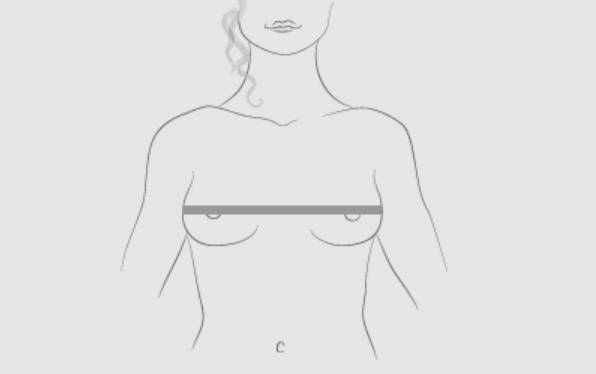
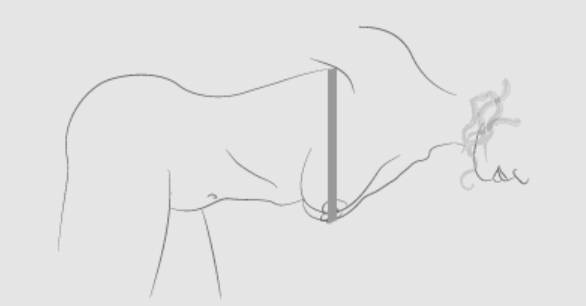
Measure cup steps accurately
Soft tape, afternoon timing, skin-to-tape under the bust. Full illustrated steps: how to measure bra size.
- 1
Fix band first
Correct band anchor makes cup letters meaningful. Loose band pushes people toward DDD when they need 34DD on a firm 34.
- 2
Bust minus underbust
About 4 inches often maps near D, 5 near DD, 6 near DDD on US inch charts—brand grading varies.
- 3
Try one letter step
From D, try DD on same band with scoop test. Still spill? Then try DDD—do not skip DD unless chart shows merged letters.
- 4
Read brand ladder row
Screenshot whether E shares a row with DD or sits alone—that single row prevents two-cup ordering errors.
Know DD vs DDD in wear
- DD: smooth neckline after scoop, gore touches sternum, no wire on tissue.
- DDD: same checks—if DD still spills, DDD is next step, not bigger band.
- Compare wire length—DDD needs depth, not just wider strap.
- Straps mid-tension when band carries weight in both DD and DDD.
- No quad-boob in fitted tops at either letter when fit is correct.
Before judging cups, scoop tissue fully into the cups (scoop & swoop).
Nearby sizes worth comparing
Same letter on a different band is not the same volume. Use these when you are between sizes or a style skips your label.
34DD
Common band + DD
Applying letters to a real size.
32DD
Narrow band + DD
Petite frame with fuller cups.
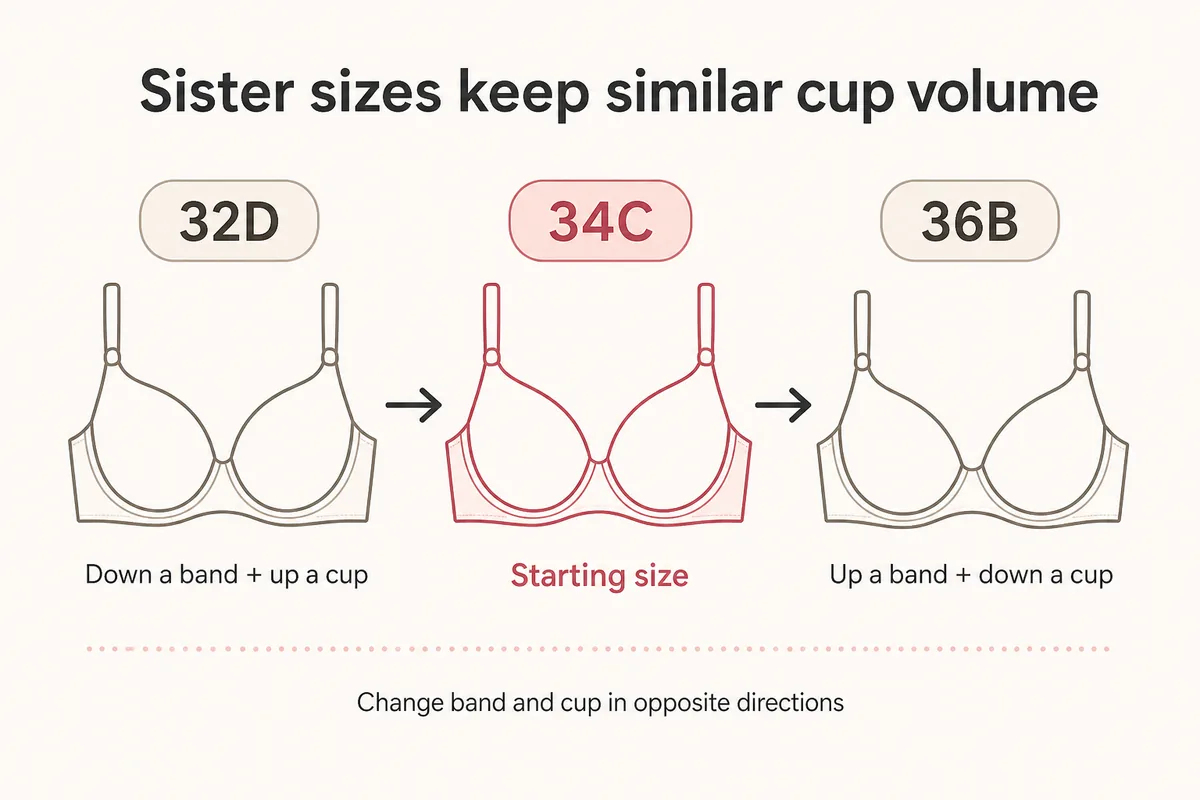
Sister sizes
34DD ↔ 36D
Stock or tension issues.
34C
Fewer cup steps
When DD feels clearly roomy.
Letter ladder (typical US retail)
| Cup step | Also written as | Relative to D |
|---|---|---|
| D | D | After C |
| DD | Double D · E (many US charts) | One step larger than D |
| DDD | Triple D · F (many US charts) | One step larger than DD |
Same size, different shape
The label is volume on a band—not a body type. If the number seems right but the bra still fights you, cup shape is often the missing piece.
Tall molded cups often gape at the top. Try a shorter or demi cup before assuming the letter is too big.
Shallow t-shirt cups can flatten you even when the letter is right. Seamed or deeper cups usually feel truer.
A natural center gap is normal. Side-support panels help center the silhouette without forcing the gore.
Scoop fully into the cups first. Persistent empty space at the top often means cup shape, not a smaller letter.

How the letters usually progress
On many US charts, cup steps run C, D, DD (sometimes called E or double D), DDD (sometimes F or triple D), then G and beyond. Each step is commonly about one more inch of bust-minus-band difference.
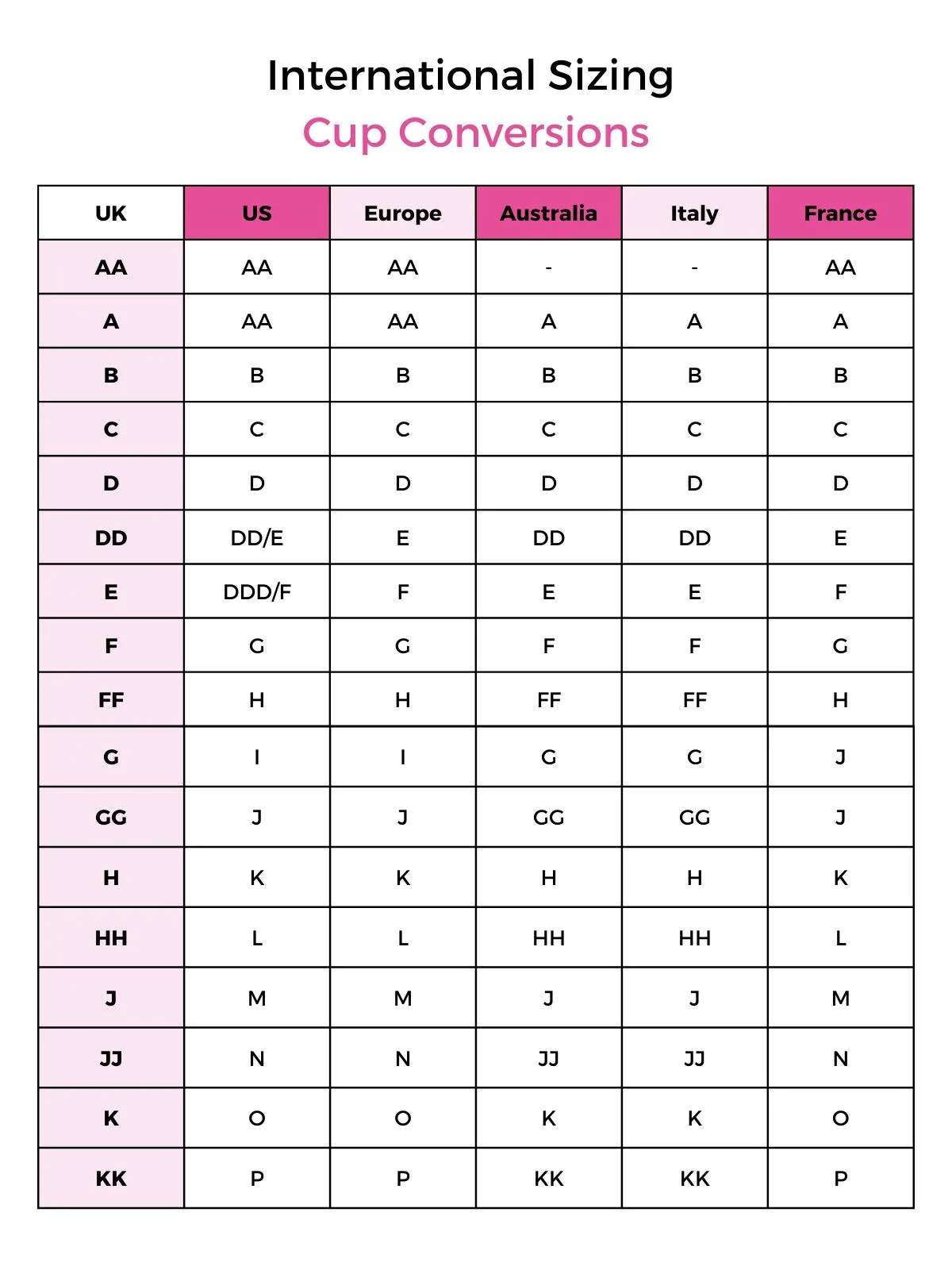
UK charts often keep DD and then use E, F, FF differently from US department-store letters. That is why a 34DD in one brand can feel unlike another 34DD.
EU letters may skip the double-letter look entirely (E, F, G…). Convert using the brand chart rather than the letter alone.
Double D marketing language usually means DD—the cup step—not two full sizes above D. Triple D usually means DDD.
Jumping from D to DDD skips DD entirely—two volume steps. If D cups spill, try DD before DDD unless measurement clearly supports the larger jump.
Band number still scales absolute volume: 32DD and 38DD are not the same amount of tissue even when letters match.
Who needs DD vs DDD clarity
Shoppers crossing US mall brands, UK full-bust lines, and EU sites see E and F used differently—this page prevents ordering the wrong step.
Anyone spilling in D cups but unsure whether to try DD or DDD benefits from one-letter-at-a-time tries on the same band.
People told they are double D without a band number need both parts—DD on 32 vs 38 are different fittings.
Practical shopping tips for DD/DDD
- If D cups quad or spill after scooping, try DD before changing the band.
- If DD still cuts in at the wire, DDD/F is the next volume step—not automatically a bigger band.
- Read the product size chart once when you see both DD/E written on a single row.
- Sister sizes still apply: 34DD and 36D is a common volume-preserving move.
- UK imports: verify whether E is DD-equivalent or next step.
- Do not trust double D slang on packaging—find the letter on the chart row.
DD/DDD confusion mistakes
Skip this: Treating DD as one size fits all across countries.
Try this instead: Open each brand cup ladder—US DD and UK E may differ.
Skip this: Skipping DD and buying DDD when D spills slightly.
Try this instead: Try DD first—one inch step on many charts.
Skip this: Assuming DDD always needs bigger band.
Try this instead: Increase cup letter on stable band before band upsize.
Double D vs triple D in plain language
Double D usually means the DD step. Triple D usually means DDD. Neither term is standardized in law—packaging marketing still needs the chart.
When a site lists E cup beside DD, treat them as the same rung unless the brand shows separate rows for each.
If between DD and DDD in one brand, try both—half the time grading decides when charts cannot.
Buy DD and DDD with fewer errors
Full-bust brands document ladders clearly—use them when mall tags confuse E and DD.
Order baseline and one letter up with free returns when trying a new label.
Link cup step to fit signs—spill means larger letter, gap means smaller, band ride-up means band or sister fix.
How we approach bra sizing
SizeFit tools use bust-to-underbust difference for cup signals, aligned with European clothing size standard EN 13402. Measurement vocabulary follows ISO 8559 work under ISO/TC 133.
Letter ladders reflect common US retail naming; UK/EU charts may place E/F differently. Use the product chart once.
Brands still cut different shapes under the same stamp. Measure, use sister sizes when needed, and keep the bra that stays level through a normal day. Fit guidance—not medical advice.
Frequently asked questions
In many US charts, yes—DD and E share a row. In some UK charts, E is a different step. Check the specific brand ladder.
DDD is typically one cup volume step larger than DD (often about one more inch of difference). You should notice more room in the cup, not a looser band.
DD is simply further along the cup scale than D. Absolute volume still depends on the band number—32DD and 38DD are not the same amount of tissue.
Many US charts go DDD then G; UK charts may use F, FF, G differently. Always follow the printed ladder.
Only if band fit tests fail. Most spill fixes are DD or DDD on the same band you already wear in D.
Related guides
Owning a True 34DD Fit
Plenty of people discover 34DD only after leaving a too-small 34C/D or a stretched 36. The win is keeping a common band while admitting the cup volume you actually need.
Fitting 32DD Without Settling
32DD is a real measured size—narrower ribs with fuller cups—not a contradiction. People often bounce to 34D for “easier shopping” and then fight a band that will not stay down.
Sister Sizes Keep Cup Volume, Change the Band
When cups already sit well but the band digs or rides up, sister sizes let you change tension without throwing away the volume that worked. They are a fitting tool—not a reason to skip measuring.
Why 34C Feels Different From 34B
Moving from 34B to 34C often fixes spillage without touching the band—yet many people size up the band instead and lose the snug anchor they already had.