
Is 32D Your True Bra Size?
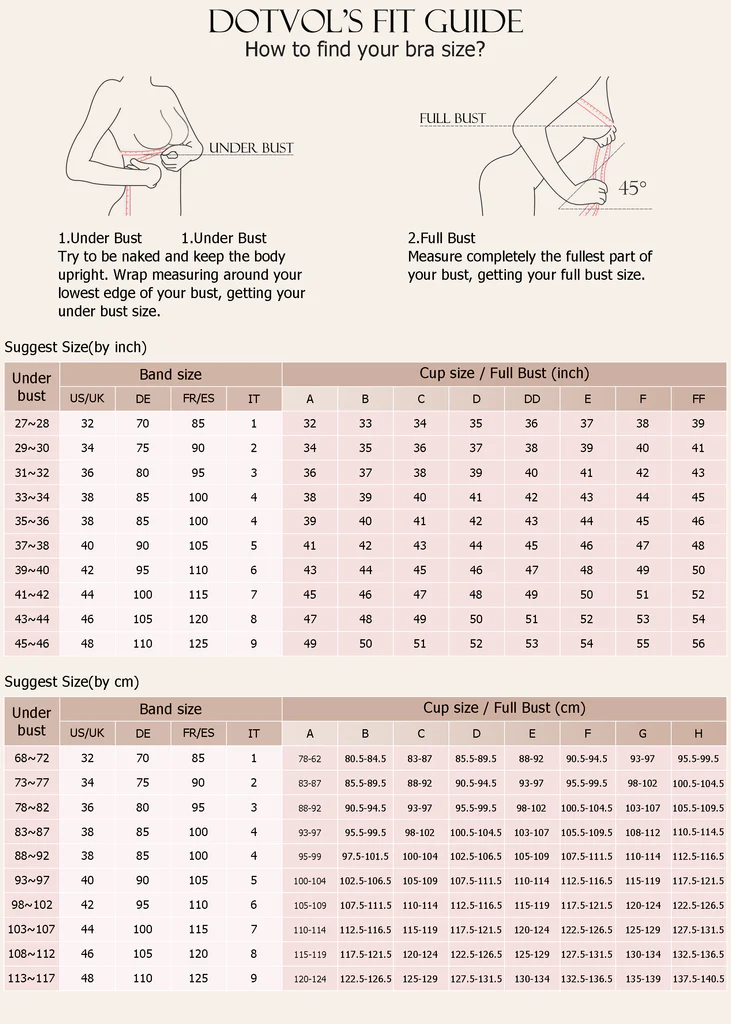
32D pairs a 32 band with a D cup. Start here if your underbust lands near 32 and your bust-minus-band is about 4 inches—then confirm with a scoop-and-swoop try-on, not clothing size.
Quick answer
32D is a US/UK size: band 32 (EU often ~70) with cup D (often near EU D). Sister sizes 30DD and 34C keep similar volume when the band feels wrong.
| US / UK | EU (approx.) | Cup difference (chart) | Sister sizes |
|---|---|---|---|
| 32D | 70D | About 4" (≈10 cm) | 30DD · 34C |
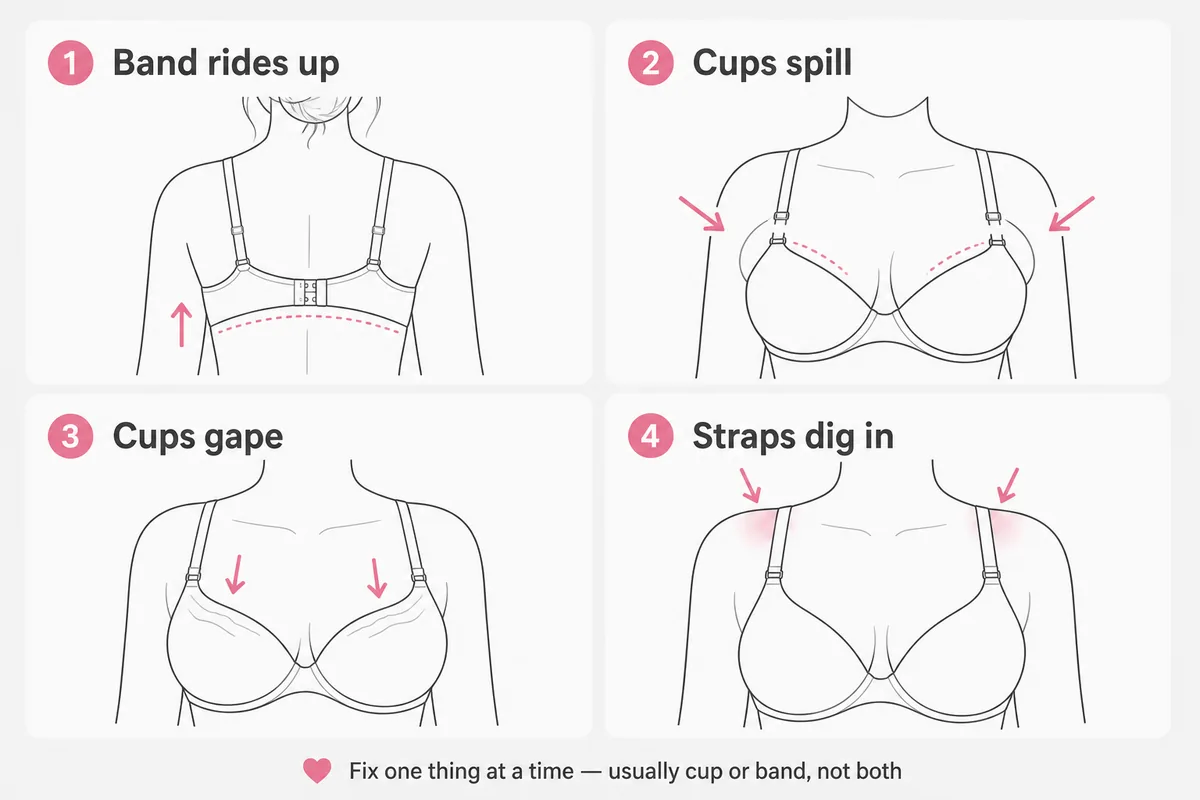
If this size feels wrong, try this next
Start from what you feel in the bra—not from a clothing size. Change one thing at a time: usually cup volume first if the band already stays level.
Band rides up on the tightest hook
Try next: Stay near 32; add cup volume or try sister 30DD
Overflow can push a correct band out of place; a bigger band often hides the real issue.
Band digs in on the loosest hook
Try next: 34C
Sister sizing keeps volume while giving the ribs more ease.
Cups wrinkle but band feels good
Try next: Smaller cup letter on 32
Empty fabric is volume or shape mismatch, not a reason to size up the band.
Quad-boob or side spill after scooping
Try next: Larger cup on 32, or a deeper-cup style in 32D
Spill is often cup volume or shape, not automatically a bigger band.
Measure for 32D
Soft tape, afternoon timing, skin-to-tape under the bust. Full illustrated steps: how to measure bra size.
- 1
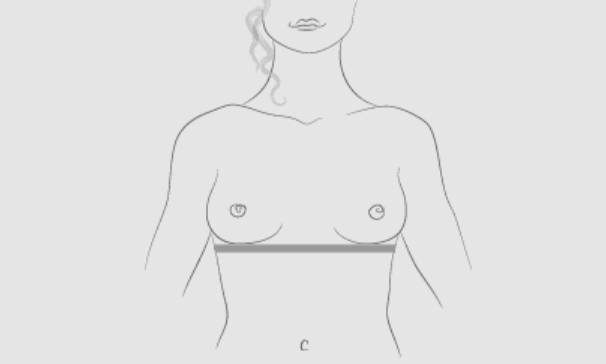
Snug underbust
Wrap a soft tape under the bust, level around the back. Round toward even band 32 when your raw number sits near that range.
- 2
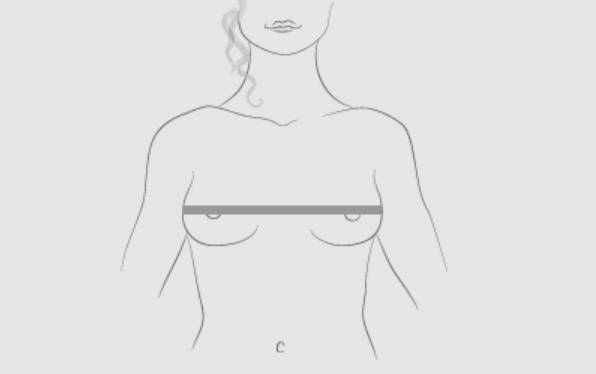
Bust at the fullest point
Lean slightly forward and measure the fullest bust without compressing tissue. Keep the tape parallel to the floor.
- 3
Check ~4" difference
Subtract underbust from bust. Near 4 inches suggests D on a 32 band. Half-inch gaps may still wear as 32D depending on brand.
- 4
Confirm in a bra
Try 32D and one sister size. Scoop all tissue into the cups, fasten on the loosest hook, and check that the band stays level when you raise your arms.
32D fit checks
- Band stays horizontal across your back when you lift arms.
- Two fingers fit under the front band—snug, not strangling.
- Center gore touches the sternum on underwire styles.
- No tissue trapped under the wire after scooping.
- Straps do not leave deep red grooves by midday.
Before judging cups, scoop tissue fully into the cups (scoop & swoop).
Nearby sizes worth comparing
Same letter on a different band is not the same volume. Use these when you are between sizes or a style skips your label.
32C
One cup down
When 32D is close but cup volume feels off.
32DD
One cup up
When 32D is close but cup volume feels off.
30DD
Sister size
When the 32 band digs or floats but cup volume feels right.
34C
Sister size
When the 32 band digs or floats but cup volume feels right.
30D
Same letter, firmer band
When 32 never stays level.
34D
Same letter, easier band
When 32 digs despite correct cups.
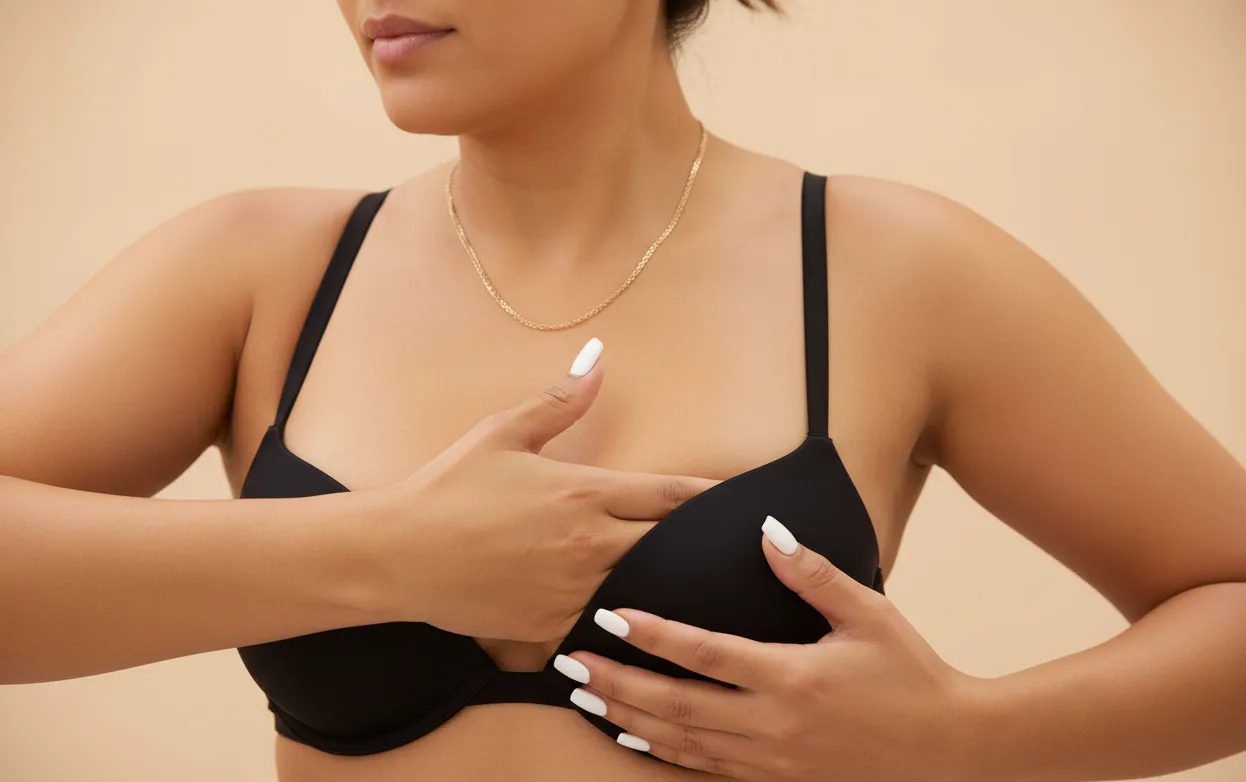
Sister sizes for 32D
Similar cup volume, different band tension. Full rule and chart: bra sister sizes.
- 30DD
- 34C
Same size, different shape
The label is volume on a band—not a body type. If the number seems right but the bra still fights you, cup shape is often the missing piece.
Tall molded 32D cups may gape at the top—try a shorter or stretch cup before dropping a letter.
Shallow t-shirt cups can flatten you even when the letter is right. Seamed cups usually feel truer.
A natural center gap is normal. Side-support panels help without forcing the gore.
Scoop fully first. Empty space at the top often means cup shape, not a smaller letter.
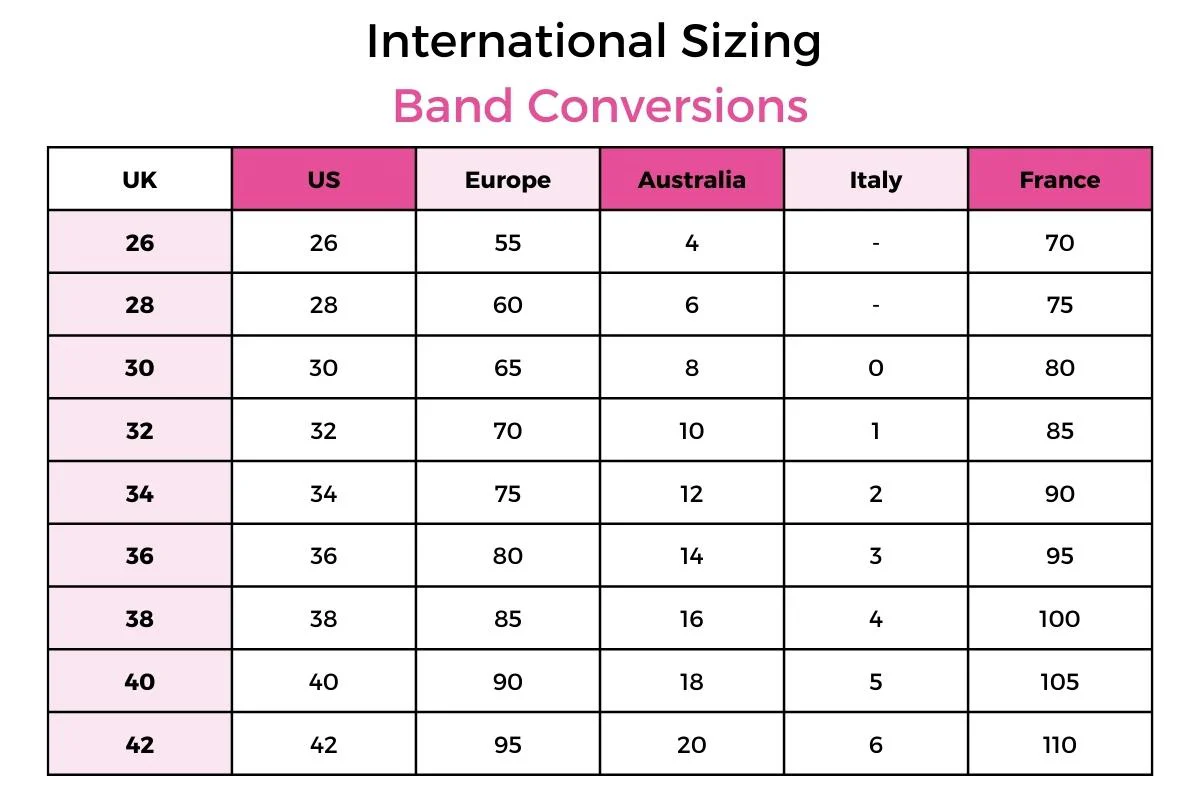
What 32D is describing
The 32 is the band that should sit snug and level under the bust. The D is cup volume on that band—classically about a 4-inch (roughly 10 cm) difference between bust and underbust, though brand grading varies.
EU tags often list something near 70D. Keep both band and cup when you convert; dropping the letter is a common ordering mistake.
Two people in 32D can look different in clothing because shape and projection change how the same inches fill a cup.
If you were sold a looser band for "comfort," you may actually belong in 32D once cups match after a real measurement.
Wire width and cup depth matter as much as the label—shallow molded cups and stretch lace can feel like different sizes.
Cycle swelling can nudge 32D toward a sister size for a few days; stretch cups help more than jumping multiple letters.
Who often lands on 32D
Measured underbust near the 32-inch range with a bust difference around 4 inches is the textbook start. Athletes and postpartum bodies may shift in or out of this size within months.
Former wearers of 34 with a smaller cup letter often move to 32D when the larger band rides up.
Store charts that skip your cup on a sparse wall push people into the wrong band—measure first, then shop the letter.
Fit details for 32D
- Fasten 32D on the loosest hook when new so you can tighten as elastic relaxes.
- Raise your arms—if the band rides up, fix cup volume or sister size before loosening straps.
- Straps only fine-tune lift; they should not carry the whole bust.
- Log brands where 32D runs shallow or deep—letters are not universal.
- Hand-wash or use a lingerie bag; heat drying kills band recovery.
- Keep a sister size (30DD and 34C) in rotation for high-swelling days.
32D mistakes
Skip this: Jumping to 34 because 32 feels firm for thirty seconds.
Try this instead: Wear 32D for ten minutes after scooping; a correct band feels secure before it feels familiar.
Skip this: Sizing up the band whenever cups overflow.
Try this instead: Stay on 32 and increase the cup letter, or change cup shape.
Skip this: Letting straps do all the lifting on a loose band.
Try this instead: A firm 32 band reduces shoulder pain and keeps wires in your fold.
When 32D is close but not quite right
Band digs all day? Try sister 34C so volume stays similar.
Band fine but spill at the neckline? Stay on 32 and move up a cup letter.
Between two bands on tape? Try 32D and a sister with matching volume, then pick whichever band stays level through a normal day.
Buying bras in 32D
Mall walls under-stock some 32D combinations; specialty and EU brands often cut deeper cups on the same letter.
Read return policies before ordering three sister sizes online.
When converting to EU 70D, match both band and cup on the brand chart—not letter alone.
How we approach bra sizing
SizeFit tools use bust-to-underbust difference for cup signals, aligned with European clothing size standard EN 13402. Measurement vocabulary follows ISO 8559 work under ISO/TC 133.
Band and cup differences follow classic inch steps used with our calculator—then confirm with a real wear test.
Brands still cut different shapes under the same stamp. Measure, use sister sizes when needed, and keep the bra that stays level through a normal day. Fit guidance—not medical advice.
Frequently asked questions
32D means a 32 underbust band with a D cup—about a 4-inch bust difference on classic US charts. Shape and brand still change how it feels.
Common sisters are 30DD and 34C. They keep similar cup volume while moving the band tighter or looser.
Often near 70D, but cup letters shift by market. Check the brand chart when you shop internationally.
Letters are not standardized across brands. If cups wrinkle or spill in one brand, try shape changes or a sister size before assuming the whole size is wrong.
Measure snug underbust near 32 and bust difference near 4 inches, then try 32D with a scoop-and-swoop. If the band rides up or digs, test a sister size before abandoning the letter.
Related guides
What a 32 Bra Band Really Means
If you have worn 34 for years, a true 32 can feel surprisingly firm at first—and still be the right anchor once the cups match. Most of the support should come from that snug band, not from digging straps.
Sister Sizes Keep Cup Volume, Change the Band
When cups already sit well but the band digs or rides up, sister sizes let you change tension without throwing away the volume that worked. They are a fitting tool—not a reason to skip measuring.
Is 32B Your True Bra Size?
32B can look small on the hanger and still be the right everyday volume once the band stays put. The usual mistake is sizing up the band for “comfort” and then wondering why cups gape or the back floats.
Why 34C Feels Different From 34B
Moving from 34B to 34C often fixes spillage without touching the band—yet many people size up the band instead and lose the snug anchor they already had.