
What a 32 Bra Band Really Means
If you have worn 34 for years, a true 32 can feel surprisingly firm at first—and still be the right anchor once the cups match. Most of the support should come from that snug band, not from digging straps.
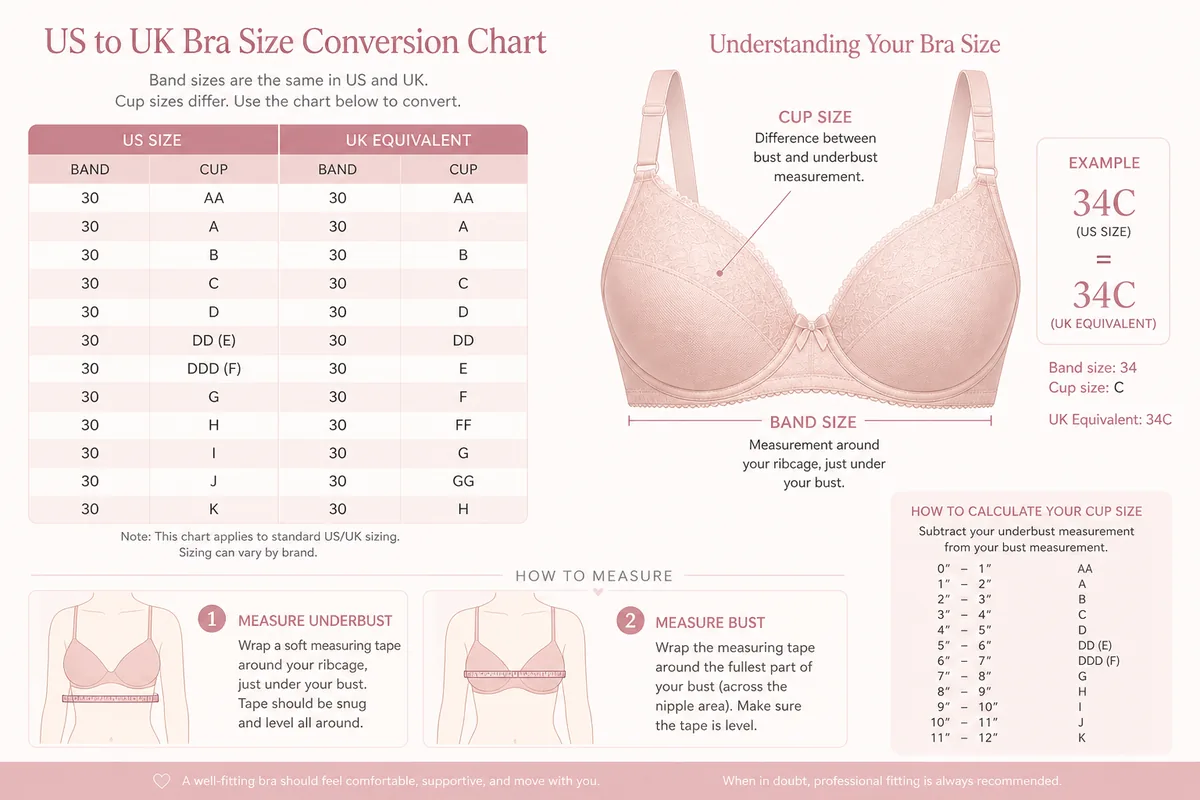
Quick answer
32 is a US/UK band size for a narrower underbust (EU often ~70). The letter after 32 is cup volume on that band. If the band rides up, add cup or try a firmer sister—not automatically a 34.
US / UK band: 32 · EU (approx.): 70
Pair with a cup letter for volume. The letter is relative to this band—not a clothing size.
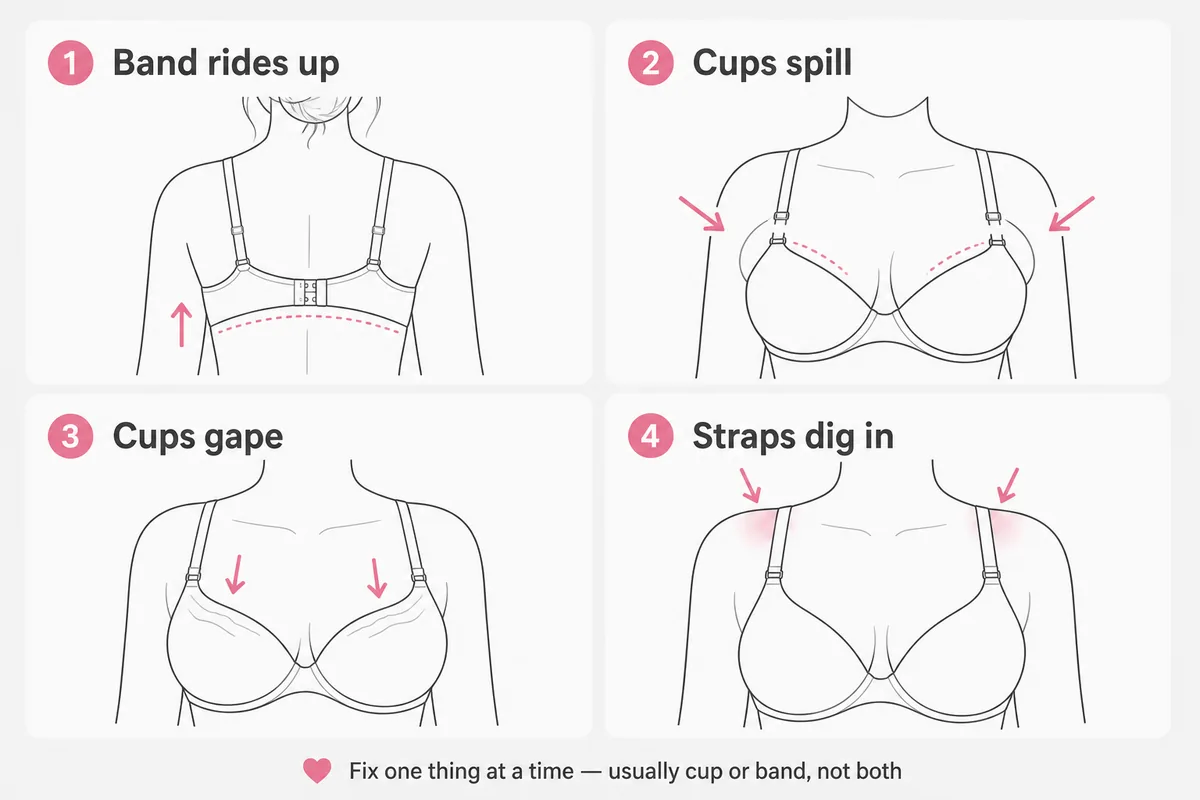
If this size feels wrong, try this next
Start from what you feel in the bra—not from a clothing size. Change one thing at a time: usually cup volume first if the band already stays level.
Band rides up even on the tightest hook
Try next: Stay near 32; add cup (32C / 32DD) or try sister 30 with a larger letter
Overflow can push a correct band out of place; a bigger band often hides the real issue.
Band digs in on the loosest hook
Try next: 34 with a smaller cup letter (sister size)
You keep similar cup volume while giving the ribs more ease.
Straps carve into shoulders
Try next: Confirm the 32 band is snug; then loosen straps
Straps should fine-tune lift. Pain usually means the band is not carrying weight.
Cups wrinkle but band feels good
Try next: Smaller cup letter on 32
Empty fabric is a volume or shape mismatch, not a reason to size up the band.
Measure with a 32 band in mind
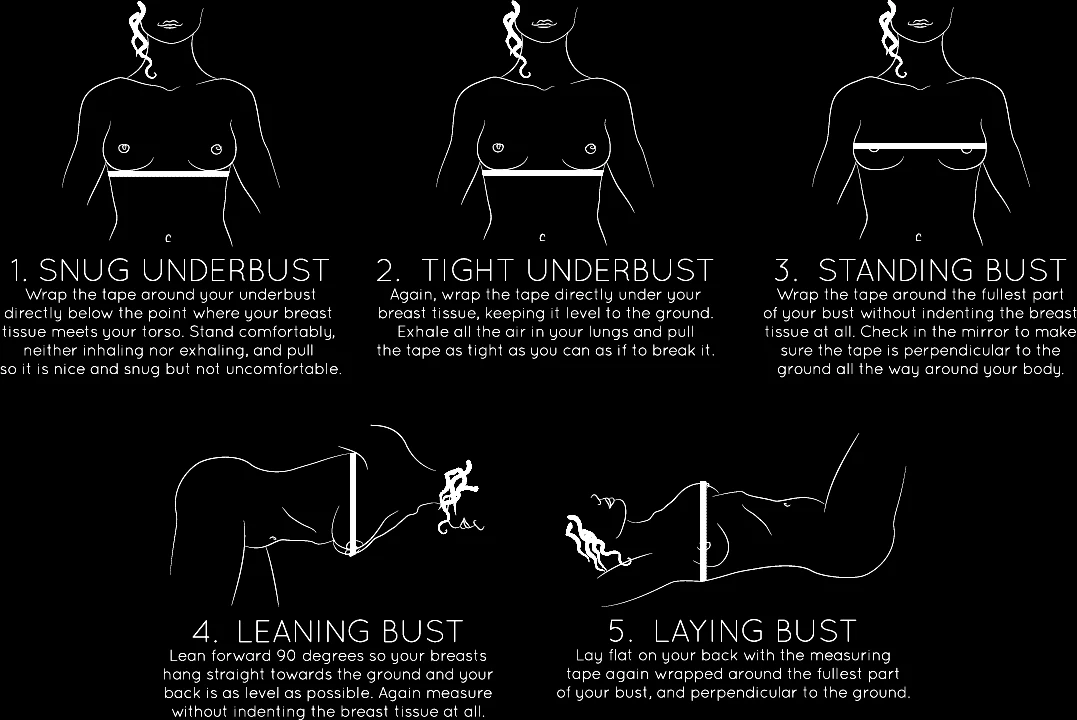
Soft tape, afternoon timing, skin-to-tape under the bust. Full illustrated steps: how to measure bra size.
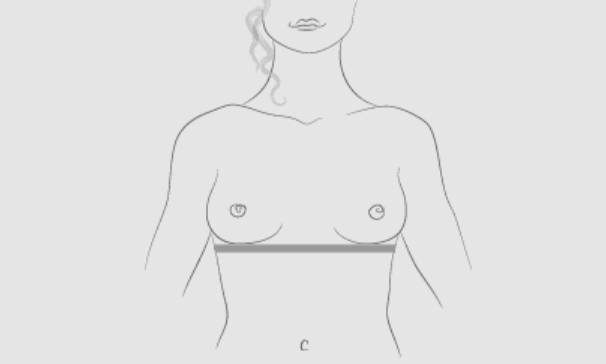
- 1
Snug underbust first
Wrap a soft tape directly under the bust, level around the back. Pull snugly—tape should not dig, but should not slide. Note inches or centimeters; many 32 wearers measure near 28–32 inches depending on breathing and posture.
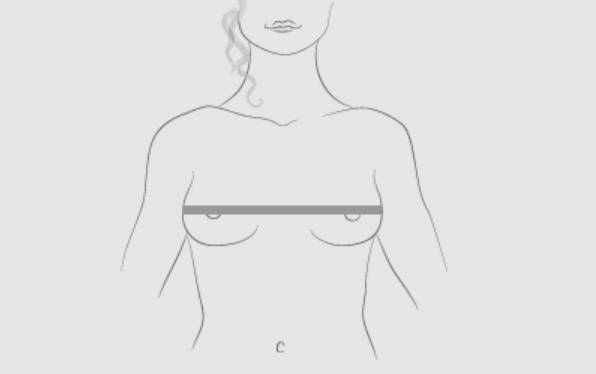
- 2
Loose bust at the fullest point
Lean slightly forward and measure around the fullest part of the bust without compressing tissue. Keep the tape parallel to the floor. The difference between bust and underbust suggests a cup letter on a 32 band.
- 3
Round to the nearest even band
Classic US sizing rounds underbust to the nearest even number. If you land between 31 and 33 inches, try 32 and 34 with appropriate cups rather than forcing one label. Brand stretch changes the feel.
- 4
Confirm in a bra, not only with tape
Put on a non-padded bra near your guess. Scoop all tissue into the cups, fasten on the loosest hook, and check that the band stays level when you raise your arms. Tape gets you close; a short wear test confirms.
Five checks before you keep a 32
- Band stays horizontal across your back when you lift arms overhead.
- You can slide two fingers under the front band—snug, not strangling.
- Center gore touches your sternum on underwire styles (or sits flat on wireless).
- No breast tissue trapped under the wire or spilling at the armpit after scooping.
- Straps do not leave red grooves; if they do, fix the band before loosening straps.
Before judging cups, scoop tissue fully into the cups (scoop & swoop).
Nearby sizes worth comparing
Same letter on a different band is not the same volume. Use these when you are between sizes or a style skips your label.
32B
Common moderate cup on this band
When the band fits and you need everyday B-cup volume.
32DD
Fuller cup on the same 32 band
When 32 cups spill after scooping but the band stays put.
34 band
Next wider band family
When every 32 digs in even with sister-cup adjustments.
Same size, different shape
The label is volume on a band—not a body type. If the number seems right but the bra still fights you, cup shape is often the missing piece.
Tall molded cups often gape at the top. Try a shorter or demi cup before assuming the letter is too big.
Shallow t-shirt cups can flatten you even when the letter is right. Seamed or deeper cups usually feel truer.
A natural center gap is normal. Side-support panels help center the silhouette without forcing the gore.
Scoop fully into the cups first. Persistent empty space at the top often means cup shape, not a smaller letter.
Common cups on a 32 band
How a 32 band is meant to fit
On a true 32, the band sits level under the bust, parallel to the floor, and feels firm on the loosest hook when the bra is new. If you can pull the band more than a couple of inches away from your back, the number is likely too large—even if the cups seem fine in the mirror.
Many people who always wear 34 actually measure closer to 32 and float in a bigger band. Others need 32 with a larger cup (32C, 32DD) after years of being sold a stretched-out 34B that felt comfortable only because the elastic had given up.
In EU-style labeling, a 32 band often lines up near a 70. Brand charts still differ, so treat conversions as a starting point rather than a guarantee. A European 70B and a US 32B aim at similar volume but wire width and cup depth can feel different.
The band number reflects underbust circumference more than dress size or weight. Two people in 32 can look nothing alike in clothing because cup letters carry the bust volume. That is why 32A and 32DD both exist on the same band ladder.
Petite frames and narrow backs often need shorter hook-and-eye rows and straps that adjust fully. A 32 that fits well should let you forget about your shoulders by midday—the band carries the load while straps only fine-tune lift.
When a 32 band rides up, the fix is rarely loosening straps. Check whether cups are too small (pushing the frame out of your fold) or whether you actually belong in 30 with a larger cup letter. Sister sizing helps you test that without guessing.
Who often lands on a 32 band
Measured underbust in the low 30-inch range (roughly 68–73 cm snug) is the clearest signal. Teen and young adult assortments stock 32 heavily, but plenty of adults with narrow ribcages stay here for decades—not because the size is junior, but because the band matches their frame.
Athletes and dancers with developed lats sometimes assume they need a larger band when they actually need a firmer 32 and a cup that respects projection. Postpartum bodies also shift; someone who wore 34 before pregnancy may return to 32 with a different cup letter.
If store associates always steer you to 34 because 32 feels tight in the dressing room, try 32 again after a full scoop-and-swoop and five minutes of wear. A correct 32 should feel secure, not painful, within the first hook row.
Practical checks for a 32 band
- Fasten on the loosest hook first; you should still feel secure.
- Raise your arms—if the band rides up your back, try a firmer 32 or a sister size with more cup.
- Straps should only fine-tune lift; they should not carry the whole bust.
- If cups wrinkle but the band feels right, go down a cup letter before going up a band.
- Petite strap lengths matter—check that adjusters sit mid-track, not maxed out.
- Hand-wash or use a lingerie bag; narrow 32 bands lose elasticity faster with heat drying.
Common 32-band mistakes
Skip this: Choosing 34 because 32 feels tight for thirty seconds in the store.
Try this instead: Wear 32 for ten minutes after scooping; if cups fit, the band will relax slightly without needing a larger number.
Skip this: Sizing up to 34 whenever cups overflow.
Try this instead: Stay on 32 and increase the cup letter—32C or 32DD often fixes spillage without a loose band.
Skip this: Letting straps do all the lifting on a loose 34.
Try this instead: A firm 32 band reduces shoulder pain and keeps wires in your inframammary fold.
When 32 is close but not quite right
Band digs in all day? Step to a 34 with a smaller cup letter (sister size) so volume stays similar—34A if you were trying 32B, for example.
Band feels fine but tissue spills at the sides or neckline? Stay on 32 and move up a cup—32C or 32DD is common after a real measurement.
Between 32 and 34 on tape? Try both with sister cups and pick whichever band stays level through a normal day, not just at the mirror.
Buying bras in a 32 band
Department-store walls often under-stock 32DD and above; online specialty lines and European brands frequently cut deeper cups on narrow bands. Read return policies before you order three sister sizes.
Check wire width and cup depth separately from the label. A 32B in a shallow molded t-shirt bra can feel empty while the same size in stretch lace fits—shape matters as much as the number.
When converting to EU 70, match both band and cup on the brand chart. If a site lists only 70C/D/E, compare your bust-minus-band difference instead of assuming US letters map one-to-one.
How we approach bra sizing
SizeFit tools use bust-to-underbust difference for cup signals, aligned with European clothing size standard EN 13402. Measurement vocabulary follows ISO 8559 work under ISO/TC 133.
Band and cup differences follow classic inch steps used with our calculator—then confirm with a real wear test.
Brands still cut different shapes under the same stamp. Measure, use sister sizes when needed, and keep the bra that stays level through a normal day. Fit guidance—not medical advice.
Frequently asked questions
Not reliably. Clothing small mixes bust, waist, and brand vanity sizing. Bra size 32 is specifically about underbust band fit, paired with a cup letter for volume. You can wear 32 with many different cup letters and still shop tops labeled S, M, or XS.
32A through 32D appear widely in mall brands; 32DD and beyond show up more in specialty and full-bust labels. Measure bust minus underbust rather than guessing from clothing size or what a friend wears.
A US/UK 32 band often corresponds roughly to EU 70, but cup letters can shift by market. Check the brand own chart when you shop internationally—some list E where US tags say DD.
Cups that are too small can make the whole bra feel tight. Scoop tissue forward, try a larger cup on the same 32, or test the sister size 34 with a smaller letter before abandoning the band number.
Rotate at least two bras and replace when the band rides up on the tightest hook even after washing, or when wires poke through. Narrow bands wear out faster with daily single-bra wear.
Related guides
Is 32B Your True Bra Size?
32B can look small on the hanger and still be the right everyday volume once the band stays put. The usual mistake is sizing up the band for “comfort” and then wondering why cups gape or the back floats.
Fitting 32DD Without Settling
32DD is a real measured size—narrower ribs with fuller cups—not a contradiction. People often bounce to 34D for “easier shopping” and then fight a band that will not stay down.
34 Bra Size: Band Fit & Common Cups
Because 34 is everywhere in US stores, many people wear “34-something” out of habit. If bras feel loose in the back or empty in the cups, the band number may be right while the letter—or the reverse—is wrong.
Sister Sizes Keep Cup Volume, Change the Band
When cups already sit well but the band digs or rides up, sister sizes let you change tension without throwing away the volume that worked. They are a fitting tool—not a reason to skip measuring.