
Dress Size Chart
US 8 ≈ UK 12 ≈ EU 40 when bust is ~90 cm (~35 in). Use bust, waist, and hip measurements—inch or cm tape both work; match the cm rows below.
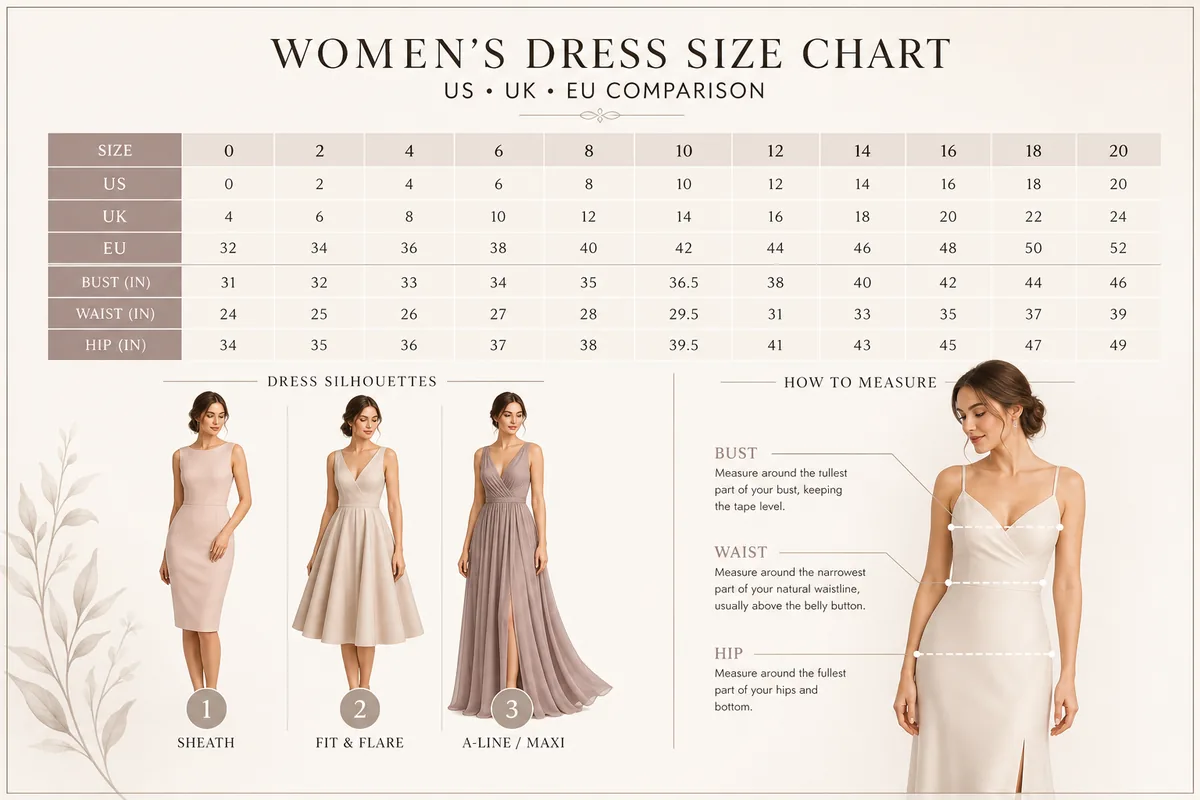
Women's dress sizes (US / UK / EU)
| US | UK | EU | Bust | Waist | Hip |
|---|---|---|---|---|---|
| 0 | 4 | 32 | 81 cm~32 in | 66 cm~26 in | 89 cm~35 in |
| 2 | 6 | 34 | 84 cm~33 in | 69 cm~27 in | 92 cm~36 in |
| 4 | 8 | 36 | 87 cm~34 in | 72 cm~28 in | 95 cm~37 in |
| 6 | 10 | 38 | 90 cm~35 in | 75 cm~30 in | 98 cm~39 in |
| 8 | 12 | 40 | 93 cm~37 in | 78 cm~31 in | 101 cm~40 in |
| 10 | 14 | 42 | 96 cm~38 in | 81 cm~32 in | 104 cm~41 in |
| 12 | 16 | 44 | 99 cm~39 in | 84 cm~33 in | 107 cm~42 in |
| 14 | 18 | 46 | 102 cm~40 in | 87 cm~34 in | 110 cm~43 in |
| 16 | 20 | 48 | 105 cm~41 in | 90 cm~35 in | 113 cm~44 in |
| 18 | 22 | 50 | 108 cm~43 in | 93 cm~37 in | 116 cm~46 in |
Dress size charts US, UK, EU
Dress sizes use bust, waist, and hip in inches or cm. US women's even numbers (2, 4, 6) differ from UK (6, 8, 10) and EU (34, 36, 38) though all describe body cm ranges.
Formal gowns and bridesmaid dresses often run small—compare bust and waist to designer chart, not mall size habit.
Women's dress cross-chart
| US | UK | EU | Bust in |
|---|---|---|---|
| 0 | 4 | 32 | 31 |
| 4 | 8 | 36 | 33 |
| 8 | 12 | 40 | 36 |
| 12 | 16 | 44 | 38 |
| 16 | 20 | 48 | 40 |
Pick dress size
- 1
Measure bust, waist, hip
Wear fitting bra for bust.
- 2
Use largest matching measurement
Alter smaller zones tailor-style.
- 3
Check fabric
Zippered satin less give than knit.
- 4
Length
Petite vs regular by height cm on chart.
Dress style notes
- Shift dresses forgive waist; mermaid needs exact hip.
- Wrap dresses adjustable—size to bust if between.
- US misses vs women's differ—misses run smaller hip.
- Plus sizes use W suffix on some charts (16W).
Dress size mistakes
Avoid: US 8 = EU 8
Instead: US 8 ≈ EU 40.
Avoid: Same size all designers
Instead: Davids Bridal ≠ mall brand.
Avoid: Ignoring zipper side
Instead: Structured bodice needs exact bust.
Formal vs casual dress blocks
Bridesmaid and prom dresses use designer blocks that run small versus mall sundresses at the same US number.
Knit wrap dresses tolerate a range of bust sizes; boned bodices need exact bust match.
Petite, regular, and tall dress lines change sleeve and torso length—not always the bust/waist numbers.
Alteration-friendly sizing
- Size to your largest measurement; tailor waist and hips inward.
- Pleated skirts forgive hip mismatch more than pencil cuts.
- Sleeve length is the cheapest alteration on woven dresses.
- Keep shoes height in mind for maxi length hemming.
Return or exchange workflow
- 1
Keep packaging
Boxes and hang tags speed refunds when size is wrong.
- 2
Try indoors only
Scuffed soles or worn labels may void returns.
- 3
Document fit issue
Photo of pinch point or heel gap helps support.
- 4
Reorder fast movers
Half sizes and popular EU widths sell out during sales.
More dress size chart questions
- Should I size up when between chart rows?
- Non-stretch and leather usually need the larger row; stretch fabrics may take the smaller.
- Do regional sites use different charts?
- Yes—US, EU, and Asia storefronts sometimes grade differently for the same SKU.
- How often to remeasure?
- Feet: twice a year or after weight change; kids: every 2–3 months; bras: after body changes.
- Are marketplace sellers reliable for size?
- Authorized retailers match brand charts; third-party listings may be old season lasts.
- Where to start with feet?
- See how to measure shoe size before converting sizes.
Real-world notes on dress size chart
Charts for dress size chart summarize typical grading—they are not a guarantee for every season or factory run. When a brand refreshes a last or fit block, reviews often mention it before charts update.
Marketplace listings may ship mixed inventory. Compare the size stamped inside the item on delivery with the chart row you used at checkout.
If you are gifting, ask for body or foot measurements in cm instead of guessing their usual tag size. Gift returns are harder when wear signs appear.
Sales associates can measure you in store; take a photo of the store chart if you later order online from the same brand.
Between online orders, remeasure if your weight changed, you had a foot injury, or you switched sock or insole thickness for running.
Teaching kids their cm size helps them shop later—write foot length inside closet door as a reference.
Document the date you measured—repeat after pregnancy, injury, or major weight change so old numbers do not linger in notes apps.
Measurement hygiene
- Stand weight evenly on both feet when tracing outlines.
- Measure twice on different days if you are between rows.
- For clothing, wear the undergarments you will use with the piece.
- For shoes, match sock thickness to intended use.
- Convert using cm first, then read US/UK/EU from the row—never reverse the order.
- Keep a saved note on your phone with your foot cm and bust/waist/hip cm.
- Update kids' sizes every growth spurt—do not buy multiple seasons ahead.
- Check whether reviews mention 'runs small' for the exact model you chose.
- Prefer free-return windows when trying a new brand last.
- Wide feet: try width SKUs before adding length—see 2E vs 4E shoe width.
Common dress size chart errors
Avoid: Using an old size tag from a different brand
Instead: Measure today and match the chart row for this category.
Avoid: Rounding down cm to stay in a smaller letter size
Instead: Round to the row that fits your longer foot or largest body measure.
Avoid: Ignoring half sizes or wide widths
Instead: Half steps and 2E/4E widths fix fit better than guessing.
Avoid: Assuming sales charts match outlet or marketplace stock
Instead: Verify inside label on delivery against the chart you saved.
Extra dress size chart answers
- Online vs in-store size the same?
- Usually yes for current season full-price items; outlets and older stock may differ slightly.
- Do I need to convert if the site shows multi-scale?
- Pick the column you shop in, but confirm your cm or inch measure lands on that row.
- Should athletes size up?
- Running and court sports often need thumb-width toe room—see running shoe size fit.
- Are charts unisex?
- Only when labeled unisex—otherwise use men's and women's tables separately.
- What if half my foot measures between rows?
- Use the longer foot and the larger measure among bust, waist, and hip for clothing.
Dress size FAQ
- US dress size 6 measurements?
- Bust ~34.5", waist ~27", hip ~37" typical.
- UK 10 to US dress?
- Often US 6.
- EU 38 dress?
- Often US 6 / UK 10.
- Between bust and waist sizes?
- Size to bust; tailor waist.
- Plus dress sizing?
- Use W charts; start at bust/hip largest.
FAQ
- What is US dress size 8 in UK and EU?
- On our international chart, US 8 aligns with UK 12 and EU 40 when bust is about 90 cm. Formal brands may differ—check the product size guide.
- How do I find my dress size?
- Measure bust at fullest point, natural waist, and hips at widest—all in cm. Match the largest relevant measurement to the dress size chart row.
- Are US and UK dress sizes the same number?
- No—UK numbers run about 4 higher than US for the same body (US 8 ≈ UK 12). EU uses different numeric scale (EU 40 ≈ US 8).
- Should I size up in formal dresses?
- Size up if you are between rows, the dress is non-stretch woven fabric, or you need room for a bra with padding. Stretch bodycon may allow staying on-chart.