
Want cleaner waist definition
Recommended: A-line or fit-and-flare with a structured waist seam
Avoid: Ultra-thin cling fabrics without lining
Formal Dress Guide
Choose by dress code, measurements, comfort, and timeline—then verify with a pre-order checklist. Size from bust / waist / hip first; silhouette second.
Size first, then style
Measure bust, waist, and hip in cm, then match the plus size clothing size chart (US 14–24). For tops and tees on the same chart, open plus shirts.
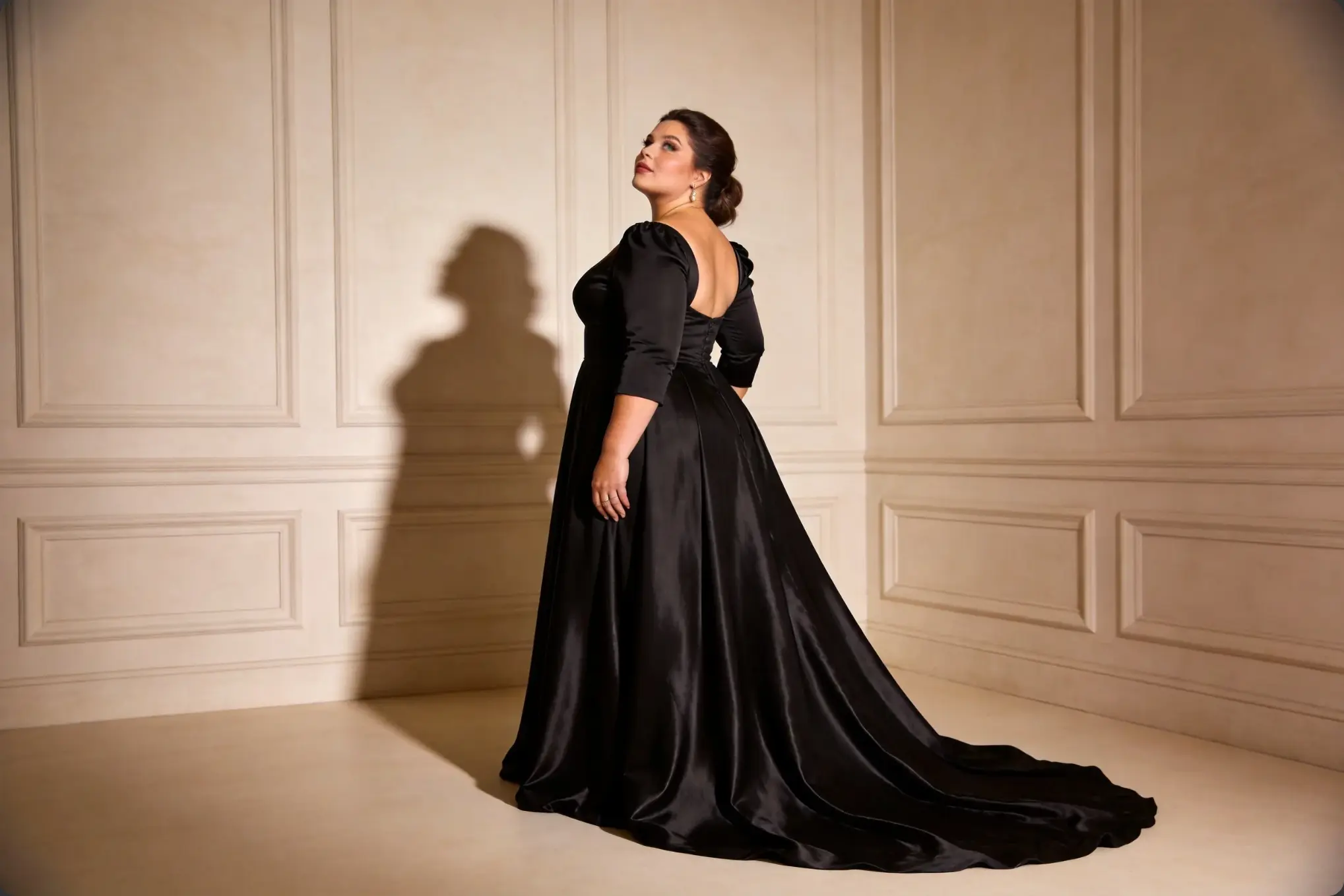
Floor-length (or a clearly evening midi) in structured or lustrous fabric. Size from measurements first; black is optional, not the whole code.
Shorter than black-tie is fine: midi, tea-length, or tailored knee-length. Same bust/waist/hip method as formal—then match the invitation.
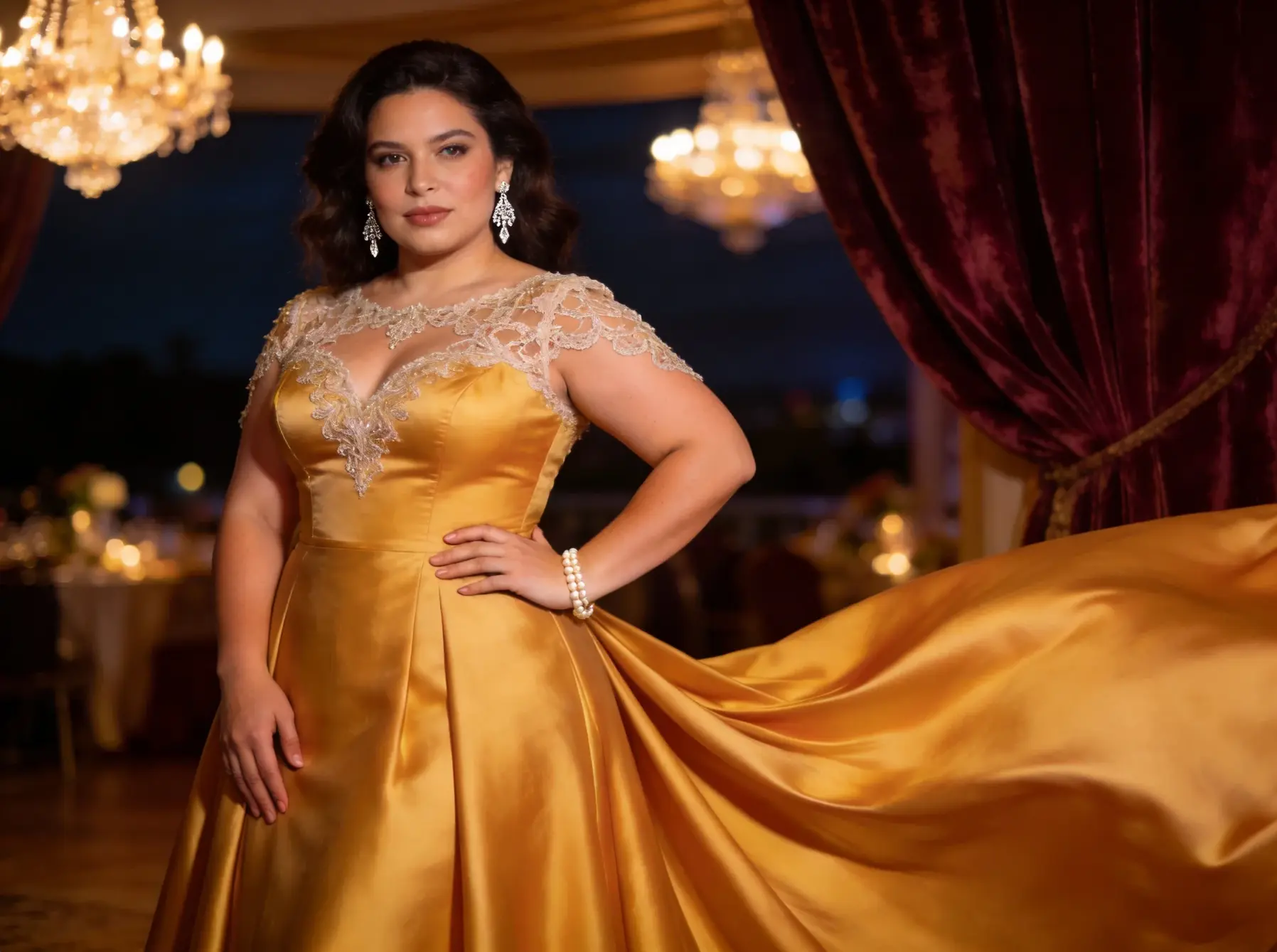
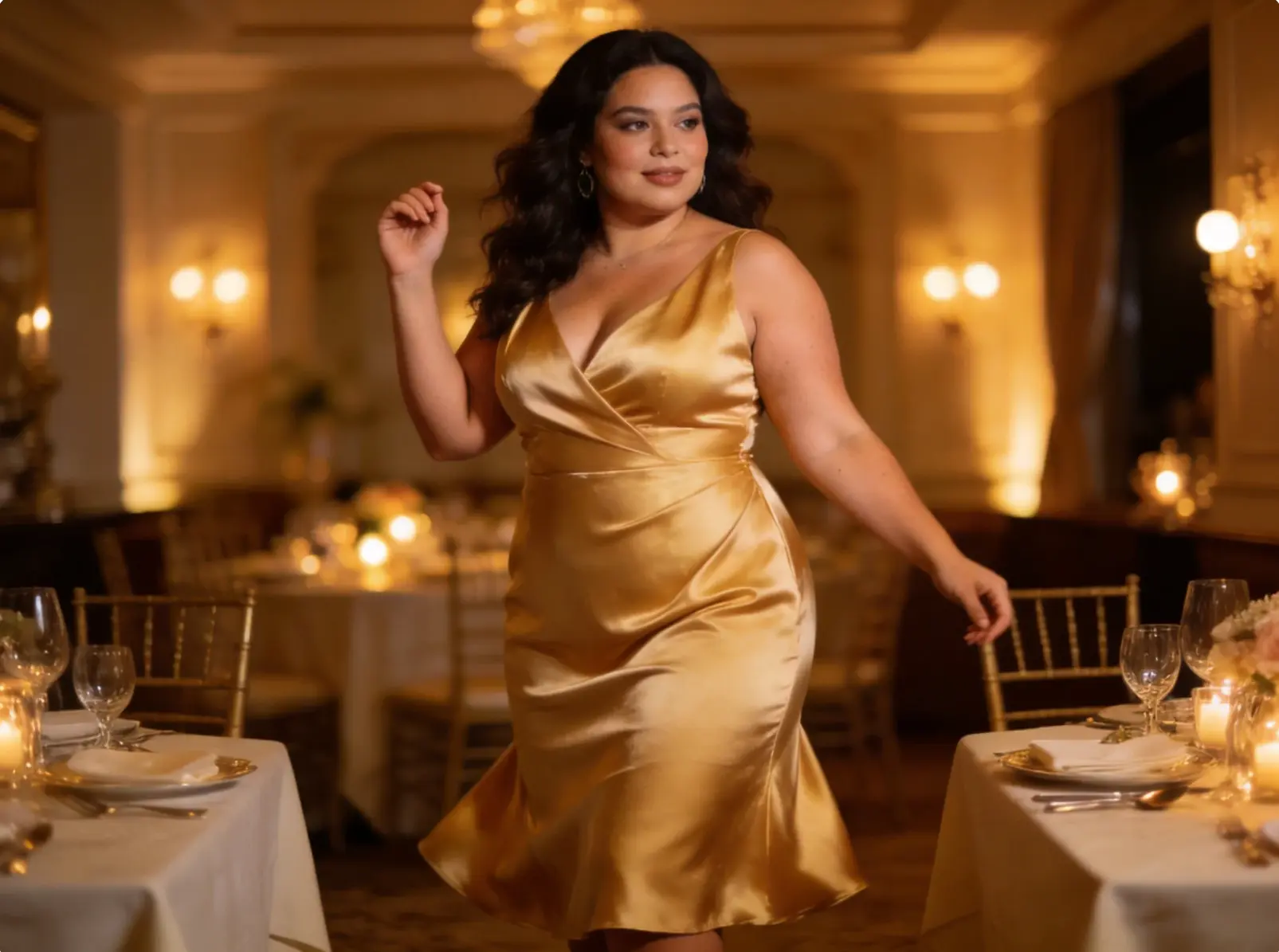
Use the shape notes below before you buy—especially if you searched for plus size a line formal dresses and plus size long formal dresses.
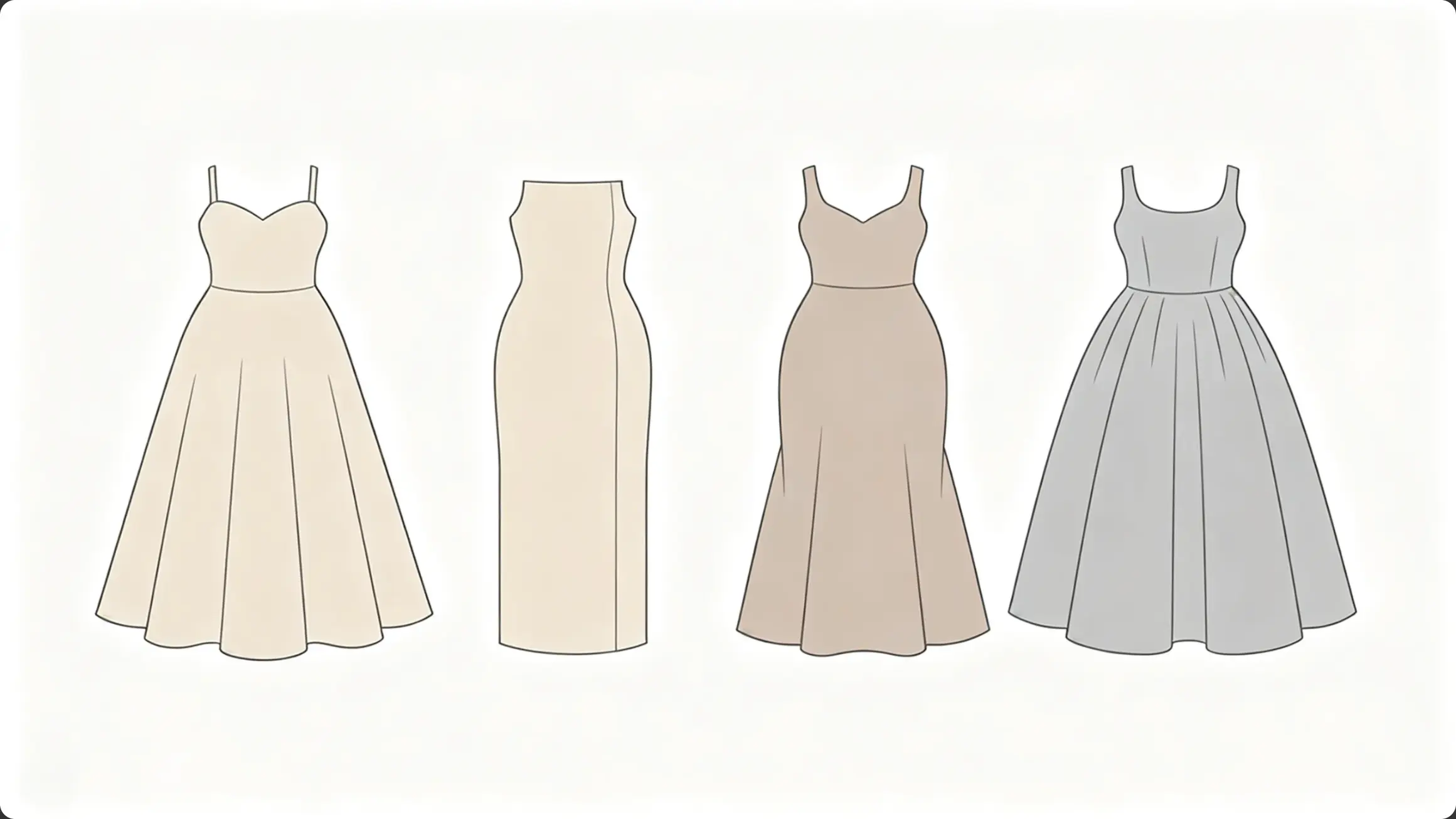
Recommended: A-line or fit-and-flare with a structured waist seam
Avoid: Ultra-thin cling fabrics without lining
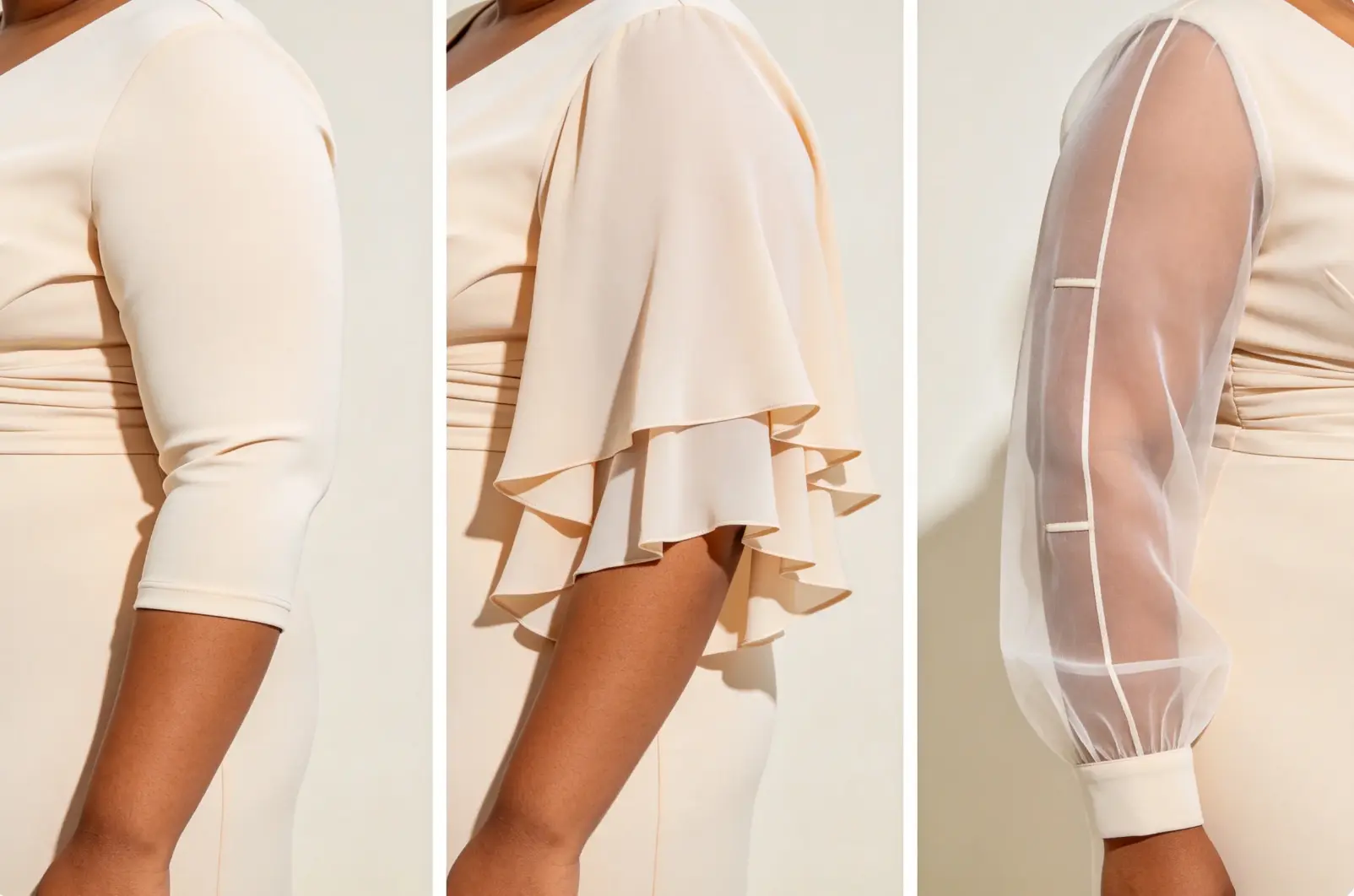
Recommended: 3/4 sleeves, soft flutter sleeves, or sheer structured sleeves
Avoid: Very tight cap sleeves that restrict movement
Recommended: A-line, gentle column with back slit, soft draped fabrics
Avoid: Heavy fabric with narrow hem and no movement allowance
Best colors: Black, deep emerald, navy, burgundy
Best fabric direction: Satin, crepe, structured chiffon
Best colors: Jewel tones, muted metallics, rich neutrals
Best fabric direction: Soft sheen fabrics with comfortable lining
Best colors: Dusty rose, deep teal, navy, wine
Best fabric direction: Lighter crepe, chiffon, stretch blends
Formula: Floor-length A-line + 3/4 sleeves + structured clutch + block heel
Why it works: This combination keeps the look formal while reducing arm and foot fatigue during long standing periods.
Formula: Ankle-length fit-and-flare + soft draped sleeve + metallic low heel
Why it works: Balanced silhouette works for photos, dining, and dancing without over-restricting movement.
Formula: Polished midi + defined waist seam + light outer layer
Why it works: Easy to dress up or down depending on venue while keeping comfort stable.
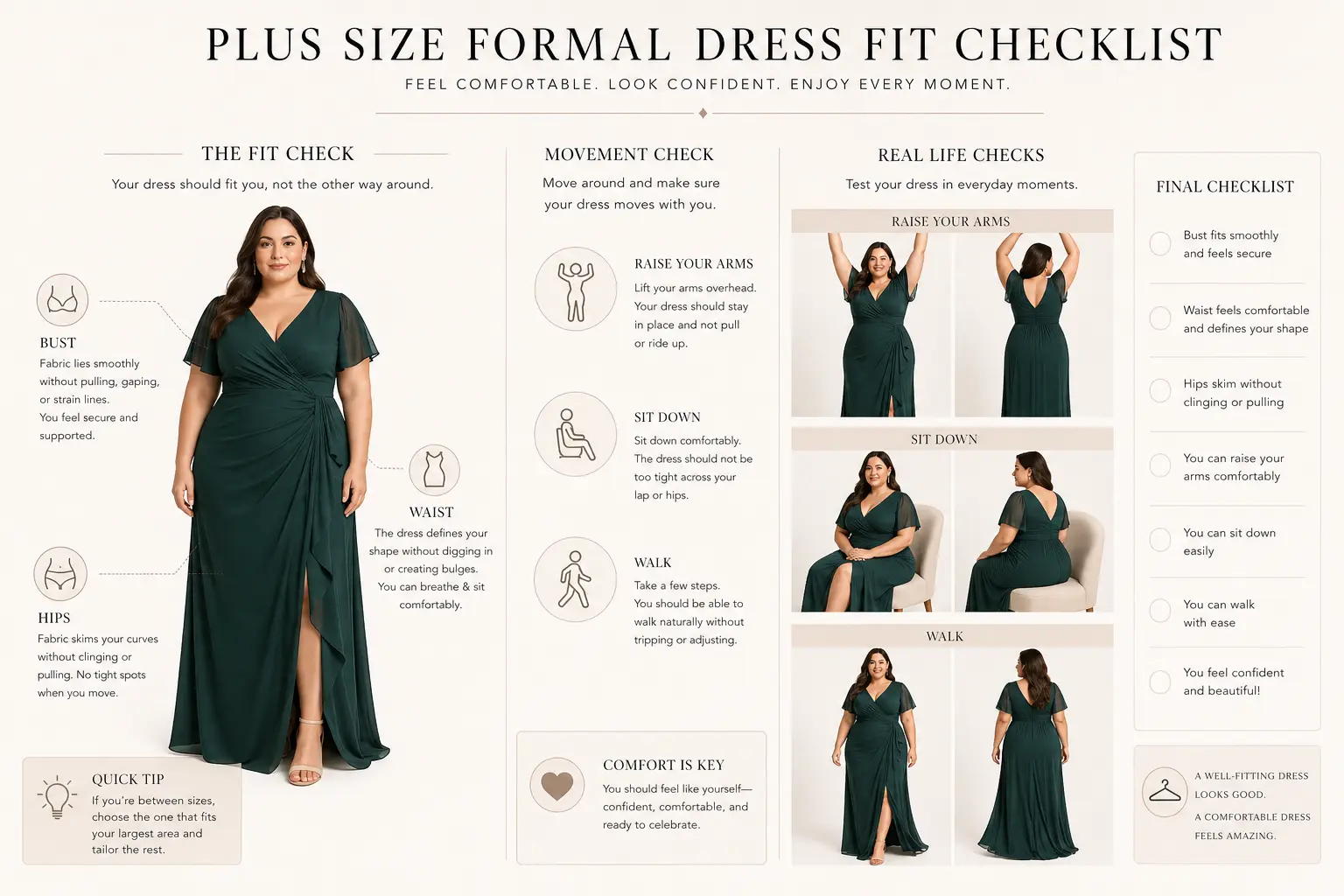
Measure bust, waist, and hip in cm, then match the plus size clothing size chart (US 14+ with UK/EU). When between sizes, fit the largest measurement and tailor down if needed. Bridal or brand charts can differ from everyday clothing—confirm the product chart.
Yes. Black formal dresses are widely accepted for evening and formal events. For daytime events, soften the look with lighter accessories or a textured fabric.
Use event instructions first. Formal usually calls for floor-length or elegant midi dresses and refined fabrics, while semi-formal allows shorter lengths and simpler construction.
Sleeves can improve comfort and confidence, especially for long events. 3/4 sleeves and soft draped sleeves often balance support with mobility.
When between sizes, choose the size that fits your largest measurement and tailor down if needed. This reduces strain at seams and zippers.
For strict formal dress codes, floor-length is usually the safest. For flexible formal events, elegant midi lengths also work when fabric and styling remain polished.
Prioritize breathable lining, movement-friendly skirts, and secure but non-restrictive sleeves or straps. Always test sitting and walking before finalizing.
Black-tie usually means a floor-length gown or equivalent evening dress in a refined fabric such as satin or crepe. Size from bust, waist, and hip on the plus size clothing size chart first. Black is common; the dress code is about length and polish, not color alone.
Occasion dresses cover cocktail, wedding guest, and party looks—midi or tea-length often works. Formal and black-tie run longer and more structured. Measure the same way, then pick the silhouette that matches the invitation.
A black dress is formal when length, fabric, and neckline match the invitation. A short jersey black dress can be too casual for black-tie. Size is independent of color—use the plus clothing chart, then check the dress code.