Running Shoe Size & Fit
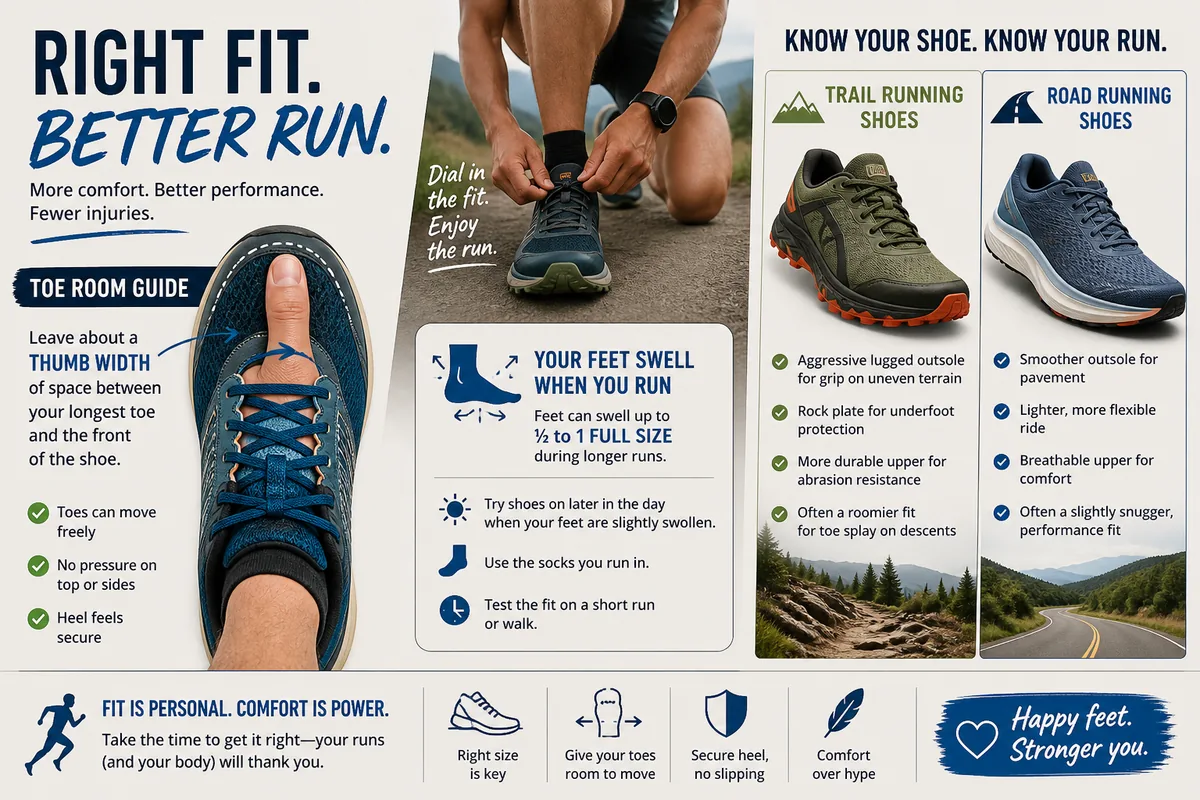
Stand in the shoes: thumb width (~½–⅔ in) from longest toe to front. Measure feet in cm after a run or in the afternoon—swelling changes length by half a size.
4-step fit check
- Trace both feet; use the longer heel-to-toe length in cm (inches ÷ 2.54 ≈ cm on most shoe charts).
- Match cm to the brand running chart (not dress shoe size).
- Stand and slide foot forward—check thumb width at toes.
- Jog in-store or on a treadmill; heel should not slip, toes should not hit front on descent.
Brand fit notes
- Nike: Nike size chart— often true-to-length; narrow forefoot on some racers.
- Brooks: Brooks size chart— Ghost/Adrenaline roomy toe; wide (2E) available.
- ASICS: ASICS size chart— Gel-Nimbus true length; consider 2E if standard D pinches.
- Saucony: Saucony size chart— Ride/Guide neutral fit; Endorphin line runs snug—half up if between sizes.
Running shoe size and fit
Running shoes need thumb-width (≈0.5–0.75 in) space between longest toe and end at standing weight. Feet swell on runs—size measured morning may be tight by mile 3.
Road vs trail: trail toe bumpers reduce usable length—some runners half size up trail only.
Fit running shoes
- 1
Measure cm afternoon
- 2
Try TTS brand last
Brooks Ghost, Saucony Ride often TTS.
- 3
Check heel lockdown
Lace heel eyelets; minimal lift.
- 4
Jog store aisle
Toes must not hit on slight descent.
Running models fit snapshot
| Model / line | Typical fit | What to try |
|---|---|---|
| Brooks Ghost | TTS medium | 2E available |
| Saucony Ride | TTS | Wide 2E on many releases |
| Nike Pegasus | TTS; narrow width | Wide Pegasus when listed |
| Hoka Clifton | TTS; feels long to some | Do not down-size without trying |
| Altra | Foot-shaped toe box | Same US as other brands often; toe box wider not longer |
Running fit checklist
- Sock thickness: race socks vs cushion changes volume.
- Orthotics: remove factory insole; verify depth.
- Half sizes matter more than in lifestyle shoes.
- Replace every 300–500 miles—upper stretches, not always length.
Running shoe mistakes
Avoid: Toes touch end standing
Instead: Thumb width space minimum.
Avoid: Sizing up for wide without wide SKU
Instead: Heel slip on marathon.
Avoid: Same size road and track spikes
Instead: Spikes tighter intentional—separate fit.
Race day vs daily trainer fit
Marathon feet swell—some runners half size up in race shoes only while daily trainers stay TTS.
Trail descent toe bump requires room; uphill snug midfoot helps—lace techniques adjust both.
Replace trainers after visible outsole wear or 300–500 miles; stretched uppers mimic 'runs large' falsely.
Return or exchange workflow
- 1
Keep packaging
Boxes and hang tags speed refunds when size is wrong.
- 2
Try indoors only
Scuffed soles or worn labels may void returns.
- 3
Document fit issue
Photo of pinch point or heel gap helps support.
- 4
Reorder fast movers
Half sizes and popular EU widths sell out during sales.
More running shoe size fit questions
- Should I size up when between chart rows?
- Non-stretch and leather usually need the larger row; stretch fabrics may take the smaller.
- Do regional sites use different charts?
- Yes—US, EU, and Asia storefronts sometimes grade differently for the same SKU.
- How often to remeasure?
- Feet: twice a year or after weight change; kids: every 2–3 months; bras: after body changes.
- Are marketplace sellers reliable for size?
- Authorized retailers match brand charts; third-party listings may be old season lasts.
- Where to start with feet?
- See how to measure shoe size before converting sizes.
Real-world notes on running shoe size fit
Charts for running shoe size fit summarize typical grading—they are not a guarantee for every season or factory run. When a brand refreshes a last or fit block, reviews often mention it before charts update.
Marketplace listings may ship mixed inventory. Compare the size stamped inside the item on delivery with the chart row you used at checkout.
If you are gifting, ask for body or foot measurements in cm instead of guessing their usual tag size. Gift returns are harder when wear signs appear.
Sales associates can measure you in store; take a photo of the store chart if you later order online from the same brand.
Between online orders, remeasure if your weight changed, you had a foot injury, or you switched sock or insole thickness for running.
Teaching kids their cm size helps them shop later—write foot length inside closet door as a reference.
Document the date you measured—repeat after pregnancy, injury, or major weight change so old numbers do not linger in notes apps.
Measurement hygiene
- Stand weight evenly on both feet when tracing outlines.
- Measure twice on different days if you are between rows.
- For clothing, wear the undergarments you will use with the piece.
- For shoes, match sock thickness to intended use.
- Convert using cm first, then read US/UK/EU from the row—never reverse the order.
- Keep a saved note on your phone with your foot cm and bust/waist/hip cm.
- Update kids' sizes every growth spurt—do not buy multiple seasons ahead.
- Check whether reviews mention 'runs small' for the exact model you chose.
- Prefer free-return windows when trying a new brand last.
- Wide feet: try width SKUs before adding length—see 2E vs 4E shoe width.
Common running shoe size fit errors
Avoid: Using an old size tag from a different brand
Instead: Measure today and match the chart row for this category.
Avoid: Rounding down cm to stay in a smaller letter size
Instead: Round to the row that fits your longer foot or largest body measure.
Avoid: Ignoring half sizes or wide widths
Instead: Half steps and 2E/4E widths fix fit better than guessing.
Avoid: Assuming sales charts match outlet or marketplace stock
Instead: Verify inside label on delivery against the chart you saved.
Extra running shoe size fit answers
- Online vs in-store size the same?
- Usually yes for current season full-price items; outlets and older stock may differ slightly.
- Do I need to convert if the site shows multi-scale?
- Pick the column you shop in, but confirm your cm or inch measure lands on that row.
- Should athletes size up?
- Running and court sports often need thumb-width toe room—see running shoe size fit.
- Are charts unisex?
- Only when labeled unisex—otherwise use men's and women's tables separately.
- What if half my foot measures between rows?
- Use the longer foot and the larger measure among bust, waist, and hip for clothing.
Running shoe fit FAQ
- Half size up for running?
- Common if between sizes or long toes.
- Wide feet running?
- 2E same length before length up.
- Same as casual Nike size?
- Often TTS Pegasus vs Air Force not comparable.
- Toe black nail?
- Usually too short or downhill toe box—size up or wider.
- Break in miles?
- Should fit day one walk; do not expect major stretch.
FAQ
- How much toe room should running shoes have?
- Aim for about a thumb width (roughly ½–⅔ inch or 1.3–1.6 cm) between your longest toe and the inside front of the shoe when standing. Too little causes black toenails; too much reduces stability.
- Should running shoes be a half size bigger?
- Half size up helps if you are between lengths, feet swell on long runs, or you wear thick socks. Do not size up only to fix width—order wide (2E) instead.
- Do Nike running shoes run small?
- Many runners find Nike length true-to-size with a snug midfoot. Check our Nike shoe size chart and measure foot length in cm—Pegasus and Vomero differ slightly in volume.
- Brooks vs ASICS vs Saucony sizing?
- Brooks often fits true-to-length with roomy toe boxes in Ghost. ASICS can feel narrow in standard width—try 2E if needed. Saucony Ride/Guide usually match cm length; see each brand chart for width notes.