
Generic / Standard Shoe Size Chart
US, UK, EU, JP, CN — prefer the CM foot-length column when labels disagree.
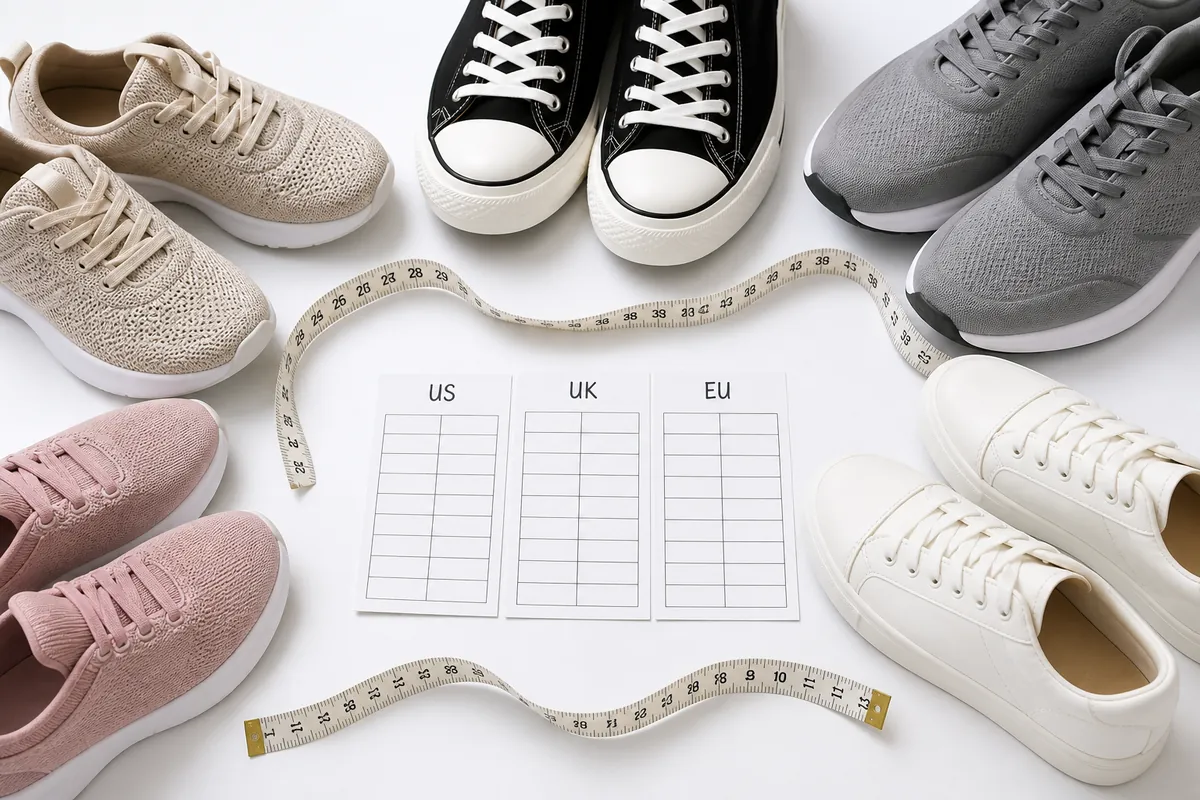
← Scroll horizontally to view all sizes →
| US | UK | EU | JP | CN | CM | IN |
|---|---|---|---|---|---|---|
| 3 | 2 | 34 | 21.5 | 215 | 21.5 | 8.5 |
| 3.5 | 2.5 | 34.5 | 21.5 | 215 | 21.5 | 8.5 |
| 4 | 3 | 35 | 22 | 220 | 22 | 8.7 |
| 4.5 | 3.5 | 35.5 | 22.5 | 225 | 22.5 | 8.9 |
| 5 | 4 | 36 | 22.5 | 225 | 22.5 | 8.9 |
| 5 | 4 | 36.5 | 22.5 | 225 | 22.5 | 8.9 |
| 5.5 | 4.5 | 37 | 23 | 230 | 23 | 9.1 |
| 6 | 5 | 37.5 | 23.5 | 235 | 23.5 | 9.3 |
| 6.5 | 5.5 | 38 | 24 | 240 | 24 | 9.4 |
| 6.5 | 5.5 | 38.5 | 24.5 | 245 | 24.5 | 9.6 |
| 7 | 6 | 39 | 24.5 | 245 | 24.5 | 9.6 |
| 7.5 | 6.5 | 39.5 | 25 | 250 | 25 | 9.8 |
| 8 | 7 | 40 | 25.5 | 255 | 25.5 | 10 |
| 8.5 | 7.5 | 41 | 26 | 260 | 26 | 10.2 |
| 9 | 8 | 41.5 | 26.5 | 265 | 26.5 | 10.4 |
| 9.5 | 8.5 | 42 | 27 | 270 | 27 | 10.6 |
| 10 | 9 | 42.5 | 27 | 270 | 27 | 10.6 |
| 10.5 | 9.5 | 43 | 27.5 | 275 | 27.5 | 10.8 |
| 10.5 | 9.5 | 43.5 | 27.5 | 275 | 27.5 | 10.8 |
| 11 | 10 | 44 | 28 | 280 | 28 | 11 |
| 11.5 | 10.5 | 44.5 | 28.5 | 285 | 28.5 | 11.2 |
| 12 | 11 | 45 | 28.5 | 285 | 28.5 | 11.2 |
| 12.5 | 11.5 | 45.5 | 28.5 | 285 | 28.5 | 11.2 |
| 12.5 | 11.5 | 46 | 29 | 290 | 29 | 11.4 |
| 13 | 12 | 46.5 | 29.5 | 295 | 29.5 | 11.6 |
| 13.5 | 12.5 | 47 | 30 | 300 | 30 | 11.8 |
| 14 | 13 | 47.5 | 30.5 | 305 | 30.5 | 12 |
| 14 | 13 | 48 | 30.5 | 305 | 30.5 | 12 |
| 14.5 | 13.5 | 48.5 | 31 | 310 | 31 | 12.2 |
| 15 | 14 | 49 | 31.5 | 315 | 31.5 | 12.4 |
| 15.5 | 14.5 | 49.5 | 31.5 | 315 | 31.5 | 12.4 |
| 16 | 15 | 50 | 32 | 320 | 32 | 12.6 |
Generic / Standard shoe size conversion across US, UK, EU, and other standards.
How to measure your feet
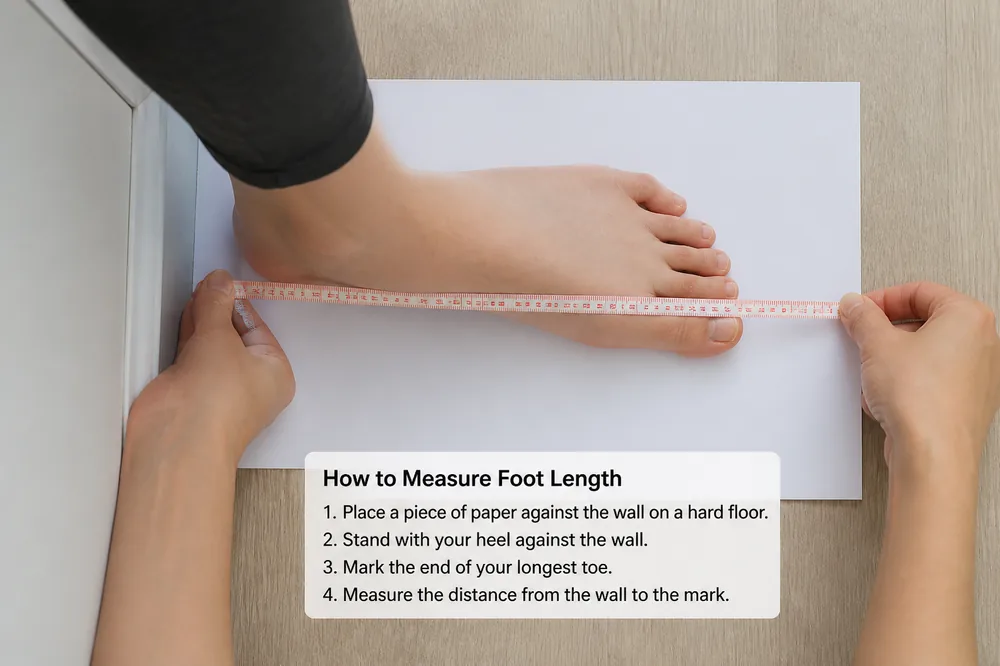
Stand with heel against a wall, mark the longest toe, and use the longer foot in centimeters on the Generic / Standard chart above.
Size guide tips & FAQExpand
How to Use This Generic / Standard Size Chart
How to Read the Chart
- Measure Your Foot: Measure foot length in centimeters. Place your foot on a piece of paper, mark the longest toe and heel, then measure the distance.
- Find Your Current Size: Locate your current shoe size in your local system (US, UK, EU, JP, or CN) in the appropriate table above (Men's, Women's, or Kids').
- Convert to Your Target Size: Use the same row to find the equivalent size in other systems. The CM column is foot length—use it when US/UK/EU labels disagree.
- Consider Brand-Specific Fit: Review the sizing recommendations above for Generic / Standard-specific fit characteristics, as some models may run small or large compared to standard sizes.
Understanding the Size Systems
US: United States shoe size system, commonly used in North America. Men's and women's sizes use different scales.
UK: United Kingdom shoe size system, used in the UK and some Commonwealth countries. Generally runs one size smaller than US for men.
EU: European Union shoe size system, used throughout Europe. Uses a different scale than US and UK.
JP: Japanese shoe size system, based directly on foot length in centimeters.
CN: Chinese shoe size system, also based on centimeters, similar to the Japanese system.
CM: Foot length in centimeters—your primary reference when converting between label systems.
IN: Foot length in inches. Useful for quick reference; CM is finer for matching charts.
Frequently Asked Questions
How accurate is this Generic / Standard size conversion chart?
Our conversion chart is based on international sizing standards and Generic / Standard's official sizing guidelines. However, sizing can vary between different models and even between different colorways of the same model. We recommend using this chart as a starting point and checking model-specific sizing notes when available.
Prefer measuring foot length in centimeters and matching the CM column in the chart above.
What if my size is between two sizes on the chart?
If your measurements fall between two sizes, we generally recommend sizing up for comfort, especially for athletic shoes. A slightly larger shoe can be adjusted with insoles or thicker socks, while a shoe that's too small can cause discomfort and foot problems.
However, for Generic / Standard specifically, consider the fit characteristics mentioned above. Some models may run small or large, so adjust accordingly.
Do Generic / Standard shoes run true to size?
Fit can vary by model and product line. We recommend checking the sizing recommendations above and reading customer reviews for the specific Generic / Standard model you're interested in.
How do I convert between men's and women's Generic / Standard sizes?
Women's US sizes are typically 1.5 to 2 sizes larger than men's. For example, a men's US 9 is roughly equivalent to a women's US 10.5 or 11.
A steadier method is foot length in centimeters (CM). If you know your foot length, find that row in both men's and women's tables.
For detailed conversion guidance, check out our Men's to Women's Shoe Size Converter.
Can I use this chart for all Generic / Standard shoe models?
This chart provides a general guide for Generic / Standard sizing, but fit can vary between different models and product lines. Some models may run small, large, or have different width characteristics.
We recommend using this chart as a starting point, then checking model-specific sizing notes, customer reviews, and the sizing notes above for that model.