
International vs Domestic Luggage Rules
Use this guide when your trip includes cross-border routes, codeshare flights, or mixed carriers.
Quick Facts
Decision-focused differences between domestic and international luggage policy context.
- Domestic pattern
- Rules are usually easier to compare route by route.
- International pattern
- Allowance can vary by segment and operating airline.
- Highest risk point
- Codeshare or interline itineraries with mixed policy context.
Connection and Policy Complexity Visual
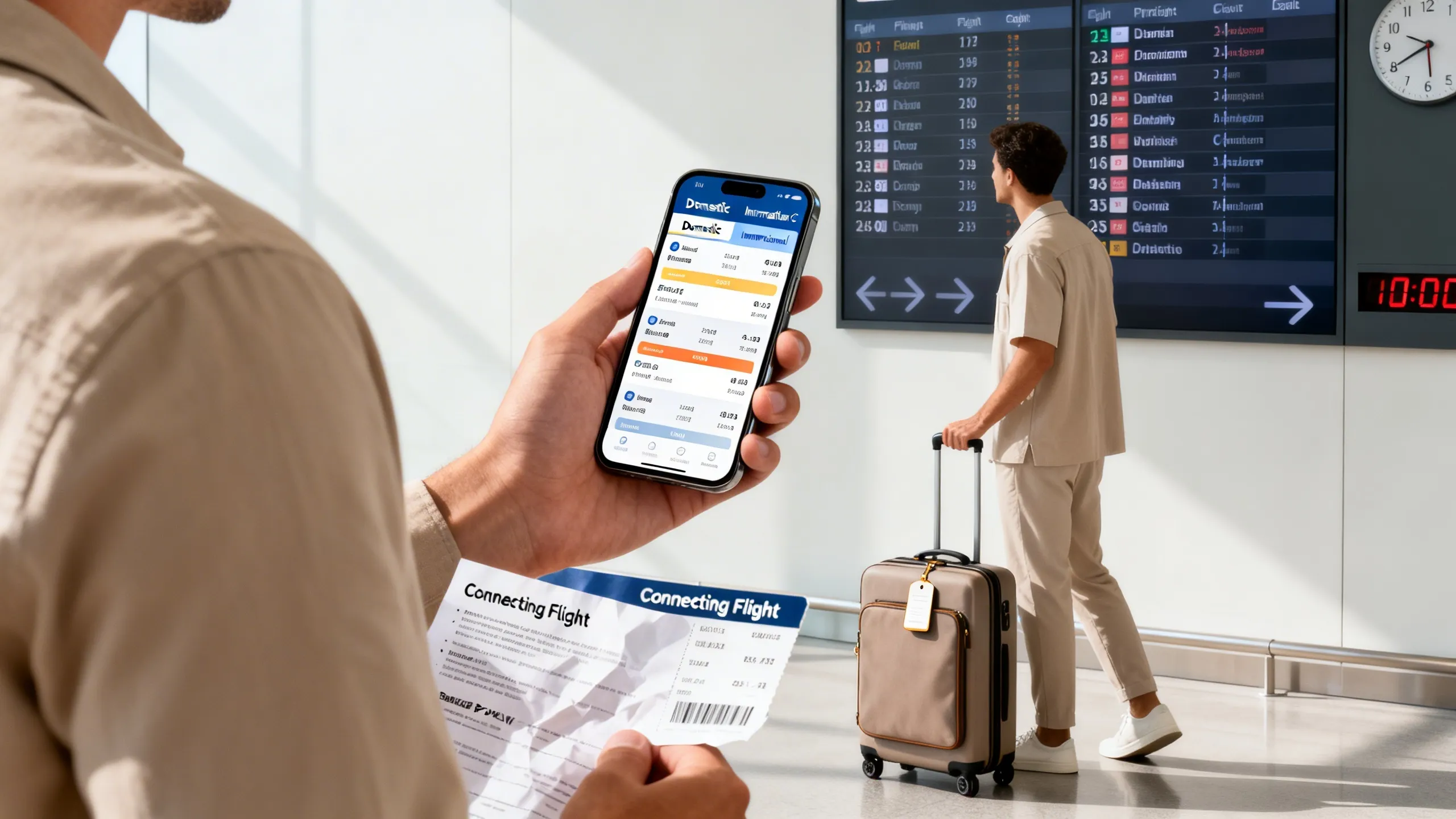
International and multi-segment trips often require stricter policy checks than simple domestic itineraries.
Always validate rules by operating carrier to avoid mismatch across connection segments.
Rule Difference Table
| Topic | Domestic | International |
|---|---|---|
| Policy variability | Rules are usually simpler and easier to compare. | Allowance often changes by route region and operating carrier. |
| Connection complexity | Single-carrier flights often keep one baggage policy context. | Codeshare and interline journeys can apply different baggage conditions. |
Execution Checklist
- Check operating carrier for every segment, not only ticket seller.
- Confirm carry-on and checked rules for both outbound and return routes.
- Re-check baggage terms 24-48 hours before departure.
Codeshare Reality: Marketing vs Operating Carrier
A common user issue is assuming the airline shown in booking flow always controls baggage rules. In multi-carrier trips, operating-carrier context can change your actual baggage experience.
For U.S.-related itineraries, policy presentation can follow specific consumer rules, while other international patterns may use most-significant-carrier logic. This is why one “global rule” often fails in real travel.
The safe action is to review baggage terms by segment and keep screenshots of the relevant rule page.
User-Centric Preparation Strategy
- For outbound and return, verify both carry-on and checked allowance separately.
- Treat transfer airports as risk points for stricter baggage checks.
- Keep critical items in personal bag for segment-level resilience.
- Re-check rules close to departure to catch late policy updates.
Related Guides
- Policy variabilityAirline site · Last checked: 2026-08-30https://www.iata.org/en/programs/ops-infra/baggage/
- Connection complexityAirline site · Last checked: 2026-08-30https://www.united.com/en/us/fly/baggage/checked-bags.html