
Luggage Size Fees Explained
Use this page to understand what usually triggers baggage fees and how to reduce them before airport day.
Quick Facts
Fee trigger summary for fast decision-making before checkout and before departure.
- Most common checked threshold
- 62 linear inches for size and 50 lb for weight on many economy fares
- Most expensive behavior
- Paying baggage fees at airport instead of prepaying online
- Best prevention
- Measure and weigh every bag after final packing
Fee Trigger Visual: Linear Size and Limits
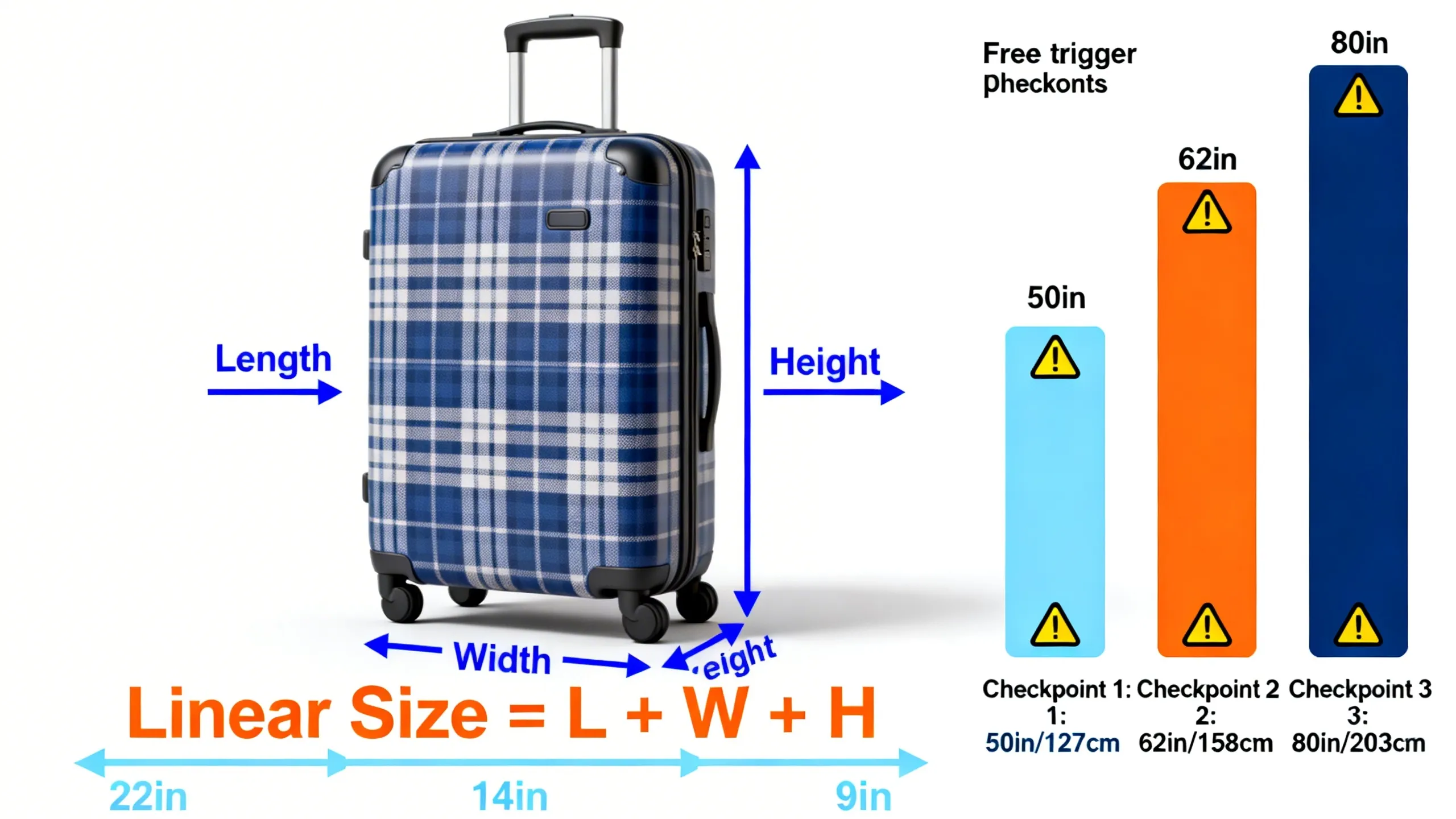
Many oversize fees start when outer dimensions exceed airline thresholds, commonly measured by linear size.
Use this formula before travel day to avoid airport counter surprises and higher charges.
Common Fee Trigger Table
| Trigger | What It Means | Typical Cost Range |
|---|---|---|
| Carry-on over limit | Bag exceeds carry-on side dimensions or fails sizer check. | $30-$99+ |
| Checked oversize | Linear size exceeds common 62 in threshold. | $100-$200+ |
| Checked overweight | Bag exceeds common 50 lb threshold for standard economy tickets. | $100-$200+ |
How to Reduce Fee Risk
- Prepay baggage online if your fare does not include carry-on/checked allowance.
- Keep a 1-2 kg weight margin for return-trip packing changes.
- Use one standard checklist: side dimensions + linear size + total weight.
How Fees Usually Stack in Real Trips
Users often expect one single fee, but real billing can stack: bag base fee + oversize + overweight, depending on airline and fare conditions.
Common public thresholds around 62 linear inches and 50 lb are useful baselines, but route-level exceptions still apply.
To prevent expensive surprises, validate both size and weight after final packing, not before.
Cost-Control Playbook
- Use 24-26 inch checked luggage for better size/weight balance on most routes.
- Split dense items into carry-on/personal item when fare allows.
- Prepay baggage online to avoid counter premium pricing.
- Keep a small return buffer for shopping-driven weight increase.
Related Guides
Data Sources
- Carry-on over limitAirline site · Last checked: 2026-08-30https://www.southwest.com/html/customer-service/travel-fees.html
- Checked oversizeAirline site · Last checked: 2026-08-30https://www.aa.com/i18n/travel-info/baggage/oversize-and-overweight-baggage.jsp
- Checked overweightAirline site · Last checked: 2026-08-30https://www.delta.com/us/en/baggage/checked-baggage/excess-overweight-baggage