
Family Travel Luggage Planning
Make family trips smoother by assigning bag roles and protecting critical items in personal bags.
Quick Facts
Fast family-focused baggage planning facts.
- Best structure
- One shared checked bag + one personal item per traveler
- Critical protection
- Medication and essential child items stay in under-seat bag
- Most common failure
- No final post-packing measurement for each bag
Under-seat Essentials Planning Visual
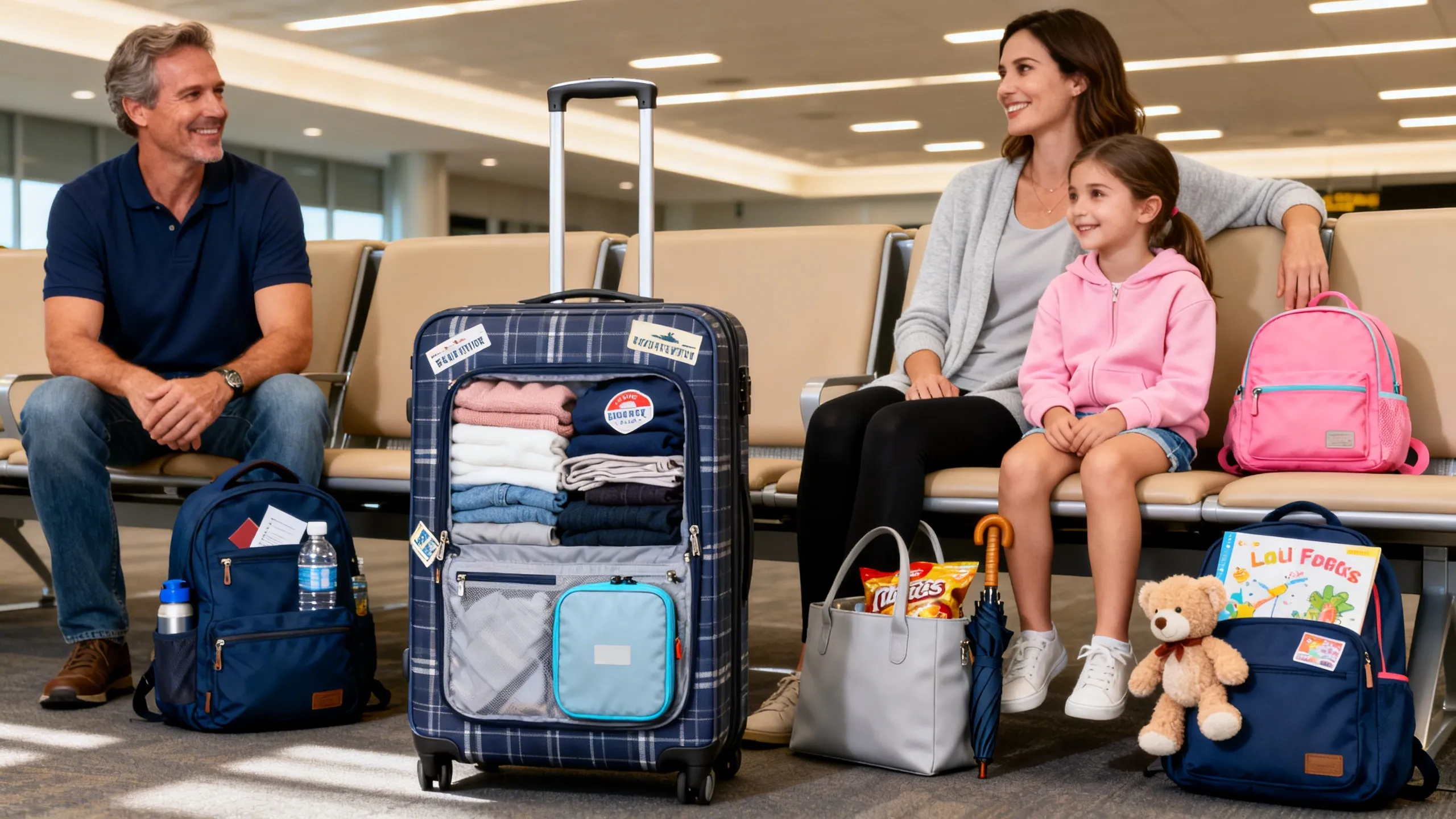
For family trips, critical items should stay in personal under-seat bags, not only in shared checked luggage.
This reduces disruption if carry-on space is limited or checked bags are delayed.
Family Packing Framework
- Assign one bag owner and one bag purpose (essentials, clothing, backup).
- Keep high-priority items in personal items, not only in checked bag.
- Measure and weigh bags after final packing, including kids' bags.
- Keep one compression space for return-trip changes.
Authority-Backed Practical Tips
- Split essentials into personal items: Keep medicine, snacks, and one clothing layer in each traveler personal item.
- Use one measurement checklist per bag: Measure every bag after final packing, not before.
Family Travel Failure Points and Fixes
Families commonly fail when all essentials are concentrated in one checked bag. If that bag is delayed, the whole trip starts with disruption.
A better setup is role-based distribution: one shared checked bag for bulk items, personal under-seat bags for critical items per traveler.
For kids, keep one emergency change set and key comfort items in immediately accessible personal baggage.
3-Level Family Packing Model
- Level 1 (Immediate): passport, medicine, chargers, child essentials in personal item.
- Level 2 (Day-1): one day outfit and toiletries in carry-on if permitted.
- Level 3 (Bulk): non-critical clothing and gear in checked luggage.
Related Guides
Data Sources
- Split essentials into personal itemsAirline site · Last checked: 2026-08-30https://www.tsa.gov/travel/travel-tips/traveling-children
- Use one measurement checklist per bagAirline site · Last checked: 2026-08-30https://www.tsa.gov/travel/frequently-asked-questions/what-are-size-restrictions-carry-bags