How to Measure Suit Size at Home
Six measurements: chest → waist → hips → shoulders → sleeve → inseam, then pick S / R / L from height. Soft tape, level, breathe normally. Example: 40 in chest + Regular height → start at 40R.
Quick answer
Jacket number = chest inches. Letter = height. Pants waist ≈ chest − 6 for a standard drop. Shoulders decide whether an off-the-rack jacket will ever look right.
Measurement steps
- Chest: Stand relaxed. Wrap a soft tape around the fullest part of your chest, under the arms and across the shoulder blades. Keep the tape level with one finger of ease. Note inches or cm—this number is your jacket size starting point.
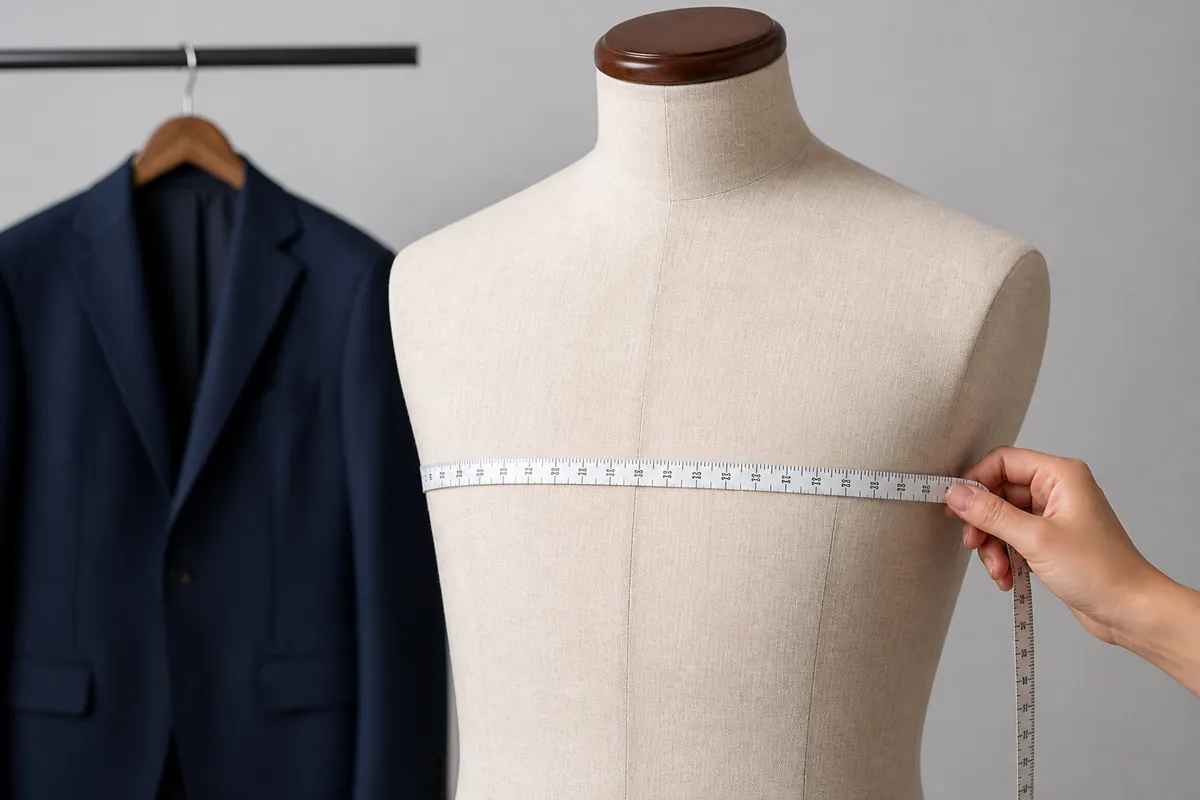
- Natural waist: Measure where suit pants sit (near the navel—higher than jeans). Drop ≈ chest − waist. Standard ready-to-wear assumes about 6 in (40 chest → ~34 waist).
- Hips / seat: Feet together; tape around the fullest seat. Confirms trousers clear the hip when you sit without pulling.
- Shoulders: Across the back from shoulder bone to shoulder bone. Hardest area to alter—if off-the-rack fails here, change size or cut before buying.
- Sleeve length: Slight bend at the elbow. From the shoulder point down the outside of the arm to the wrist bone. Aim for about 0.5 in (1–1.5 cm) of shirt cuff under the jacket.
- Inseam + height letter: Inseam: crotch seam to ankle bone. Height: Short ≤5'8", Regular ≈5'9"–6'0", Long ≥6'1". Combine chest + letter (example: 40 in + Regular → 40R).
Height → S / R / L
| Letter | Height | What changes |
|---|---|---|
| S (Short) | ≤ 5'8" · ≤ 173 cm | Shorter jacket body and sleeves |
| R (Regular) | 5'9"–6'0" · 175–183 cm | Most common off-the-rack length |
| L (Long) | ≥ 6'1" · ≥ 185 cm | Longer sleeves and jacket length |
| XL (Extra Long) | ≥ 6'4" · ≥ 193 cm | Not stocked by every brand |
After you measure
- Round chest to an even jacket size (or up if between sizes).
- Add the length letter from height.
- Open the suit size chart & finder to confirm US / EU and standard pant waist.
- Check shoulders and button pull in person when you can—numbers are a start.
What you need before you measure
Use a soft measuring tape. Wear a thin dress shirt or tee—not a sweater. Stand naturally; do not puff your chest or suck in your stomach.
A second person helps for shoulders and sleeves. Measure twice and average. Body size can shift through the day; stay consistent.
Six measurements that matter
- 1
Chest (jacket number)
Tape around the fullest chest, under the arms and across the shoulder blades. Level and snug with one finger of ease. This inches number is your jacket size start (40 in → try 40).
- 2
Natural waist (pants + drop)
Measure where suit pants sit—usually near the navel, higher than jeans. Drop ≈ chest − waist. Standard ready-to-wear assumes about 6 in.
- 3
Hips / seat
Feet together; tape around the fullest seat. Helps trousers clear the hip without pulling when you sit.
- 4
Shoulders
Across the back from shoulder bone to shoulder bone. Hardest area to alter—if off-the-rack shoulders fail here, change size or cut.
- 5
Sleeve length
Slight bend at the elbow. From shoulder point down the outside of the arm to the wrist bone. Aim to show about 0.5 in of shirt cuff under the jacket.
- 6
Inseam
From crotch seam down the inside leg to the ankle bone. Suit trousers often sit higher than jeans; confirm rise on the brand chart.
Do and don't while measuring
Avoid: Measuring over a jacket or thick hoodie.
Instead: Measure over a thin shirt so the tape matches how you wear the suit.
Avoid: Pulling the tape so tight it digs in.
Instead: Keep it snug with one finger underneath so the jacket can close.
Avoid: Guessing S/R/L from an old coat label only.
Instead: Confirm height bands on the [suit size chart](/guides/suit-size-chart), then use the finder with chest + height.
Turn measurements into a size
- Round chest to the nearest even jacket size (or up if between sizes).
- Pick S / R / L / XL from height.
- Example: 40 in chest + 5'10" → start at 40R. See what 40R means.
- Compare pant waist to chest for drop; use the pants size converter if you buy trousers alone.
Next
Frequently asked questions
Do I measure over a shirt?
Yes—wear a thin dress shirt or tee. Do not measure over a thick sweater. Keep one finger of ease under the tape so the jacket can close without pulling.
Should I round up between sizes?
If chest lands between even sizes (39 → 40), round up for comfort, especially in slim cuts. Then confirm shoulder fit in person when you can.
Is sleeve length the same as jacket size?
No. Sleeve length usually comes with S/R/L proportions. Tailors shorten sleeves; shoulders and chest are harder to fix—prioritize those when choosing the number.
What if my drop is not 6 inches?
Athletic drops near 8 in and portly drops near 4 in are common. Buy jacket and pants as separates, or plan alterations. See the drop table on the suit size chart.
More questions
- Can I measure without a soft tape?
- A string plus a ruler works in a pinch: wrap the string at the chest, mark the overlap, then measure the string. Soft tape is still more accurate for shoulders and sleeves.
- Does neck size tell me my suit size?
- Only roughly. Dress shirts use neck and sleeve. A 15.5–16.5 in neck often pairs with mid-size jackets, but always measure chest. Use the shirt size chart for the shirt under the jacket.