
Shoe Size Chart by Age
Age bands are a rough start. Measure both feet in cm, use the longer length, then open the infant / toddler chart (US C) or the kids converter (youth Y). 6Y means youth—not toddler 6C.
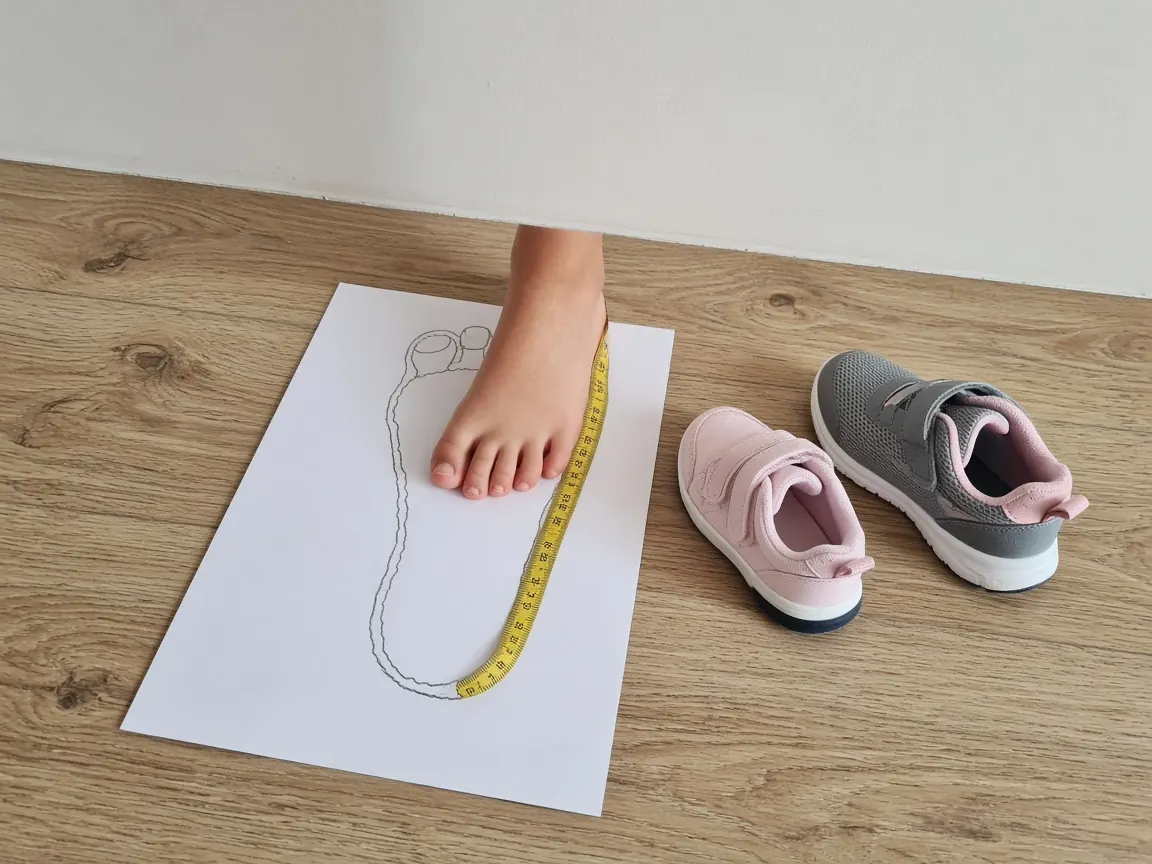
How to use age + cm
- Note age only to pick the right table (infant / toddler / kids).
- Measure both feet standing; use the larger length in cm.
- Match cm on the chart or converter—leave a little growth room, not a full size too big.
Infant shoe size chart (US)
US infant / early baby sizes are usually labeled 1C–5C by foot length. Full US / UK / EU / cm rows:
Toddler shoe size chart by age
Toddler sizes continue with C labels (often through about 10C) plus an age guide. Same numbers for boys and girls.
Kids / youth shoe sizes (Y)
After toddler C sizes, many US kids shoes use Y (youth) labels such as 1Y–7Y. Convert from cm:
Frequently Asked Questions
How do I find my child's shoe size by age?
Use age only as a starting point. Measure both feet in cm (afternoon, standing), use the longer foot, then match the infant/toddler C table or the kids converter. Children the same age often wear different sizes.
Are age-based shoe size charts accurate?
They are a quick start, not a final answer. Foot length in centimeters is more reliable than age alone—genetics and growth rate differ.
What does 6Y mean in shoe size?
6Y is a US youth (big-kid) size. It is not toddler 6C and not “for age 6.” Convert with foot length in cm on the kids shoe size converter.
How often should I check my child's shoe size?
About every 3–4 months, or sooner if shoes leave red marks, feel tight, or are hard to put on. During growth spurts, check more often.