
Memory Foam vs Hybrid Mattress (2026)
Updated for 2026. A construction-first comparison table for two common mattress categories: what is inside the bed, how layers tend to behave, and how thickness connects to sheets and sizing tools on SizeFit.
Mattress size converterWhat is each mattress type?
Start with construction, then map your preferences. The notes below describe common shopping tendencies, not medical advice and not guarantees for every SKU.
What is a memory foam mattress?
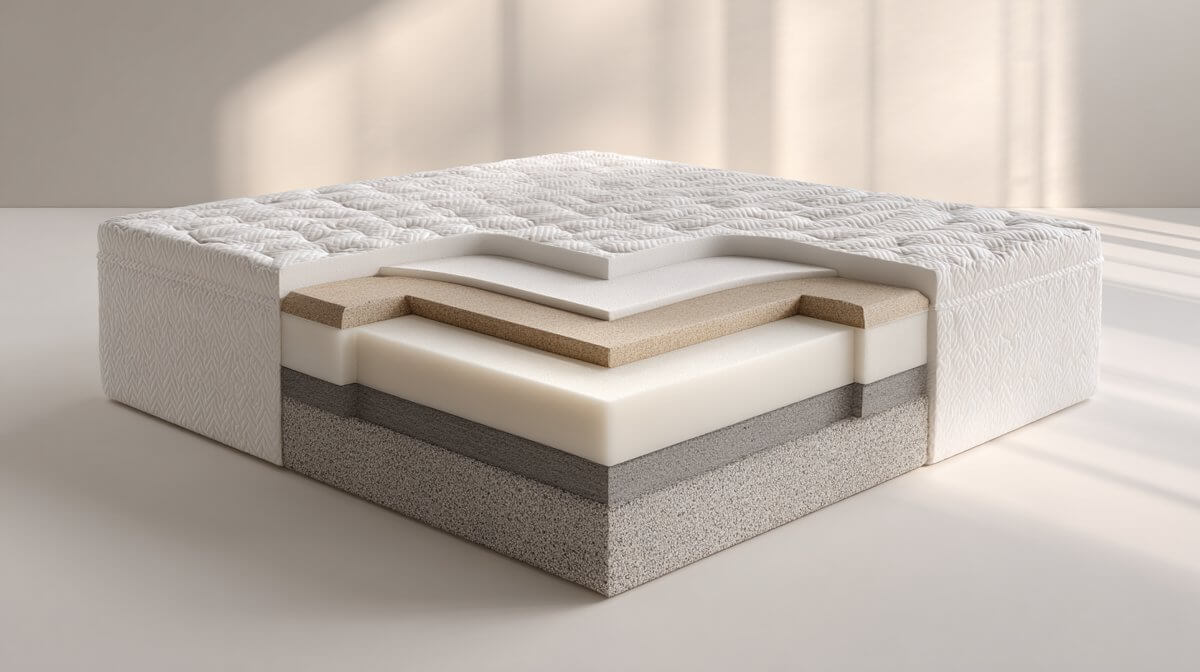
In retail language, a "memory foam mattress" is usually an all-foam mattress that uses viscoelastic polyurethane foam (memory foam) in the comfort layers, supported by high-density polyfoam and sometimes transition or zoning layers. It does not use a metal spring unit as the primary support core.
Memory foam is valued for slow-response contouring: it changes shape under pressure and heat over a short time window. Exact feel, density, and airflow depend on foam grade, layering, and the cover—not the word "memory foam" alone.
Preference fit (tendencies, not guarantees)
If your question sounds like one of these, memory foam is often shortlisted—then confirm with firmness charts and return policies.
- I prefer a slower, more contouring surface with less springiness.
- That shopping goal often leads people to all-foam comfort systems. Firmness, transition layers, and cover materials still change the outcome—test the specific model when possible.
- My priority is reducing motion felt from a partner on the same mattress.
- Foam cores and comfort stacks often damp surface motion compared with basic continuous-coil designs. Hybrid pocket-coil designs can still perform well, so compare layer thickness and coil type—not only the category name.
- I want a straightforward build without a metal spring unit.
- The memory foam mattresses described here are all-foam constructions. If you specifically want coils, you are outside this category and should compare hybrid specifications instead.
- I sleep warm—should I avoid memory foam entirely?
- Not automatically. Foam formulation, perforations, cover fabric, and your protector and bedding stack all matter. Use the category as a starting point, then read cooling-related specs and owner feedback for the exact bed.
What is a hybrid mattress?
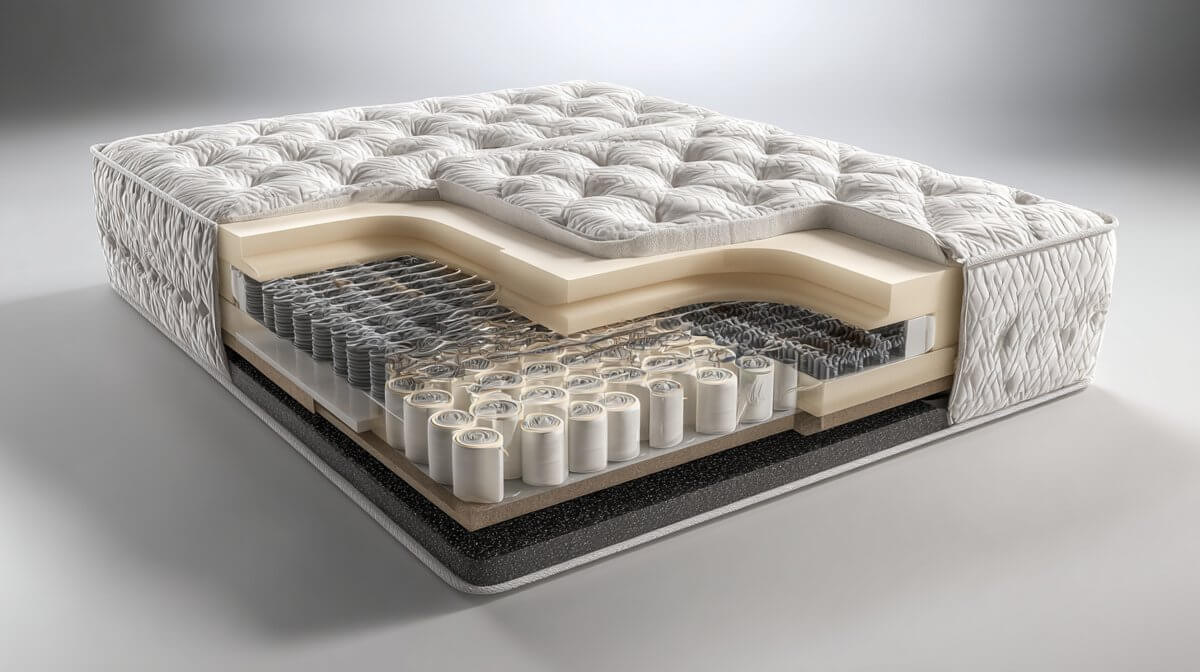
A hybrid mattress typically combines a coil support core (often pocket springs) with foam, memory foam, latex, or fiber comfort layers above the springs. The springs carry most of the load and define bounce and support, while upper layers tune pressure relief and surface feel.
"Hybrid" is a retail category label, not a single legal standard. Coil height, coil count (when disclosed), foam thicknesses, and edge systems differ widely between models.
Preference fit (tendencies, not guarantees)
If your question sounds like one of these, hybrid models are often shortlisted—then compare coil type, foam stack height, and edge construction for the exact listing.
- I like easier repositioning and more lift when I change sides.
- Coil cores often add spring-back versus thick memory-foam-only comfort systems. Thick soft top layers can still slow movement, so check total foam height and firmness labels on the model you consider.
- I want better airflow through the support layer as a general tendency.
- Open coil support layers usually move air more freely than a solid foam base. Comfort foam, quilting, and mattress protectors still affect heat and moisture, so category alone is not a guarantee.
- I prefer a blend: foam-like comfort with spring-based support.
- That is the common hybrid design goal. The balance depends on coil height, coil type, and how much foam sits above the springs—compare layer diagrams when manufacturers publish them.
- I need strong edge support for sitting on the side of the bed.
- Many hybrids advertise reinforced coil perimeters and foam encasement. High-quality all-foam designs may use dense foam rails instead. Treat edge performance as a model-specific spec, not a rule tied only to the category.
Side-by-side comparison table
Rows describe category tendencies. Individual mattresses vary by foam grade, coil design, and cover—verify specs on the manufacturer page for the exact model.
Support core
Memory foam
Foam support stack (typically high-density polyfoam); no metal spring unit as the primary core.
Hybrid
Metal innerspring unit (commonly pocket coils) as the primary support core, often with a thin foam base layer.
Comfort system
Memory foam
Memory foam plus polyfoam or latex layers; quilting and fiber pads may sit under the cover.
Hybrid
Foam, memory foam, latex, or fiber layers above coils; some models add micro-coils or zoned foam.
Typical total thickness
Memory foam
Commonly about 10–14 inches for mainstream models; thicker luxury profiles exist.
Hybrid
Commonly about 10–15 inches depending on coil height and comfort stack; profiles vary widely.
Motion transfer (tendency)
Memory foam
Foam absorbs surface motion well; partner disturbance tends to be low versus traditional tied-coil innersprings.
Hybrid
Pocket coils isolate motion better than continuous coils, but springs can transmit more vibration than an all-foam core; foam layer thickness matters.
Bounce / repositioning (tendency)
Memory foam
Low surface bounce; slower contouring response can make rolling over feel different from a spring bed.
Hybrid
More spring-assisted lift and quicker surface response than most all-foam memory foam beds.
Airflow in the support layer (tendency)
Memory foam
Solid foam cores restrict vertical airflow; covers and comfort-layer perforations still matter.
Hybrid
Open coil structure allows more air movement through the support layer than a solid foam base.
Edge support (tendency)
Memory foam
High-density foam rails or reinforced perimeter foam on better models; softer edges on thin designs.
Hybrid
Coil perimeter systems plus foam encasement are common; edge feel still varies by gauge and foam height.
Weight (same nominal size)
Memory foam
Often heavy due to dense foam volume; shipping cartons can be bulky.
Hybrid
Weight varies with coil system and foam stack; not always lighter than all-foam—check listed shipping weight.
Base compatibility (general)
Memory foam
Usually requires a firm, flat, or closely spaced slatted foundation per manufacturer; flexing or bowed bases can stress foam layers.
Hybrid
Similar foundation rules apply; slat spacing and center support often matter for coil warranty compliance.
The table uses the full content width on desktop. If your window is very narrow, scroll horizontally—the first column stays visible.
| Topic | Memory foam mattress | Hybrid mattress |
|---|---|---|
| Support core | Foam support stack (typically high-density polyfoam); no metal spring unit as the primary core. | Metal innerspring unit (commonly pocket coils) as the primary support core, often with a thin foam base layer. |
| Comfort system | Memory foam plus polyfoam or latex layers; quilting and fiber pads may sit under the cover. | Foam, memory foam, latex, or fiber layers above coils; some models add micro-coils or zoned foam. |
| Typical total thickness | Commonly about 10–14 inches for mainstream models; thicker luxury profiles exist. | Commonly about 10–15 inches depending on coil height and comfort stack; profiles vary widely. |
| Motion transfer (tendency) | Foam absorbs surface motion well; partner disturbance tends to be low versus traditional tied-coil innersprings. | Pocket coils isolate motion better than continuous coils, but springs can transmit more vibration than an all-foam core; foam layer thickness matters. |
| Bounce / repositioning (tendency) | Low surface bounce; slower contouring response can make rolling over feel different from a spring bed. | More spring-assisted lift and quicker surface response than most all-foam memory foam beds. |
| Airflow in the support layer (tendency) | Solid foam cores restrict vertical airflow; covers and comfort-layer perforations still matter. | Open coil structure allows more air movement through the support layer than a solid foam base. |
| Edge support (tendency) | High-density foam rails or reinforced perimeter foam on better models; softer edges on thin designs. | Coil perimeter systems plus foam encasement are common; edge feel still varies by gauge and foam height. |
| Weight (same nominal size) | Often heavy due to dense foam volume; shipping cartons can be bulky. | Weight varies with coil system and foam stack; not always lighter than all-foam—check listed shipping weight. |
| Base compatibility (general) | Usually requires a firm, flat, or closely spaced slatted foundation per manufacturer; flexing or bowed bases can stress foam layers. | Similar foundation rules apply; slat spacing and center support often matter for coil warranty compliance. |
Thickness, bedding, and pocket depth
Both categories ship in a wide thickness range. For fitted sheets, measure mattress height including any topper, then match pocket depth (standard, deep, or extra-deep). Our bed sheet selection guide explains pocket depth bands; the bed sheet size chart lists fitted dimensions by bed size.
Mattress size, couples, and motion on the sleeping surface
Construction does not change standard length and width labels: Twin, Full, Queen, and King remain the same nominal sizes. If two people share a smaller width (for example Full), partner motion on the surface may feel more noticeable than on a wider Queen or King—regardless of foam versus hybrid.
Use the mattress size comparison guide and how to choose mattress size for room dimensions and sleeper count, and the mattress size chart for dimension tables.
Layer stack vocabulary (quick reference)
- Comfort layers: upper foams or fibers that mainly affect pressure relief and surface feel.
- Transition layer: firmer foam between soft comfort foam and the support core to reduce bottoming out.
- Support core: the thickest load-bearing section—either foam or coils depending on category.
- Quilt / cover: ticking, fire barrier (where required), and padding that slightly changes surface firmness and breathability.
Frequently asked questions
What is the main structural difference between a memory foam mattress and a hybrid mattress?
A typical memory foam mattress uses foam layers for both comfort and support, often with a high-density polyfoam base and memory foam (viscoelastic foam) in the comfort system. A hybrid mattress pairs a metal spring support core (commonly pocket coils) with foam and/or fiber comfort layers above the coils.
Which type tends to allow more airflow through the support layer?
Hybrids usually allow more open airflow through the coil support layer than an all-foam support stack. Memory foam comfort layers still vary by formulation, cover, and ventilation features, so total breathability depends on the full layer stack—not the label alone.
Do hybrid mattresses always sleep cooler than memory foam mattresses?
No. Coil layers can improve ventilation, but thick foam comfort layers, quilted covers, and mattress protectors still affect heat and moisture. Some all-foam beds use open-cell foams, perforated layers, or phase-change covers. Always check the specific model specifications.
How does mattress thickness relate to fitted sheet pocket depth?
Fitted sheet pocket depth must cover the full mattress height you measure, including any topper. Both memory foam and hybrid models are sold in a wide range of thicknesses, so pocket depth is not determined by the category name. Measure thickness and match it to standard, deep, or extra-deep pocket sheets.
Which mattress type is usually heavier for the same standard size?
All-foam mattresses are often very dense and can be heavier than many hybrids of similar height, but coil gauges, foam densities, and border systems vary. Use the manufacturer shipping weight if you need to plan lifting, stairs, or bed frame load limits.
Can both memory foam and hybrid mattresses be used on slatted foundations?
Many models work on slatted bases if slat spacing, center support, and weight limits meet the manufacturer requirements. Requirements differ by brand and coil or foam construction, so follow the warranty card or official setup guide for your exact mattress.
Disclaimer
Related tools and guides
Mattress size converter
Compare standard dimensions and plan room fit.
Mattress size comparison
Twin through California King side-by-side.
How to choose mattress size
Room, sleepers, and step-by-step selection.
Mattress size chart
US and international dimension references.
Bed sheet selection guide
Pocket depth and mattress height measurement.
Bed sheet size chart
Fitted and flat sheet dimensions by bed size.