
Measure Pants Waist & Inseam at Home
Two numbers to shop jeans online: waist (where the band sits) and inseam (inside-leg length). Decode W×L tags, then match the pants size chart.
- Waist: Tape level where the waistband will sit—snug, not tight.
- Inseam: Inside leg from crotch seam straight down to hem/ankle.
- Match: Use W×L or numeric rows on the chart; plus shoppers see plus size pants.
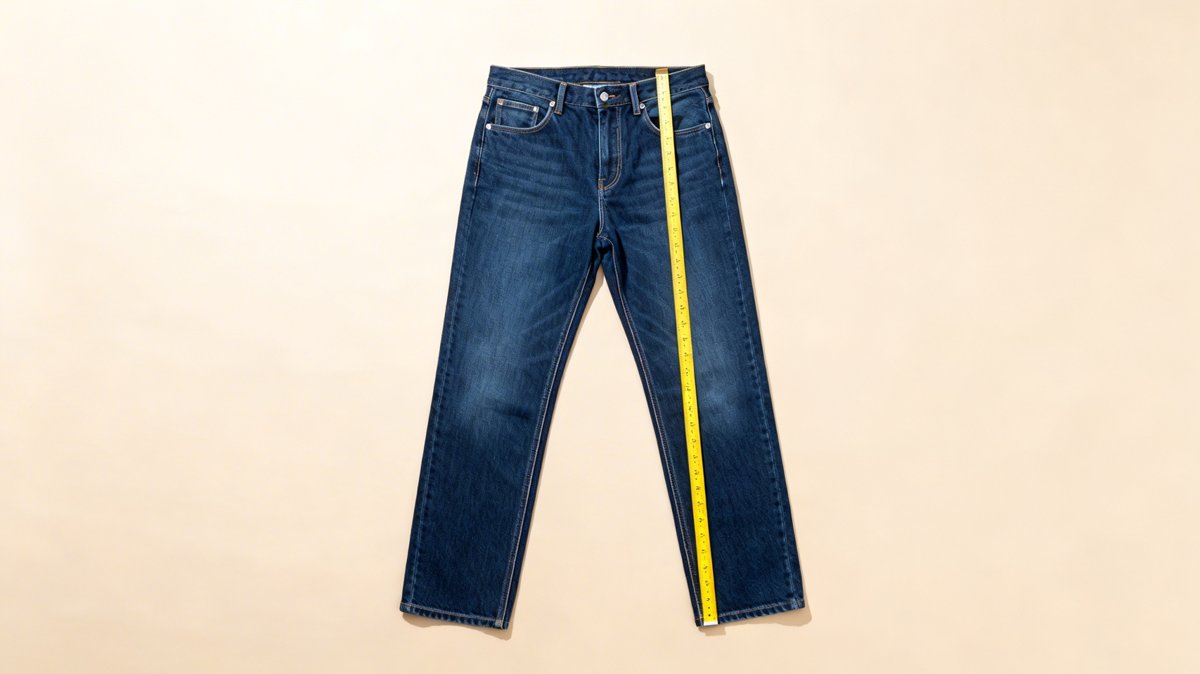
Why waist and inseam matter
Waist controls whether you can button the fly comfortably without gaping or digging. Inseam controls length: too short looks cropped; too long pools on the floor unless you cuff or tailor. Many returns happen because shoppers rely on a single letter size or an old tag from another brand instead of fresh body measurements.
What you need
- Soft cloth measuring tape (tailor tape)
- Optional: narrow string or elastic to mark the waistline
- Mirror or helper for inseam (recommended)
- A well-fitting pair of pants to cross-check measurements (optional)
Understand the numbers on the tag
- Men's jeans (US/UK): Tags often show waist × inseam in inches, for example 32×32—first number is waist, second is inseam. That is the brand's cut for that model, not a guarantee that your bare waist tape reads exactly 32 inches.
- Women's pants: You may see numeric sizes (for example US 4, 8, 10) or waist/length combos depending on the brand. Numeric dress or pant sizes are not the same system as men's inch waist labels.
- EU labels: Some products use a France/Italy-style EU number; others repeat waist in inches on the tag. Do not assume one conversion works for every pair—use the chart for that product line.
Rise and fit change where you measure
High-rise pants sit at or above the natural waist; mid-rise near the hip bones; low-rise lower on the hips. Measure the waist where that style's waistband will sit, not always at the narrowest part of your torso. If you switch rise, remeasure before ordering.
How to measure (step by step)
These steps match the structured HowTo data on this page for search engines.
- Mark where the waistband should sit: Stand relaxed, feet shoulder-width apart. Tie a narrow string or elastic level around your torso where you want the waistband to sit—often just above the hip bones for mid-rise jeans, or at the narrowest point for high-rise styles. Breathe normally; do not suck in.
- Measure waist circumference: Wrap a soft tape measure over the string. Keep the tape parallel to the floor and snug but not digging in. Note the value in inches or centimeters. Repeat once to confirm.
- Measure inseam on the body: Wear thin, close-fitting bottoms. Locate the high crotch point where seams meet. Measure straight down the inside leg to where you want the hem—ankle bone for full length, higher for cropped styles. A helper improves accuracy.
- Cross-check with flat-lay pants: Lay a pair that fits well flat on a table. For inseam, measure along the inner seam from crotch stitch to hem (same idea as the photo above). For waist, follow that brand chart: some charts use straight waistband edge, doubled measurement, or curved line—use their diagram.
- Read the tag for reference: Men's jeans often show waist×inseam in inches (for example 32×32). Women's pants may use numeric sizes (for example US 8) that are not the same numbers as men's waist labels. Write down both your body measurements and the tag.
- Compare on the official brand chart: Open the size chart for the exact product or fit. Match your body measurements to the row the brand specifies. If you fall between rows, follow their rule (size up for comfort or down for a closer fit) and read reviews for stretch fabric.
Common mistakes to avoid
- Measuring over thick clothes or with a twisted tape
- Confusing outseam (side of leg) with inseam (inside leg)
- Using one brand's tag as a universal size for every retailer
- Ignoring fabric content—stretch denim often fits smaller than rigid denim with the same tag
Stretch versus rigid fabric
Elastic blends can feel comfortable a half size smaller on the chart than 100% cotton rigid jeans. If you are between sizes and the pair has high stretch, read the brand's note; many suggest sizing down. If the fabric has no stretch, sizing up may feel better in the seat and thigh.
FAQ
Is my jeans waist size the same as my tape measurement?
Not always. Tag numbers are not a universal body measurement. Vanity sizing, rise height, and stretch fabric all change how a labeled size feels. When a chart lists body waist in inches or centimeters, use your tape measurement directly.
What is inseam on pants?
Inseam is the inside-leg length from the crotch seam along the inner leg to the hem. It controls where the pant breaks on your shoe and must match the style you want—full length, stack, or crop.
Does EU pant sizing always match US waist numbers?
No. In some EU markets jeans still show waist in inches (W32). In others you may see France- or Italy-style numbers that do not equal your inch waist. Always read the legend on the brand chart instead of assuming one global EU rule.
Is a women's size 8 the same as a men's waist 8?
No. Women's numeric clothing sizes (for example US 8) follow a different scale from men's waist-by-inch labels. Do not compare them directly; use the women's chart and your body measurements.
My inseam falls between two lengths. Which should I choose?
If you hem rarely, choose the longer inseam and tailor. If the fabric has little stretch and you want a clean break at the shoe, the shorter listed inseam may look neater. Check whether the brand offers Short, Regular, and Long legs for the same waist.
What does pants size mean on the tag?
Men's jeans often use W×L (waist × inseam in inches), for example 32×32. Women's pants may use numeric sizes (US 8, 14) that are not the same as men's waist inches. Always pair your tape measurements with the brand chart.
Related tools and charts
After you measure, convert units or open full tables with sources.